


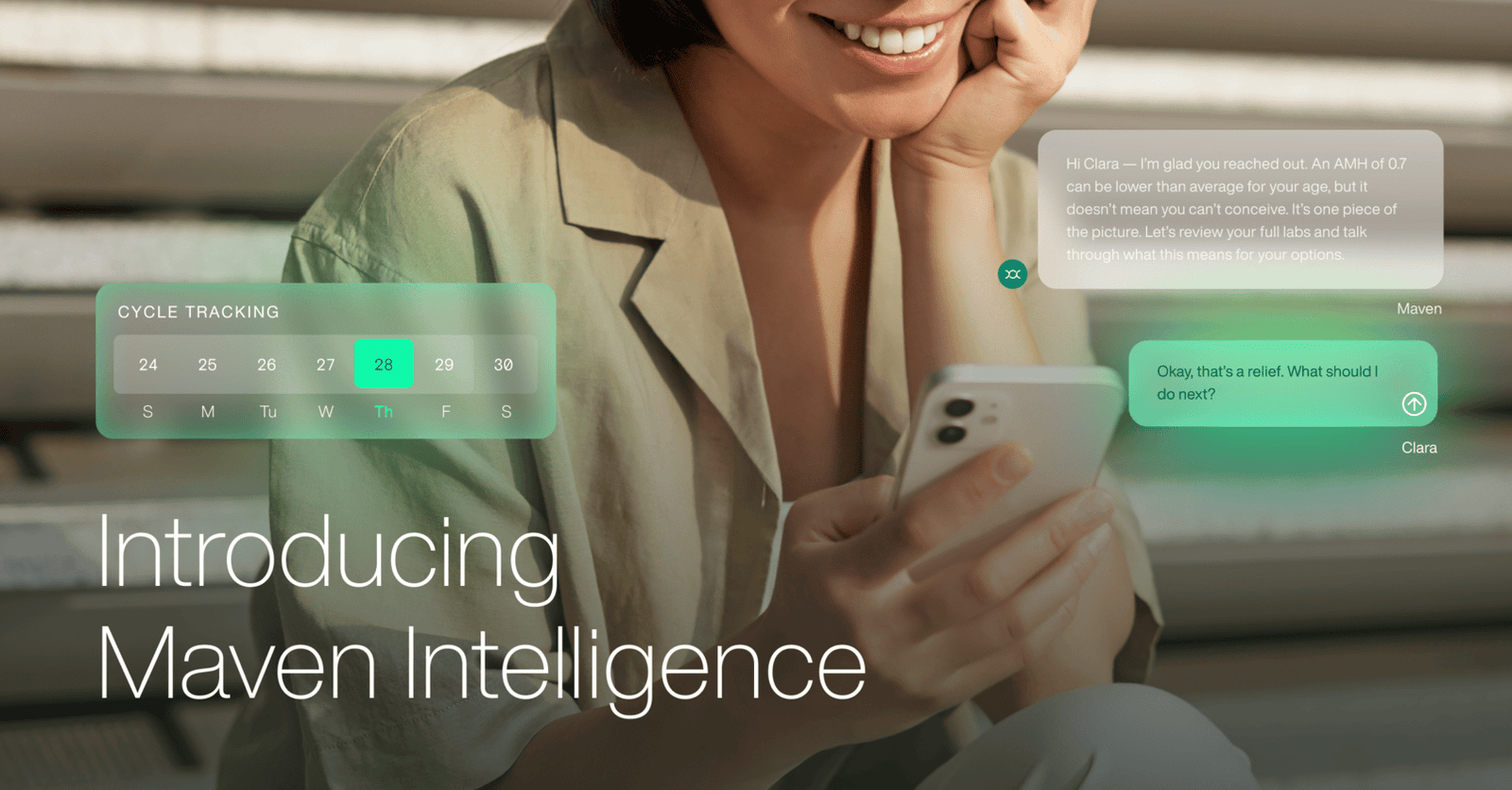
Maven Clinic has introduced Maven Intelligence, an artificial intelligence-powered infrastructure built across its virtual clinic, care programs, and benefits platform.
The company calls Maven Intelligence an orchestration layer that integrates agent AI with longitudinal data and clinical expertise to personalize care. This layer is built on Maven Clinic’s more than 1 billion structured data points and will begin rolling out to members in March.
“Women’s health has been a huge gap in healthcare (for a long time),” Jaya Savkar, Maven’s senior vice president of products, told Fierce Healthcare. “We truly believe we have an opportunity to help close this gap…We are the largest virtual clinic for women and their families, and by combining that with AI focused on women’s health, we believe humans and AI can do even more together.”
Maven’s conversational AI is trained to take women’s health symptoms seriously and support the clinical and emotional nuances of the care process. Maven Intelligence is based on Google’s Large-Scale Language Models (LLM) through a business collaboration agreement with OpenAI. As such, this tool is HIPAA compliant and cannot extract insights from the entire internet. Instead, the closed model leverages Maven member history, goals, benefit coverage, and integrated data. This includes medical records, test results, and wearables.
This tool can provide personalized, evidence-based guidance, connect members to the right provider, navigate benefits, and provide prompt follow-up and compliance support. All interactions feed back into AI guidance based on demonstrable improvements in aggregate program-level clinical outcomes, such as natural conception rates, NICU admissions, and C-section rates.
“Ultimately, we want to make sure that members don’t have to repeat themselves, for example,” Sabkar said. “We want providers to have all the latest information about their members, so when they interact with them, they already know the member’s history and don’t have to explain it again.”
As part of its safety architecture, Maven leverages Nvidia’s NeMo Guardrails, an open source toolkit for easily adding programmable guardrails to LLM-based conversation systems.
“This ensures that the conversation stays on the right topic (and) follows safe, clinically-informed guidelines,” Sabkar says.
Maven Intelligence underwent multidisciplinary review and performance evaluation with clinicians. Maven performs automated assessments to ensure that your system consistently addresses member questions. Additionally, a human team continually manually reviews conversation samples to check for bias and gaps. That feedback is used to improve the system. Conversations are not sold or used to train external models.
AI is already embedded throughout the Maven platform to support care navigation, clinician workflow, and member engagement. So far, Maven said, these capabilities have helped accelerate access to treatment, surface risk signals early and reduce administrative burden. Specifically, the company says AI has reduced post-appointment document preparation time by 30%.
“What we are seeing is that AI is not replacing humans, but we truly believe that AI is complementing humans so that members already have the right information when they are talking to their provider,” Sabkar said.
