


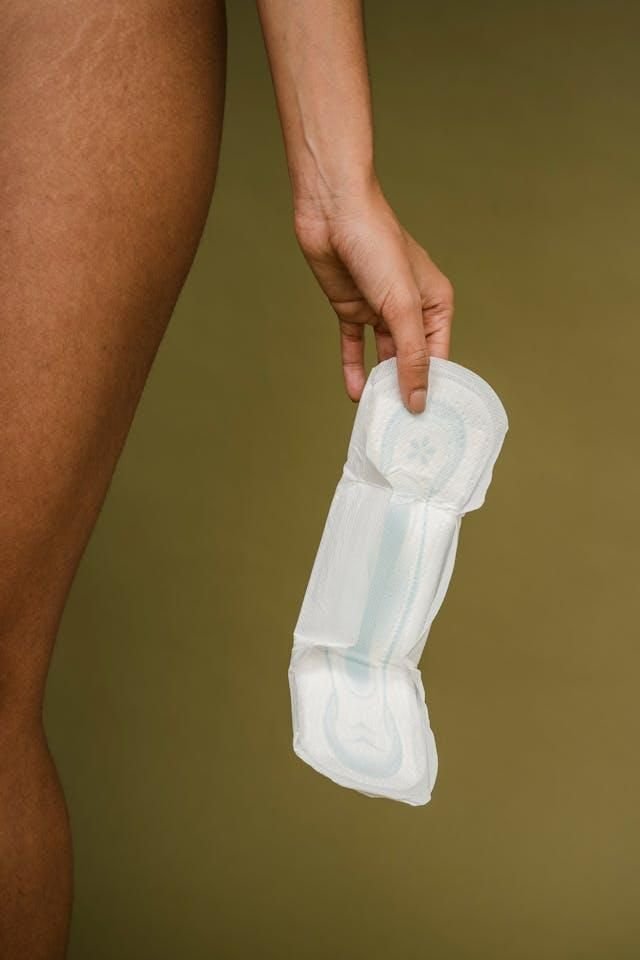
For most women, menstruation comes quietly around the age of 9 to 12. From that moment on, menstrual products became a constant accessory shoved into handbags, gym bags, and bathroom cabinets for decades.
This is why news of a recent study by the University of the Free State was so shocking. Several brands of sanitary napkins and panty liners sold in South Africa have been found to contain endocrine disrupting chemicals (EDCs).
This research Total environmental scienceconcerns were immediately raised online. Women started asking very real questions: Are the products we rely on every month safe?
A few days later, South African Health Minister Aaron Motsoaledi publicly addressed the issue at a press conference on March 8, marking International Women’s Day.
“The levels of EDC detected were within acceptable safety limits,” Motsoaledi said. “There is no evidence that the levels of these chemicals found in sanitary napkins pose a risk to women and girls.”
In other words, this study sparked an important conversation, but it did not signal a health crisis.
The discovery of UFS has sparked a more urgent investigation into our daily lives. What are these endocrine-disrupting chemicals and how many do we actually absorb each day? Beyond the headlines, where exactly are these “invisible invaders” hiding in our homes and personal care products?
Invisible chemicals woven into modern life
Endocrine disrupting chemicals, often shortened to EDC, are substances that can interfere with the body’s hormonal systems.
Hormones act like messengers in the body, silently regulating everything from metabolism and mood to fertility and sleep. The endocrine system, a network of glands that includes the thyroid, ovaries, and adrenal glands, maintains that balance.
According to the Endocrine Society, EDCs can mimic, block, or disrupt natural hormones and can disrupt the body’s signaling systems.
The most commonly studied examples are:
- Phthalates: It is used to soften plastics and is used in perfumes and cosmetics. It has a long-lasting scent, but is known for its estrogen-like properties.
- Bisphenol A (BPA): Often used in plastic and food packaging
- PFAS chemicals: Often used for non-stick cookware and water-resistant fabrics.
- Dioxins: IIndustrial by-products released during certain manufacturing processes
- Parabens: Used as a preservative in shampoos, lotions, and cosmetics. They have been detected in breast cancer tissue, raising red flags about cumulative exposure
- Triclosan: An antibacterial agent commonly found in “power-cleaning” soaps and some toothpastes that can interfere with thyroid hormone metabolism.
The difficulty is that they are almost everywhere.
Traces of these chemicals are found everywhere in modern life, from shampoo bottles to food containers, scented candles to clothing dyes.
According to research cited by the National Institute of Environmental Health Sciences, people are typically exposed to multiple EDCs daily through air, food, water, and skin contact.
This means that sanitary products are just one part of a much larger exposure puzzle.
What the UFS research actually revealed
Researchers at the University of the Free State analyzed both traditional and so-called “chemical-free” menstrual products.
Their findings showed that all products tested contained at least two types of endocrine disruptors, specifically phthalates and bisphenols.
While this sounds alarming at first glance, scientists stress that detection does not automatically mean there is danger.
Health experts explain that toxicity depends on concentration and exposure level. For the sanitary products tested, chemical levels were within internationally recognized safety standards.
Professor Ntobeko Ntusi from the South African Medical Research Council emphasized this point.
“Just because a chemical is detected doesn’t mean it’s a risk,” he says. “The concentrations found in this study were very low, well below the harmful threshold.”
In fact, the study estimates that menstrual products only account for about 6.8% of total daily exposure to EDCs.
The bulk of this is food and packaging (about 40%), and personal care products such as lotions, perfumes, and shampoos (another 40%).
What happens with long-term exposure?
Although the levels detected were considered safe, scientists are still studying how cumulative exposure to EDCs affects the body over time.
Some studies suggest that high-dose or long-term exposure to certain endocrine disruptors may be associated with:
- hormonal imbalance.
- Fertility challenges.
- Early adolescence.
- Metabolic diseases such as obesity and diabetes.
- Increased risk of hormone-related cancers.
- Implications for neurodevelopment in children.
Hormones act in very small quantities, so even small disruptions can affect biological processes, especially during early development and pregnancy.
However, researchers stress that the science is still in its infancy. Many of these findings have come from long-term population studies and animal models, and establishing a direct causal relationship in humans remains complex.
So is there any need to worry?
Experts say there is no need to panic for now, but awareness can be helpful.
Motsoaledi reiterated that women can continue to use regular menstrual products while scientists continue to investigate environmental exposures more broadly.
But this conversation has sparked a growing interest in making informed lifestyle choices.
Some health experts suggest simple ways to reduce unnecessary exposure.
- Choose unscented sanitary products.
- Consider reusable options like menstrual cups and cloth napkins.
- Limit plastic food packaging wherever possible.
- Choose cleaner personal care products.
None of these steps are mandatory, but they do reflect a broader shift toward health-conscious living.
