


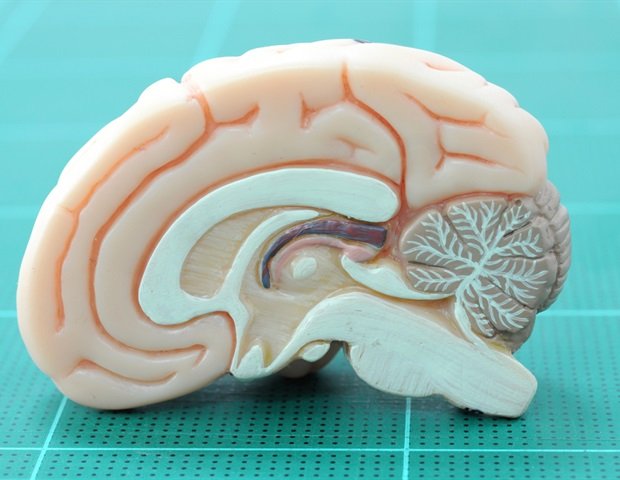
Researchers used brain imaging to show how memories can be reactivated in the brain without ever reaching consciousness, showing that memories persist even when you think you’ve forgotten them.
Scientists from the University of Nottingham’s School of Psychology used magnetoencephalography (MEG) to show how the brain reactivates memories even when you can’t remember them, suggesting that your brain remembers even when you can’t. The results were published in the Journal of Neuroscience.
Neural oscillations are rhythmic electrical activity in the brain, often called brain waves. These are essential for synchronizing neural populations to encode, store, and retrieve memories. Vibrations particularly promote memory formation, spatial navigation, and episodic memory binding in the hippocampus, while alpha and beta bands are often associated with cortical processing during long-term memory tasks.
In this study, participants completed a paired associate task. Participants were asked to make vivid associations between videos and words, and then shown each word and asked to recall the associated video. MEG captured the participants’ brain activity throughout and used machine learning algorithms (trained to recognize the brain’s unique signature for each video) to detect whether the brain was able to reactivate certain memories, even if the participants did not explicitly recall them.
The results showed that while the brain reactivates memories regardless of whether they are consciously recalled, when a memory is successfully retrieved, the reactivated memory signal fluctuates more rhythmically in the alpha band. It’s as if this rhythmic pattern is meant to be heard above all the background neural noise that masks the memory signals.
Dr Benjamin Griffiths from the Department of Psychology led the study and explained:What we have shown is that even if the brain is able to reactivate the correct memory, it does not necessarily make it conscious. Rather, what seems important is that memories pulsate rhythmically and can be detected above and beyond other neural activity. Think about a soccer field: if everyone is chatting, you can’t hear what’s being said, but if everyone starts singing the same song, you can hear it clearly. It is speculated that similar ideas are involved in memory recall in the brain.”
The researchers also found a decrease in total alpha power in the sensory neocortex that accompanies this memory rhythm, Ben explains.His findings can be likened to reducing general background noise inside stadiums. When the general chatter subsides, it becomes easier to hear the quiet chants of the fans. ”
“These findings could have real implications for conditions such as dementia. Current treatments often assume that when a person can’t remember, the memory itself is lost. But if the memory is being reactivated in the brain and simply isn’t reaching consciousness, it suggests a different approach may be needed, one that focuses on helping existing memories reach consciousness rather than rebuilding lost memories.”
sauce:
Reference magazines:
Griffith, B.J. others. (2026) Alpha oscillations track the projection of reactivated memories into consciousness. neuroscience journal. DOI: 10.1523/JNEUROSCI.1487-25.2026. https://www.jneurosci.org/content/early/2026/03/03/JNEUROSCI.1487-25.2026
