

Close Menu

    Subscribe to Updates

    Get the latest creative news from FooBar about art, design and business.

    What's Hot

    Why Rising Outbreaks and Health Inequities Threaten Your Community Outcomes Now

    June 14, 2026

    People taking GLP-1 weight loss drugs like Ozempic started moving less

    June 14, 2026

    Status drives narcissism, and narcissism drives status-seeking, new psychological research suggests

    June 14, 2026
    Facebook X (Twitter) Instagram
    Facebook X (Twitter) Instagram
    Health Magazine
    • Home
    • Environmental Health
    • Health Technology
    • Medical Research
    • Mental Health
    • Nutrition Science
    • Pharma
    • Public Health
    • Discover
      • Daily Health Tips
      • Financial Health & Stability
      • Holistic Health & Wellness
      • Mental Health
      • Nutrition & Dietary Trends
      • Professional & Personal Growth
    • Our Mission
    Health Magazine
    Home » News » New study investigates blood clot risk in female astronauts in microgravity
    Discover

    New study investigates blood clot risk in female astronauts in microgravity

    healthadminBy healthadminMarch 4, 2026No Comments4 Mins Read
    New study investigates blood clot risk in female astronauts in microgravity
    Share
    Facebook Twitter Reddit Telegram Pinterest Email


    Spending just a few days in a simulated microgravity environment can subtly change the way a woman’s blood clots, according to researchers at Simon Fraser University, raising big questions about health monitoring protocols for astronauts who may spend more than six months in orbit.

    First reported in 2020, an unexpected blood clot was detected in the jugular vein of a female astronaut on a mission to the International Space Station. Space health research has traditionally been dominated by men, but as the number of female astronauts increases, a new study from SFU and the European Space Agency investigated how microgravity affects blood clotting, especially in women.

    Main findings

    • Eighteen female participants experienced five days of continuous simulated microgravity in the VIVALDI I dry immersion study sponsored by the European Space Agency (ESA).
    • The clotting time (the time it takes for a blood clot to start forming) has increased.
    • Once started, blood clots formed faster.
    • Once formed, the strength and stability of the clot was greater
    • The findings indicate that spending just five days in a simulated microgravity environment was not of clinical concern, but further research is needed to assess the potential risks of longer spaceflights.

    We know that men and women may clot differently depending on their age on Earth, but we have little information about whether it’s different in space. They found that in this microgravity environment, it took longer for female participants’ blood to start clotting. But once it began to coagulate, it formed faster and became more stable, making it harder to break down. ”

    Andrew Blaver, professor of biomedical physiology and kinesiology and senior author of the study

    Tiffany Stead, lead author of the study, said this combination (slower onset, faster formation, stronger clots) has not been shown to be inherently dangerous in the short term. But for astronauts, there are concerns about how and where dangerous blood clots can form in the body while in space, where emergency medical care is not available.

    Published in acta astronauticaThe study examined real-time clotting reactions in 18 healthy female participants over five days in a dry immersion tank (a specially designed water tank with a tarpaulin to keep participants wet) that simulates weightlessness while floating.

    The study used a diagnostic method called rotational thromboelastometry (ROTEM) to measure how clotting begins and progresses in the body. The participants’ blood was also analyzed for menstrual hormones, which were found to have no effect on blood clotting.

    Why spaceflight changes where and how dangerous blood clots form

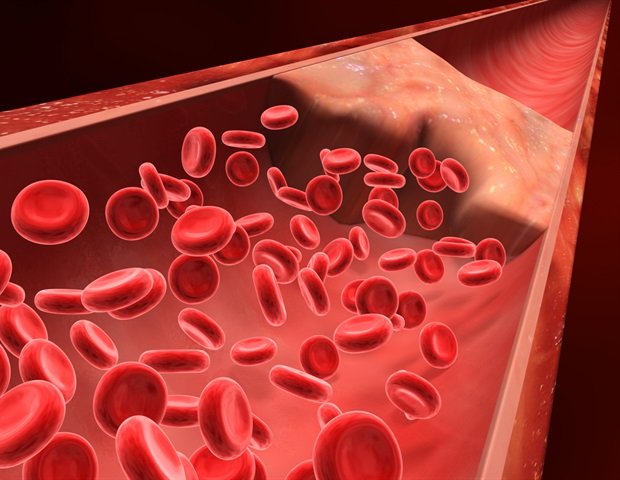
    If left untreated, the blood clot can break off and travel through the bloodstream. If they reach the lungs, heart, or brain, they can cause pulmonary embolisms, heart attacks, and strokes.

    Because of Earth’s gravity, blood clots most commonly form in the legs, allowing the body to break them down on their own or buy time for medical attention before they become life-threatening.

    But without gravity, blood pools in the head and sometimes reverses direction, creating a condition where blood clots are more likely to form, Braver said.

    “We found that in space, blood clots are more likely to form in the jugular vein, and from there they don’t have to travel far to reach the lungs or heart and cause serious medical problems,” he says. “Space is not a place where you want these things to happen.”

    Blaber’s team is currently analyzing comparable men’s dry soak data, which will help guide future medical monitoring and countermeasures needed during spaceflight.

    Space agencies are already paying close attention. Astronauts now routinely perform ultrasound scans of their jugular veins during missions, the very technique that happened to reveal the first blood clot in 2020.

    “Now that we know it can happen, we’re testing more frequently as part of our standard precautions,” Braver said.

    Blaver and his team at SFU’s Institute of Aerospace Physiology regularly collaborate with the Canadian Space Agency and the International Space Agency to study the effects of space on astronauts.

    sauce:

    Reference magazines:

    Stead, T.E. Others. (2026). Changes in blood coagulation ability in women exposed to dry immersion: Investigation of the mechanism of development of venous thromboembolism under microgravity. acta astronautica. DOI: 10.1016/j.actastro.2025.11.065. https://www.sciencedirect.com/science/article/pii/S0094576525008379?via%3Dihub


    Source link

    Visited 13 times, 1 visit(s) today
    Share. Facebook Twitter Pinterest LinkedIn Telegram Reddit Email
    Previous ArticleStudy provides new insights into the early stages of cataract formation
    Next Article Enhanced myelination may help maintain therapeutic efficacy of psychedelic-assisted PTSD treatment
    healthadmin

    Related Posts

    New DNA test improves diagnosis of rare genetic disease

    June 14, 2026

    Phase 3 trial of in vivo CRISPR therapy for hereditary angioedema successfully completed

    June 14, 2026

    Grandparents can deal with growing children’s mental health issues

    June 14, 2026

    Solent students master fake wound techniques to create life-saving simulations for military and NHS

    June 13, 2026

    Non-invasive sequencing expands prenatal genetic screening capabilities

    June 13, 2026

    Trauma-related symptoms cause death in HIV-infected women

    June 13, 2026
    Add A Comment

    Comments are closed.

    Categories

    • Daily Health Tips
    • Discover
    • Environmental Health
    • Exercise & Fitness
    • Featured
    • Featured Videos
    • Financial Health & Stability
    • Fitness
    • Fitness Updates
    • Health
    • Health Technology
    • Healthy Aging
    • Healthy Living
    • Holistic Healing
    • Holistic Health & Wellness
    • Medical Research
    • Medical Research & Insights
    • Mental Health
    • Mental Wellness
    • Natural Remedies
    • New Workouts
    • Nutrition
    • Nutrition & Dietary Trends
    • Nutrition & Superfoods
    • Nutrition Science
    • Pharma
    • Preventive Healthcare
    • Professional & Personal Growth
    • Public Health
    • Public Health & Awareness
    • Selected
    • Sleep & Recovery
    • Top Programs
    • Weight Management
    • Workouts
    Popular Posts
    • 1773313737_bacteria_-_Sebastian_Kaulitzki_46826fb7971649bfaca04a9b4cef3309-620x480.jpgHow Sino Biological ProPure™ redefines ultra-low… March 12, 2026
    • pexels-david-bartus-442116The food industry needs to act now to cut greenhouse… January 2, 2022
    • 1773729862_TagImage-3347-458389964760995353448-620x480.jpgDespite safety concerns, parents underestimate the… March 17, 2026
    • 1774403998_image_28620e4b6b0047f7ab9154b41d739db1-620x480.jpgGait pattern helps distinguish between Lewy body… March 24, 2026
    • 1773209206_futuristic_techno_design_on_background_of_supercomputer_data_center_-_Image_-_Timofeev_Vladimir_M1_4.jpegMulti-agent AI systems outperform single models… March 11, 2026
    • the-pros-and-cons-of-paleo-dietsThe Pros and Cons of Paleo Diets: What Science Really Says April 16, 2025

    Demo
    Stay In Touch
    • Facebook
    • Twitter
    • Pinterest
    • Instagram
    • YouTube
    • Vimeo
    Don't Miss

    Why Rising Outbreaks and Health Inequities Threaten Your Community Outcomes Now

    By healthadminJune 14, 2026

    Explore critical population health trends, disease outbreak preparedness, and equity-focused policies to improve community health outcomes in 2025-2028.

    People taking GLP-1 weight loss drugs like Ozempic started moving less

    June 14, 2026

    Status drives narcissism, and narcissism drives status-seeking, new psychological research suggests

    June 14, 2026

    Millipedes took vertebrates 80 million years to reach land.

    June 14, 2026

    Subscribe to Updates

    Get the latest creative news from SmartMag about art & design.

    HealthxMagazine
    HealthxMagazine

    At HealthX Magazine, we are dedicated to empowering entrepreneurs, doctors, chiropractors, healthcare professionals, personal trainers, executives, thought leaders, and anyone striving for optimal health.

    Our Picks

    Millipedes took vertebrates 80 million years to reach land.

    June 14, 2026

    Scientists have discovered a surprising problem with sugar-free diets

    June 14, 2026

    New study shows a single dose of psilocybin provides months of relief from chronic suicidal thoughts

    June 14, 2026
    New Comments
      Facebook X (Twitter) Instagram Pinterest
      • Home
      • Privacy Policy
      • Our Mission
      © 2026 ThemeSphere. Designed by ThemeSphere.

      Type above and press Enter to search. Press Esc to cancel.