


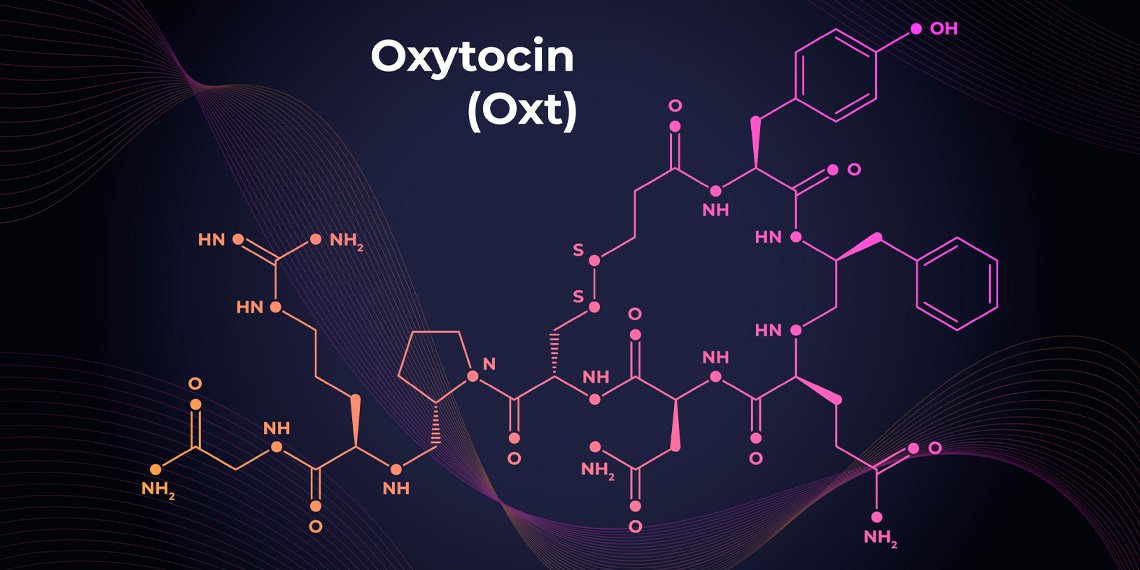
New research published in psychiatric research A nasal spray of the hormone oxytocin may help people with borderline personality disorder make compassion-based meditation more effective, a study suggests. This study provides evidence that oxytocin specifically improves the ability to create and hold pleasant mental images during these exercises. These early findings suggest the possibility of new ways to support people for whom practicing self-compassion is often difficult or uncomfortable.
Borderline personality disorder, commonly known as BPD, is a mental health condition characterized by extreme emotional instability. People with BPD often experience severe difficulties in relationships, deep conflicts with their self-image, and sudden, impulsive behavior. These characteristics make it very difficult for individuals to regulate their emotions on a daily basis.
The main features of this disorder include high levels of self-criticism and shame. This tends to create habits of self-invalidation in which individuals constantly ignore, downplay, or punish their own emotional experiences. This pattern of self-invalidation often stems from early childhood experiences in environments where an individual’s feelings were ignored or rejected.
“Some people have difficulty feeling valued and exhibit self-critical attitudes. This is a transdiagnostic variable, a source of vulnerability, and a contributing factor to the persistence of mental disorders,” said study author Joaquín Soler. Soler is a clinical psychologist in the Psychiatric Borderline Personality Disorder Unit of Santa Cruz y Sant Pau Hospital in Barcelona, Spain. He is also an Associate Professor at the Department of Psychiatry and Forensic Medicine at the Autonomous University of Barcelona.
“One disorder that frequently experiences high levels of shame, self-criticism, and self-invalidation is people with borderline personality disorder. Borderline personality disorder can make practicing self-compassion difficult and even aversive,” Soler explained. Because of this intense negative self-evaluation, compassion-based therapy can be very beneficial for this population. These therapeutic practices teach people how to direct kindness and understanding toward themselves rather than harsh judgment.
Over time, practicing self-compassion reduces emotional vulnerability and reduces overall symptom severity. However, people with borderline personality disorder often encounter severe psychological obstacles when attempting to practice self-compassion. They may feel deep discomfort, severe resistance, or even find the experience psychologically distressing.
Psychologists sometimes refer to this as “backdraft.” This is a phenomenon in which when we try to offer ourselves love and kindness, we inadvertently bring up past emotional pain and intense self-criticism. To address this particular challenge, scientists turned to oxytocin, a chemical messenger that is naturally produced in the brain. Oxytocin is well known for its role in social bonding, emotional regulation, and processing of social information.
Previous research suggests that oxytocin can influence how people process social and emotional information in clinical settings. “Intranasal oxytocin has been studied as a potential modulator of social and emotional processes, but its effects in borderline personality disorder remain mixed, and few studies have examined whether it can facilitate specific processes during psychotherapy,” Soler told PsyPost. “So we investigated whether administering oxytocin before guided compassion-based meditation would improve the subjective quality of the meditation.”
To explore this idea, scientists launched a small clinical trial known as a pilot double-blind randomized placebo-controlled study. They recruited 18 people who had been formally diagnosed with borderline personality disorder. This diagnosis was confirmed by mental health professionals using a specific clinical interview tool called the Revised Diagnostic Interview for Borderline.
Mr. Soler expressed his deep gratitude to those who volunteered to participate in the study. “I would like to thank the participants in this study for their willingness to engage in compassion practices that are particularly difficult for people with borderline personality disorder,” said Soler. “Their participation enabled us to explore this research question.”
The researchers randomly divided the participants into two equal groups of nine people each. One group received a nasal spray containing a standard dose of oxytocin measuring exactly 24 international units. The other group received a placebo, a nasal spray containing an inactive ingredient. The study was strictly double-blind, meaning that neither the participants nor the meditation instructor knew who was receiving the actual hormone or a placebo.
Participants attended five weekly sessions at a hospital clinic in Barcelona. During each session, subjects were administered their assigned nasal spray and waited 1 hour for the substance to take effect. After a waiting period, they participated in a 15-minute guided meditation focused on compassion.
The meditation program is part of a system called Contextual Compassion Training. This practice began by creating feelings of loving kindness toward loved ones and benefactors, and eventually moved to directing the same kindness toward oneself. As the five weeks progressed, the guided practice included more advanced mental exercises.
These include visualizing a safe space, imagining caring colors, and performing a caring body scan. Participants were also instructed to practice these meditation exercises at home between weekly appointments. To measure the effectiveness of the intervention, the authors used a tool called the Compassion Practice Quality Scale.
This self-report survey asks participants to rate their experience during meditation on a scale of 0 to 100. Higher scores indicate fewer difficulties experienced during mental training. But the scientists emphasized exactly what the study was assessing.
“The main caveat concerns what we measured,” Soler explained. “The Quality of Compassion Practice Scale assesses participants’ experiences while practicing compassion meditation. It does not measure symptoms of borderline personality disorder, general or trait self-compassion, or treatment efficacy.”
This scale specifically measures two different aspects of the meditation experience. The first is the mental imagery dimension, which captures how well a person can create, examine, and maintain vivid and compassionate mental imagery without being distracted by self-criticism. The second aspect is the physical dimension, which relates to the physical and physical sensations experienced during the practice, such as the feeling of warmth and comfort in the body.
Participants completed this survey at the beginning of the study and again at the end of the 5-week period. The scientists then compared the final scores between the two groups using a statistical model that adjusted for participants’ initial starting scores at baseline. At the beginning of the study, the two groups had similar scores on all measures.
The data showed that the group receiving oxytocin had significantly higher scores on aspects of mental imagery at the end of the study compared to the placebo group. “In this small pilot study, after accounting for baseline scores, participants who received intranasal oxytocin before compassion meditation reported fewer difficulties with compassionate mental imagery than participants who received a placebo,” Soler said. “This dimension reflects the ability to create, maintain, examine, and transform vivid, compassionate images during meditation while managing interference from self-critical thinking.”
“What struck me, rather than surprised me, was that the most obvious differences appeared particularly in the image dimension,” Soler said. “As we mentioned, this dimension reflects the ability to create and maintain a compassionate mental image despite interference from self-critical thinking. We had hoped that oxytocin might help participants overcome this barrier and maintain a connection with meditation, so it was reassuring to precisely observe preliminary effects in the process.”
The average image score for the oxytocin group reached nearly 77 points out of 100, while the average image score for the placebo group was approximately 67 points. The study’s physical scores and overall total scores were similar whether participants took oxytocin or a placebo. Soler noted that specific circumstances are needed if there is no change in the placebo group.
“The lack of improvement in the placebo group should not be interpreted as evidence that compassion meditation is ineffective, because both groups received the same meditation intervention and this study was designed to examine the additional effects of oxytocin,” he explained. To analyze the strength of the oxytocin findings, the authors examined statistical effect sizes. “The adjusted difference between groups for image dimensionality was 23.98 points on a 0-100 scale, with 95% confidence intervals ranging from 5.28 to 42.68, and partial eta squared 0.57,” Soler elaborated.
“Although this represents a large statistical effect within this sample, the pilot study included only 18 participants, limiting the precision and generalizability of the estimates,” Soler cautioned. “Also, we do not yet know whether improving compassionate imagery results in meaningful changes in symptoms, self-compassion, self-criticism, interpersonal relationships, or treatment response. Further research will be needed to confirm this.”
Because the group size was small, the scientists were unable to analyze how individual characteristics change a person’s response to hormones. Additionally, the majority of participants were women. This imbalance means the results may not accurately reflect how oxytocin and meditation affect men with borderline personality disorder. The researchers also did not formally assess whether participants suffered from other overlapping personality disorders, adding yet another unknown variable.
The authors also noted that the oxytocin spray was well tolerated by the participants. No one reported any adverse side effects from the drug during the five-week study, and all participants completed the final assessment. It is known that the psychological effects of oxytocin vary widely from person to person. A person’s past trauma history, particular attachment style, and susceptibility to social rejection can all alter their response to hormones in a clinical setting.
Future studies in larger groups of people are underway to see if these initial findings hold up over time and across different types of patients. “We recently completed a larger randomized, double-blind clinical trial that expands on this pilot study by including a broader range of outcome measures,” Soler revealed. “We are preparing to report results showing that oxytocin may have beneficial effects in borderline personality disorder across several relevant aspects, including quality of life.”
“We hope to continue researching oxytocin as an adjunct to psychotherapy to determine which therapeutic processes it facilitates, for whom these effects are most helpful, and whether they persist over time,” he concluded.
The study, “Facilitation of self-compassion meditation with intranasal oxytocin in borderline personality disorder: A pilot study,” was authored by Maria Arqueros, Joaquim Soler, David Almenta, Anna Soria-Madrid, Carlos Schmidt, and Juan C. Pascual.
