


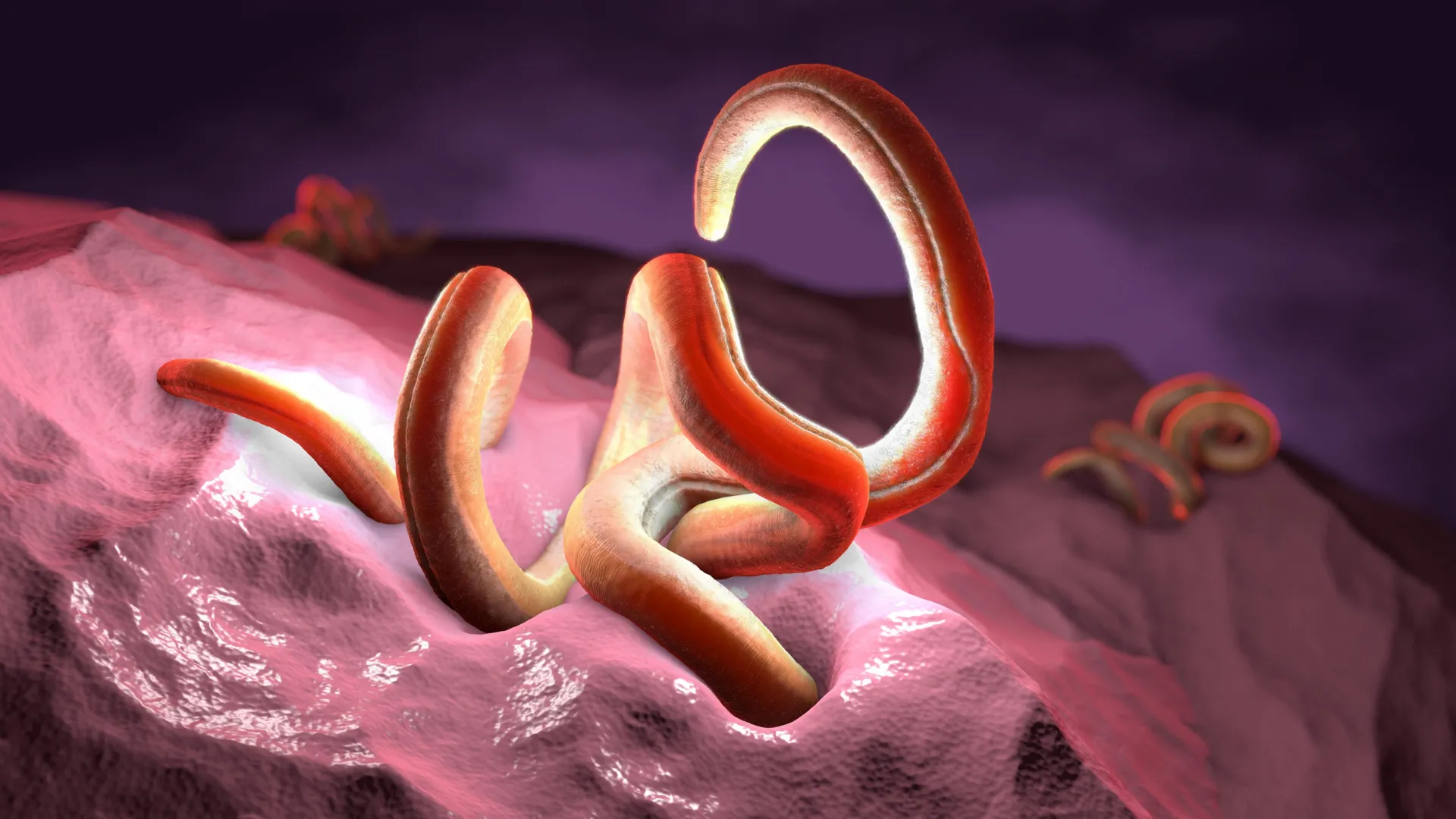
Intestinal parasites may help reduce inflammation, but new research suggests they can only do so if they have enough dietary fiber to thrive. Without enough fiber, these nematodes enter a hibernation-like state and lose their ability to provide anti-inflammatory effects.
The survey results are nature communicationsby parasitologists at the Center for Biology of the Czech Academy of Sciences.
Why scientists study intestinal parasites
For most of human history, intestinal parasites were a normal part of the digestive system. However, in developed countries, improvements in hygiene and modern medicine have made this less common. During the same period, autoimmune diseases and inflammatory bowel diseases became increasingly common.
This trend led researchers about 20 years ago to investigate whether certain intestinal parasites could be used to treat inflammatory conditions. This approach, known as helminth therapy, has shown promise, but results have been inconsistent.
“However, the results of helminth therapy are inconsistent. In some cases, the helminths suppress inflammation, and in others they do not. Therefore, we focused on factors that may influence the effectiveness of helminths in the intestine,” says Kateřina Zirk from the Institute of Parasitology at the CAS Biology Center.
The team’s study pointed to one key factor: the amount of dietary fiber in the host’s diet.
How fibers change nematode behavior
To better understand this relationship, researchers looked at how intestinal parasites responded to different levels of dietary fiber. they used rat tapeworms Hymenolepis smallis a non-pathogenic species commonly used to study interactions between parasites, gut microbes, and the immune system due to its known anti-inflammatory properties.
Their experiments revealed significant differences between fiber-rich and fiber-poor diets.
“We found that when the diet is high in structural fiber, the tapeworm not only does well, but is also able to induce an anti-inflammatory response in the host. Without fiber, the tapeworm enters an energy-saving state similar to hibernation in mammals, and the anti-inflammatory effect disappears,” explains Professor Zirk.
When animals consumed a low-fiber diet, the tapeworms became several times smaller, never sexually matured, and were unable to lay eggs. Genetic testing also showed widespread changes in gene expression that affect nematode development, metabolism, and reproduction.
Fiber reshapes the gut microbiome
Researchers also found that dietary fiber altered the host’s gut microbiome.
A diet rich in fiber promotes the growth of bacteria associated with a healthy gut environment. In contrast, a Western diet reduced microbial diversity and resulted in a higher abundance of bacteria associated with dysbiosis. These microbial changes reflected differences in host immune responses.
The researchers say the study highlights how diet has a strong influence on the entire gut ecosystem, from parasites and microbes to the immune system itself.
Health organizations generally recommend that adults consume about 25 to 30 grams of fiber each day, but the average intake in many Western countries is below that level. In comparison, traditional people are estimated to consume 80 to 120 grams of fiber each day.
Previous research has shown that too little fiber can weaken the gut microbiome, which plays an important role not only in digestive health, but also in immune function, brain health, and mental health. An unhealthy microbial balance is associated with increased risk of allergies, depression, anxiety, and neurodegenerative diseases, including Alzheimer’s disease.
