


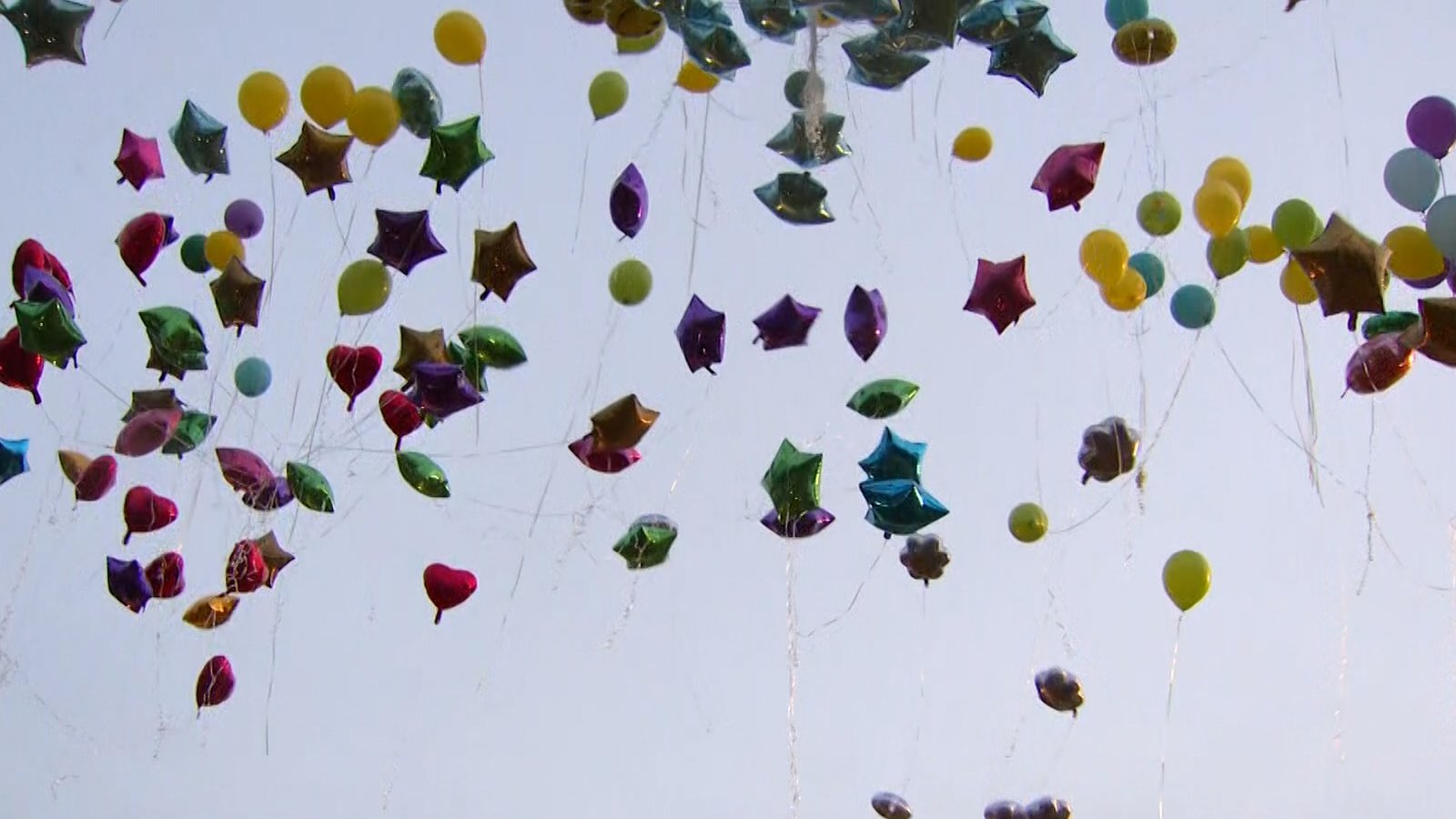
As balloons fill the sky for graduation ceremonies and summer celebrations, Duke University students want to change the tradition of leaving a lasting mark on the environment.
“When the balloon deflates, it floats back down to Earth,” said Ariane Lemaire, an environmental and marine science student at Duke University. “It ends up in our rivers and then into the ocean.”
Lemaire launched a statewide campaign to reduce balloon litter through education, citizen science, and support for policies that discourage intentional balloon releases.
“I don’t think the people releasing the balloons are intentionally trying to harm the environment,” she says. “In our culture, it’s kind of normalized. I’m trying to raise awareness of this issue and provide alternatives to people rather than criminalizing them.”
Her campaign comes as Senate Bill 20, which would ban certain mass balloon releases in North Carolina and impose a $250 civil penalty, remains stalled in the General Assembly after being referred to a committee.
For now, balloon releases remain legal in most parts of North Carolina.
Several coastal areas have adopted their own regulations, including Dare County, Currituck County, and the towns of Duck, Kitty Hawk, Kill Devil Hills, Nags Head, and Southern Shores, where balloon debris has been a recurring problem along their coasts.
more than trash
Environmentalists say balloons released can travel many miles and return to the ground, where they can become new sources of plastic pollution.
Latex balloons are often sold as biodegradable, but they can persist in the environment for several months. Foil or Mylar balloons do not biodegrade and break down into small plastic pieces over time.
Wildlife may mistake balloon fragments for food or become tangled in attached ribbons. Sea turtles often confuse floating balloons with jellyfish, while birds and other animals ingesting balloon fragments can cause fatal gastrointestinal problems.
Lemaire also pointed to another concern that many people don’t associate with balloons: power outages.
“Mylar balloons explode when they are hit by electrical wires,” she says. “It’s also a fire hazard for our neighborhood.”
Power companies across the country have recorded power outages caused by metal balloons coming into contact with overhead power lines, especially around holidays and graduation season.
Statewide database
To better understand the scope of the problem, Lemaire created the website Clear Skies and Seas. The website allows people to upload photos and locations of balloon trash they find across North Carolina.
“We recorded some balloons, especially on the coast,” she said. “It’s really sad to see balloons polluting that environment.”
She hopes the project will encourage more residents to participate in clean-up efforts and give researchers a clearer picture of where balloon waste ends up.
She said anyone can contribute to the database, regardless of their scientific background.
looking for replacement
Rather than telling people to stop celebrating, Lemaire wants communities to rethink how they record important moments.
She suggests alternatives such as blowing bubbles, planting flowers or trees, using reusable decorations, and creating paper-based decorations that won’t end up in the trash in the long run.
She said the nationwide effort to reduce balloons “is supported by Republican and Democratic members of Congress.” “It’s really what brings us together across backgrounds and communities to protect our wildlife and our homes.”
Nearly a dozen states have enacted regulations against intentional balloon releases, but North Carolina lawmakers have yet to move Senate Bill 20 out of committee.
As graduation season continues, Lemaire hopes more people will think twice before graduating.
“Once we know where the balloons actually go, there are many other ways to celebrate that don’t stay in our environment forever,” she said.
