


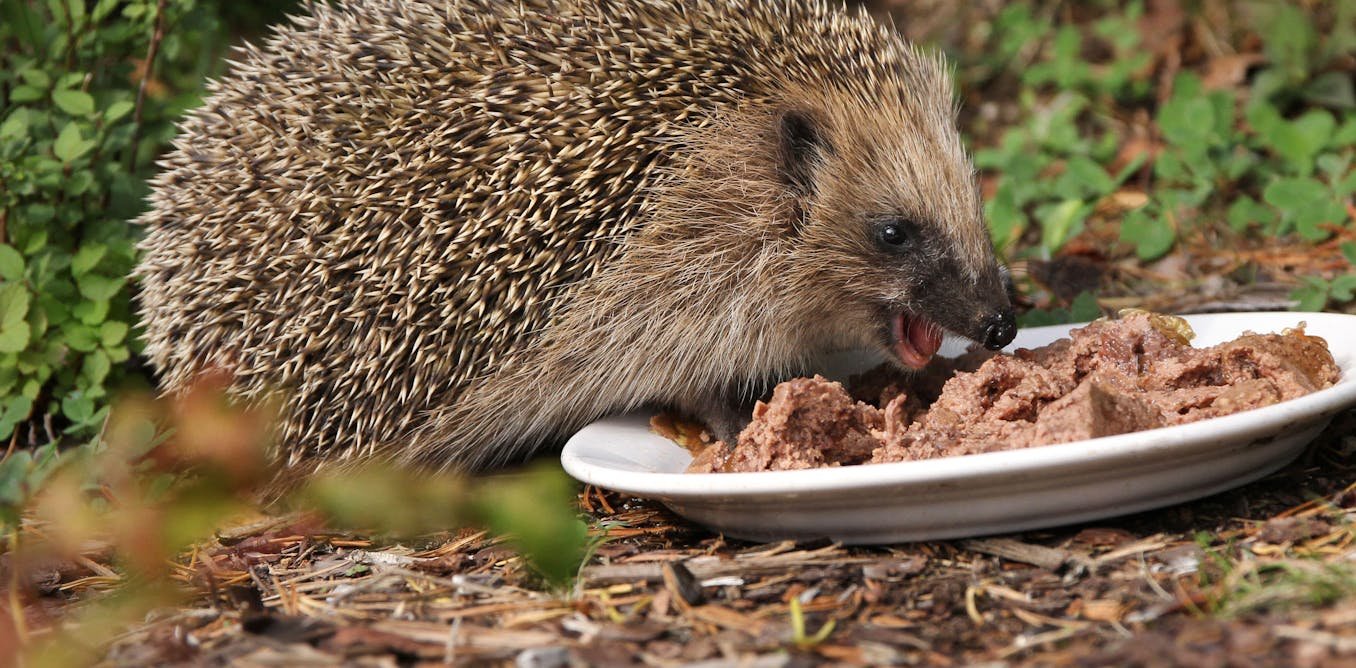
When my colleagues and I discovered microplastics in hedgehog poop, we wanted to know where it came from. One answer was surprisingly familiar. It’s pet food.
The story begins in 2021, when we collected 189 hedgehog faecal samples from residential gardens and rehabilitation centers across the UK. Plastic was found in 19% of them. Little did anyone know that hedgehogs were ingesting microplastics, despite being one of Britain’s most beloved wild animals and now officially listed as ‘Near Threatened’.
To understand where these microplastics come from, we decided to investigate their diet. Naturally, European hedgehogs eat invertebrates such as beetles, snails, slugs, earthworms, caterpillars, and woodlice, so we started by looking at these. My colleagues and I analyzed thousands of invertebrate and soil samples from 51 sites in Sussex, England. We found that plastic is widespread across different species and land types.
Next, we wanted to know if the pet food given to European hedgehogs in rehabilitation centers and residential gardens contains microplastics. In the UK, many rehabilitation centers treat large numbers of sick and injured mammals each year.
Research has shown that the number one reason European hedgehogs visit residential gardens is for food left behind by humans. Many hedgehogs have become dependent on it, especially in autumn and winter.
Often this means commercial cat, dog, or hedgehog food. To determine plastic contamination levels in pet food, my colleagues and I selected 38 brands and tested them across different price categories, food types (wet and dry), and target animals (cats, dogs, and wild hedgehogs). Six retail units of each product were purchased and 1 g samples were randomly taken from each can, sachet, tray, or bag. Our research was recently published in the journal Environment Toxicology and Chemistry.
Microplastics were detected in 29 of the 38 pet food products tested. 18 products had contamination at multiple retail locations. Although plastic was detected across the products tested, products in the “value” price category contained more positive samples.
Although dry food contained more plastic per gram, animals typically eat larger portions of wet food. As a result, wet food can lead to increased overall microplastic intake. For example, based on average levels found in wet dog food samples, large dogs such as Labradors can ingest approximately 313 microplastic particles per day.
Hey, humans, I’m hungry.
Andy Willis / UnsplashCC BY-SA
Compared to human food studies, pet food was found to contain higher levels of microplastics. This is likely due to the quality of the ingredients. For example, of the 21 products containing animal origin, 19 had at least one plastic-positive sample and 13 had at least two plastic-positive samples.
What does this mean for pets and wildlife?
All of this suggests that pet food may be an important source of microplastics for pets and wild hedgehogs (and other mammals).
Little is still known about the health effects of microplastics in pets and wildlife, and studies have not tested for health effects. However, there is a growing body of evidence from clinical studies that it causes problems with fertility, organ function, and overall health.
Given this uncertainty and how common these particles are in the pet foods tested, reducing contamination at the manufacturing stage would be a good precaution.
That’s why governments should require processed food manufacturers to test for microplastics and subject them to the same rigorous regulatory safety tests that apply to other chemical contaminants. As consumers, we need access to affordable food that does not harm the environment and is good for pets and wild mammals.
