


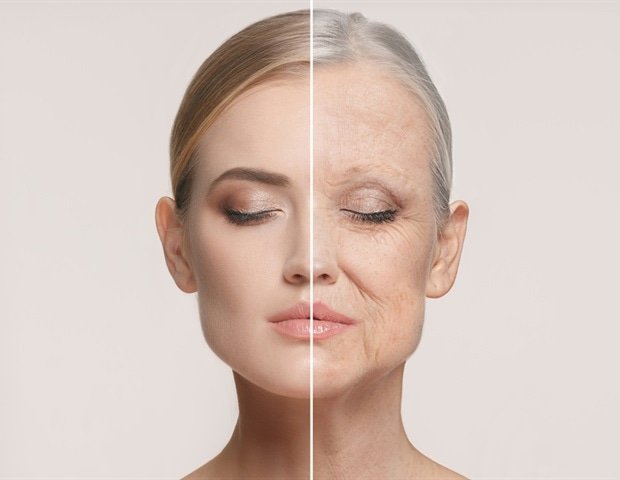
The experiences we face early in life can leave a mark on our health in ways that reverberate for decades and even throughout our bodies.
New research published today in the journal science (DOI:10.1126/science.aea4922) studied a unique group of free-living rhesus macaques who were tracked throughout their lives to record their experiences. Combining these medical histories with genomic data from 12 tissues collected during adulthood, this study provides some of the clearest molecular evidence to date that early life adversity leaves a system-wide lasting impression on the epigenome, the biological layer on the human genome that regulates gene activity.
The study, led by researchers and collaborators at Arizona State University and Vanderbilt University, examined distinct aging hallmarks of the epigenome called DNA methylation patterns. DNA methylation is one of the most well-studied markers of aging and can be used to construct “epigenetic clocks” that estimate both an organism’s chronological age (how long it has been alive) and its biological age (how old it appears physiologically).
Our goal was to understand how aging progresses throughout the body and how early experiences influence that process. What we found is that early life adversity leaves a coordinated epigenetic imprint that spans multiple tissues, but that it does not simply accelerate aging across the board. ”
Noah Snyder Mackler, co-senior author of the study and professor in the College of Life Sciences at Arizona State University
In this study, researchers developed a highly accurate tissue-specific clock that can predict an individual’s age to within about a year of their chronological age. They conducted a study of 237 macaques living in a semi-natural environment on Cayo Santiago (commonly known as “Monkey Island”), a 38-acre island off the east coast of Puerto Rico. The island is home to more than 1,500 free-ranging rhesus macaques, managed by the University of Puerto Rico and the Caribbean Primate Research Center. By integrating DNA methylation in multiple tissues collected during adulthood and detailed records of early life experiences, the researchers uncovered how adversity and aging interact to shape biology at the molecular level.
What they discovered was that despite this epigenetic precision, aging does not occur uniformly throughout the body. Instead, the researchers found that age-related changes in DNA methylation were highly tissue-dependent.
“At the molecular level, aging looks very different depending on which tissue you examine,” says Amanda Lee. Assistant Professor of Biological Sciences at Vanderbilt University and co-senior author of the study. “Blood, which is most commonly measured in human research, only captures part of the picture.” Some tissues, such as the thymus and pituitary gland, showed particularly strong and distinct age-related patterns, while other tissues showed more subtle changes.
However, even within this diversity, individuals showed some degree of internal consistency. Animals that look “biologically old” in one tissue tend to look older in other tissues as well, suggesting that aging operates as a partially coordinated process throughout the body.
The study’s most novel insights come from examining early life adversity, defined through naturally occurring circumstances such as maternal loss, low maternal social status, and growing up in crowded social groups. These experiences were not only associated with changes in DNA methylation, but also in a surprisingly harmonious manner across tissues. “We found that each type of adversity tends to affect specific regions of the genome,” Lee said. “But when you target those areas, the effects are often shared across multiple tissues.”
In total, the researchers identified thousands of genomic regions where DNA methylation is associated with early life adversity. These regions often overlap with regions affected by aging, but importantly, the direction of the effects is inconsistent.
“In some cases, adversity-related changes looked like accelerated aging, but in other cases they were in the opposite direction,” explained co-first author and Vanderbilt postdoctoral fellow Rachel Petersen. “This shows that early adversity does not simply ‘accelerate’ aging, but also reshapes the epigenome in a more complex way.”
This finding challenges the common assumption that early adversity uniformly accelerates biological aging. Rather, the results suggest a more nuanced model in which early experiences alter the trajectory of molecular aging, amplifying the effects of aging in some tissues, such as the pituitary gland, but not in others. These findings further suggest that the well-documented effects of early adversity on health operate, at least in part, through mechanisms not directly related to aging.
This study also highlights the importance of studying multiple tissues. Many previous studies relied on blood samples, which are relatively easy to collect. But new findings show that this approach may be missing important aspects of how aging and environmental exposures affect the body.
“Different tissues have unique epigenetic landscapes and respond differently to both age and adversity,” said co-first author and ASU postdoctoral fellow Baptiste Sadoughi. “To fully understand health and disease, we need to take a systemic perspective.”
The use of rhesus macaques, which share many biological and social similarities with humans, further increases the relevance of the study. Unlike laboratory animals, these macaques live in complex social environments, allowing researchers to capture naturally occurring changes in their life experiences.
“This kind of data set is incredibly rare,” Lee said. “This allows us to link detailed life history and molecular changes throughout the body in a way that is not possible in most human studies.”
Beyond its scientific contribution, this study has important implications for understanding the origins of health and disease development. Demonstrating how early childhood experiences shape the epigenome across tissues provides a potential mechanism linking childhood conditions and later life outcomes.
“Early life is a critical window for biological development,” Snyder-Muckler said. “Our findings suggest that experiences during this period leave a lasting mark on the genome, which can influence health trajectories throughout life.”
At the same time, the complexity of the results requires attention. Because all types of adversity do not have uniform effects, predicting long-term outcomes requires a more detailed understanding of context, timing, and individual differences.
“This is not a simple story,” Leah says. “But that’s what makes this research interesting. We’re beginning to understand how life experiences are written into our biology and why those traits differ within and between individuals.”
As researchers continue to explore the interplay between environment, epigenetics, and aging, studies like this are helping to redefine what it means to grow older. Not simply as a function of time, but as a dynamic process shaped by the unique experiences that can truly define our lives.
For a complete list of authors and institutions, see (DOI 10.1126/science.aea4922). This research was made possible by funding from the National Institutes of Health, including the National Institute on Aging (grants R01AG060931, R01AG084706, R00AG075241, and R21AG078554), the National Institute of Mental Health (R01MH118203), and the Office of Research Infrastructure Programs (P40OD012217). National Science Foundation (SMA-2105307, BCS-2041654, and SBE-2313953). Hevolution Foundation/American Federation for Research on Aging. and the Leakey Foundation.
sauce:
Reference magazines:
Sadui, B. others. (2026). Age and childhood adversity shape epigenomic heterogeneity between tissues in macaque monkeys. Science. DOI: 10.1126/science.aea4922. https://www.science.org/doi/10.1126/science.aea4922
