


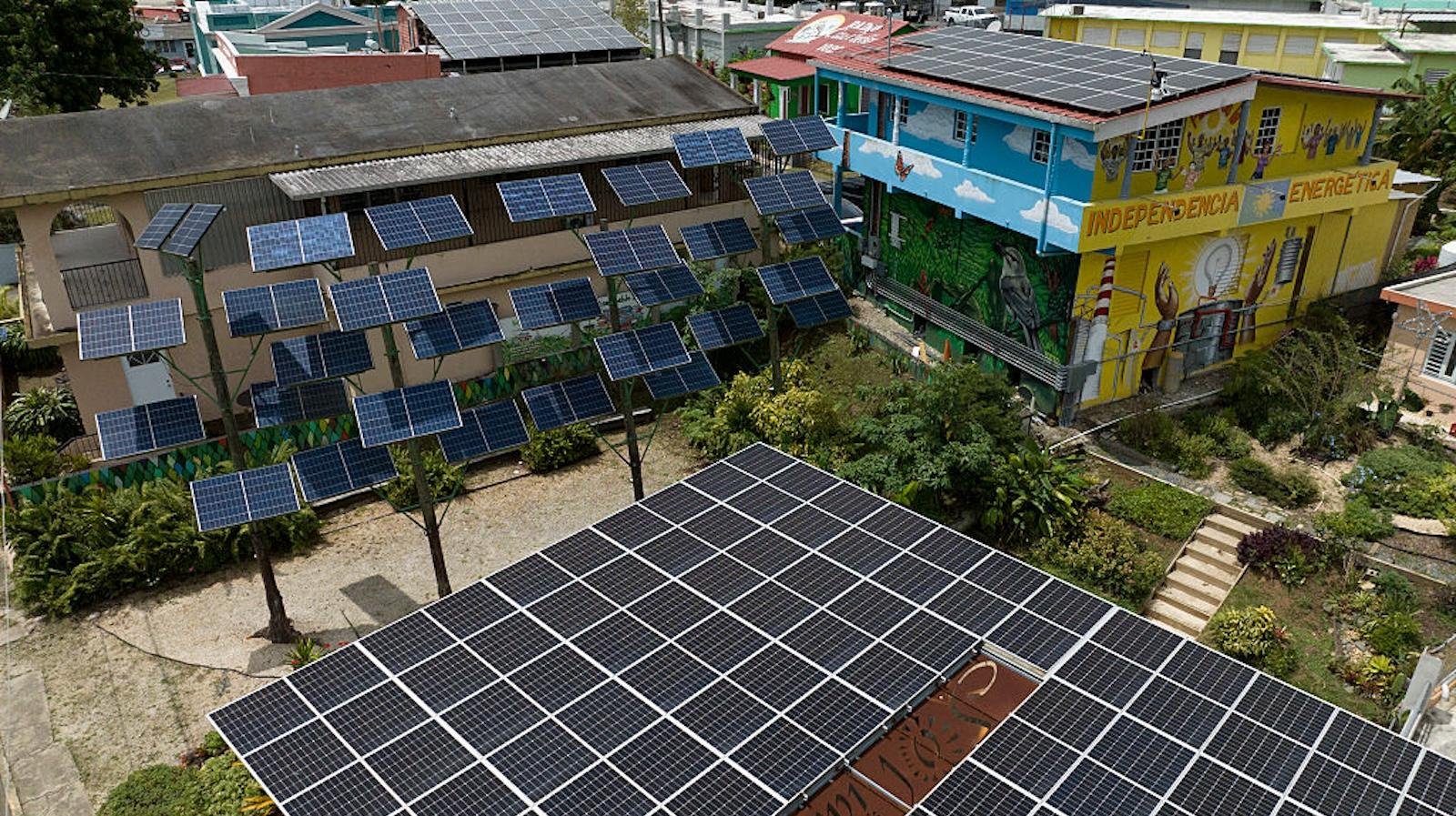
When Congress approved a $1 billion Energy Resilience Fund for Puerto Rico in 2022, the money was desperately needed. Multiple hurricanes have devastated the island’s notoriously fragile power grid, and lawmakers envisioned using the money to support rooftop solar and battery storage systems that could provide strong backup power in emergencies.
The Biden administration’s Department of Energy has developed a plan to distribute funds to about 40,000 low-income Puerto Ricans, many of whom live with health conditions that require access to reliable electricity. Biden officials envision a network of solar power and battery storage systems that would keep medically vulnerable Puerto Ricans safe during storms and reduce dependence on the island’s unstable power grid.
The Trump administration has a different idea.
The program all but disappeared after President Trump took office last year. The Trump administration’s DOE then directed most of the funds to Puerto Rico Electric Power Authority (PREPA), the bankrupt power company that operates the island’s power grid. The funds are now poised to strengthen PREPA’s fleet of power plants, which primarily run on fossil fuels, and $50 million will fund new natural gas pipelines. The administration defended the decision, arguing that PREPA’s infrastructure improvements will ultimately benefit the island’s broader population.
The process by which President Trump’s Department of Energy unilaterally redirected resilience funding against Congress’s wishes has so far been shrouded in secrecy. But public records obtained by Grist under the Freedom of Information Act shed new light on how President Trump’s political appointees orchestrated change. According to the documents, the DOE gave PREPA unusual preferential treatment by not soliciting competing bids for funding, expediting the review process and using President Trump’s executive order announcing an “energy emergency” as justification for the award.
Read next
Trump is trying to kill clean energy. There are other plans on the market as well.
Perhaps most eyebrow-raising was DOE’s abandonment of the common requirement that grant recipients must raise significant amounts of money themselves to contribute to project costs. Exceptions are sometimes made for poor recipients and economically disadvantaged communities, but for large organizations like PREPA, which has nearly $4 billion in annual revenue, officials typically require a 50 percent cost share.
In the case of PREPA, the DOE accepted just 1% cost-sharing, noting that the utility was under “significant financial stress” and that waiving cost-sharing requirements “is necessary to provide Puerto Rico with a more stable foundation on which to begin long-term energy planning and repairs.”
Some critics who have worked for the agency in the past are not satisfied with this explanation.
“For a Department of Energy award of this size and a recipient with this much cash flow, a 1% cost burden is potentially unprecedented,” said a former Energy Department official in the Biden administration, who spoke on condition of anonymity due to concerns about the impact on current jobs. Former officials pointed out that for such an exception to be legal, it would have to be made by Energy Secretary Chris Wright himself. “Congress established that cost-sharing waivers were available only at the discretion of the Executive Office. They were not intended to be used frequently, and they have not been.”
A spokesperson for DOE’s Office of Power said the agency “carefully evaluated procurement options and determined that a non-competitive, sole source award to PREPA was warranted,” adding that the use of PREPA is necessary to achieve the Energy Resilience Fund’s goals. A spokesperson acknowledged that “the reduction from the standard cost share of 50% is significant,” but noted that the decision was made based on powers set out in the Energy Policy Act.
“PREPA continues to face severe financial constraints while maintaining responsibility for critical power generation and transmission infrastructure,” the spokesperson said. “Requiring a 50% cost share would be unfeasible and would delay urgently needed grid stabilization and repair activities and undermine the core purpose of the Puerto Rico Energy Resilience Fund.”
The agency appears to have been well aware that its decision to award funds to PREPA without considering competing applicants and without seeking Congressional approval to reallocate the funds from their original use could attract scrutiny. A section of the memo titled “Sensitivity,” drafted by the agency’s Grid Implementation Office director, highlighted the decision to waive the 30-day parliamentary notification period without seeking other bids, stressing that “cost-share reductions may generate negative feedback as the funds were originally intended to fund solar installations in multi-family housing (limited to common areas) and community-based health care facilities.” The memo also states that “sole source designation to PREPA may raise objections to impartiality and perceptions of unfair favoritism.” (“Sole source designation” is technical term for a non-competitive award to a single vendor.)
Puerto Rico’s power grid has long been weak. The average island resident experienced more than 70 hours of power outages in 2024. When Hurricane Maria made landfall in 2017, more than 3 million residents of the island were without power for several weeks. It took PREPA more than nine months to restore power to some areas of the island. In the aftermath of the deadly disaster, Congress allocated more than $17 billion to modernize the power grid. But nearly a decade later, PREPA has completed few projects with that infusion of capital and has been in bankruptcy proceedings since 2017. The resilience funds being redirected to PREPA are in addition to this initial allocation. The DOE memo acknowledges these issues, noting that “the financial position of all involved is less than favorable.”
“Given the federal spending record, it is truly surprising that DOE is planning to transfer these amounts to PREPA itself,” the former Biden administration official added.
Still, President Trump’s DOE concluded that PREPA was the best candidate to receive the funds. The memo argued that even if the agency had gone through a lengthy competitive process (which would have taken 18 months), it would have ultimately chosen PREPA because the operator has sole ownership of the island’s power grid. “Given the urgency of the situation, no other organization in Puerto Rico has the extensive capabilities, asset ownership, and legal authority to carry out energy emergency response, grid stabilization, and restoration projects on this scale,” the document said.
Read next
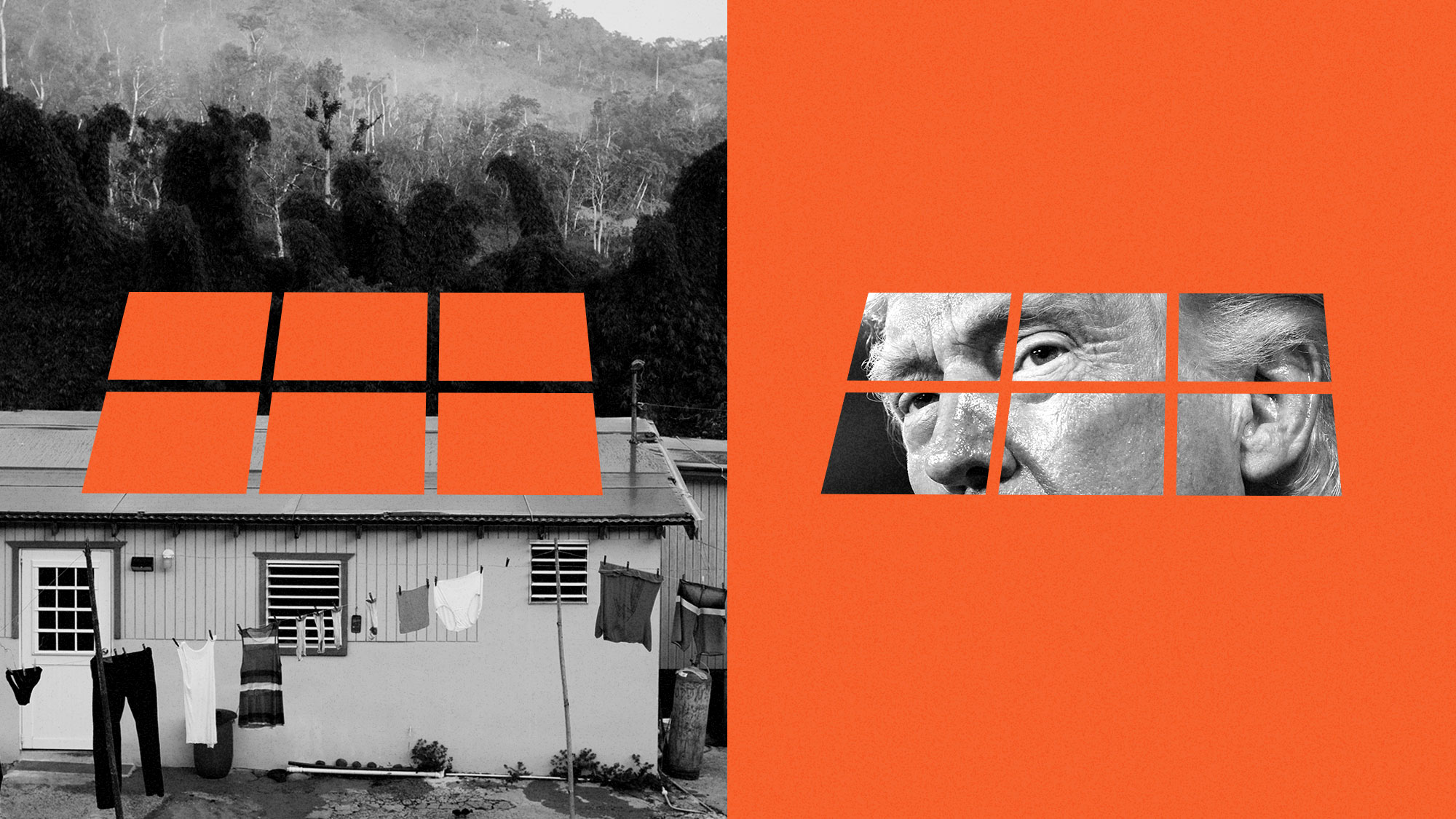
Solar power was poised to help Puerto Ricans survive power outages until President Trump cut off nearly $1 billion in funding
Last month, more than 40 Democratic members of Congress sent a letter to Secretary Wright demanding to know why the agency changed its redirection of resilience funding. Lawmakers called for a briefing detailing the agency’s rationale for transferring funds to PREPA.
“DOE’s lack of transparency, wasteful recycling of funds, disregard for Congressional intent, and potential cancellation of illegal contracts, combined with the resulting increase in energy poverty and loss of energy security, raise serious questions about the Department’s use of the Puerto Rico Energy Resilience Fund,” the letter states.
Lawmakers were particularly concerned about the money being used to build natural gas pipelines. The DOE does not directly detail funding for the pipeline on its website, instead calling the project “Security of Fuel Supply between San Juan and Palo Seco.” However, the DOE has clearly stated in internal documents that it intends to allocate $50 million to build the natural gas pipeline. According to a report in Puerto Rican publication El Nuevo Día, local authorities are already working on building a natural gas pipeline linking San Juan to the Palo Seco power plant, about 14 miles away.
“We’re trying to force the liquefied material out.” methane “The pipeline project for Puerto Ricans would help lock in the need for fuel imports – methane gas prices would remain exorbitant for decades to come, leaving ratepayers struggling to finance it and adding to already astronomical electricity bills,” the lawmakers’ letter said.
