


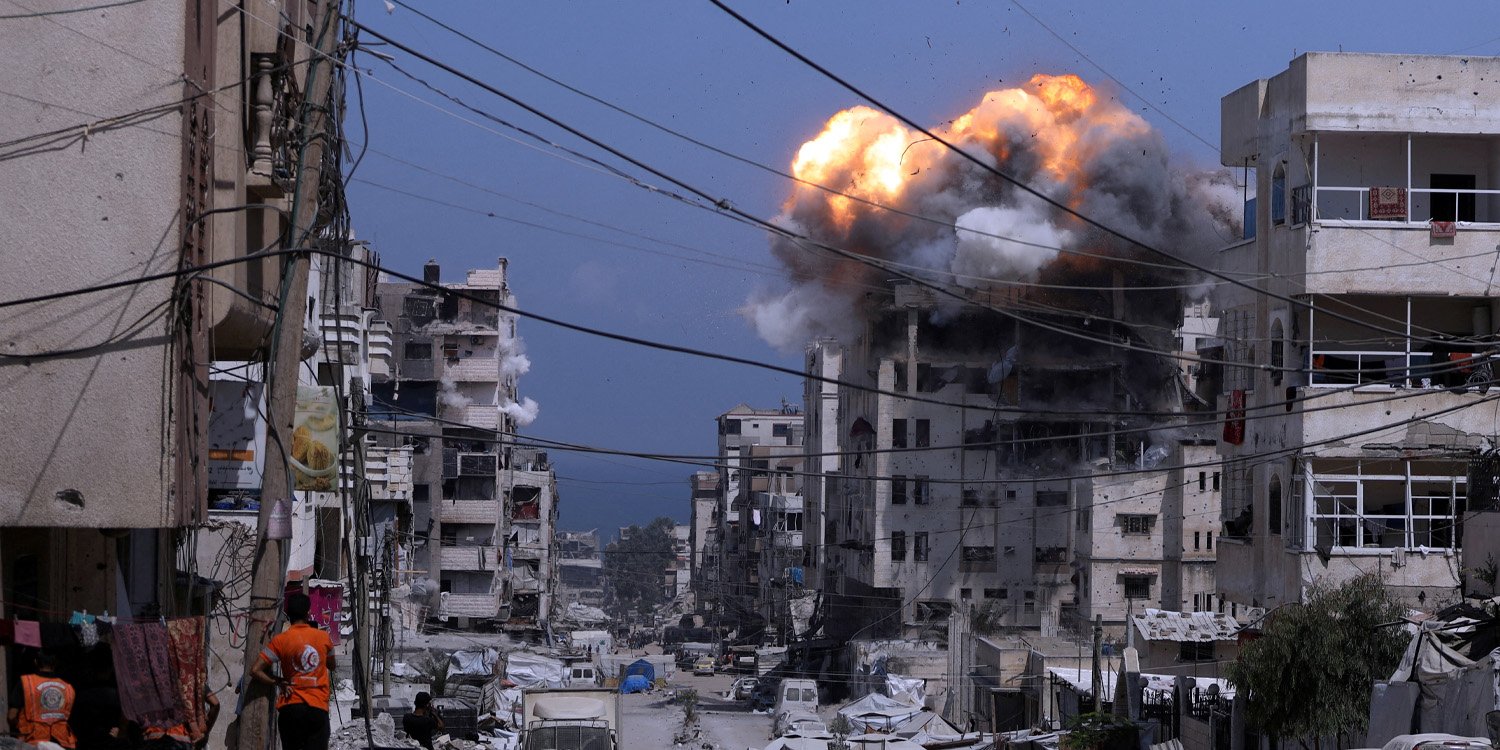
Children growing up in active conflict zones experience sustained stress that alters their biology, resulting in visible differences in their morning hormone levels. A study of Palestinian boys found that they are exposed to significant trauma in both the Gaza Strip and the West Bank, and that there are regional patterns in how their bodies produce stress hormones. The study was published in the journal Psychoneuroendocrinology.
Millions of children currently live in areas affected by armed conflict and political violence. Prolonged exposure to such environments creates a lasting psychological burden. This sustained pressure affects physical as well as mental development. For decades, researchers have studied how chronic adversity changes human physiology.
When humans encounter environmental threats, specific biological networks are activated in the brain and body. This network coordinates how the body deals with high pressure situations. A central feature of this biological network is the production of cortisol, a major stress hormone. A healthy person’s body typically experiences a measurable spike in cortisol shortly after waking up in the morning.
This early morning biological process acts as a preparatory mechanism. A surge of hormones helps a person muster the energy needed to cope with the expected demands of the next day. In an environment defined by chronic anxiety, the morning hormonal surge can become completely dysregulated. Some people have an exaggerated biological response to the next day, while others have an unusually muted response. The dull pattern suggests that the body has downregulated its internal alarm system after prolonged overstimulation.
Obtaining physiological data from children in active combat zones poses significant logistical challenges. Because of these barriers, baseline measurements of early morning stress hormones for these populations are almost non-existent. Olivier Alviset, a researcher at the University of Quebec in Montreal, led a team that documented these hidden physiological profiles. The team wanted to build an objective biological baseline for people facing sustained political violence.
The researchers focused on Palestinian boys living in the Gaza Strip and the West Bank. They aimed to record children’s daily stress hormone levels, along with their subjective feelings of stress. They focused exclusively on boys between the ages of 9 and 11. This narrow age range ensured that the intense hormonal changes of adolescence did not interfere with stress measurements.
The research team recruited 115 boys through community centers in both regions. The sample included 62 children from the Gaza Strip and 53 children from the West Bank. This data collection took place prior to the escalation of regional hostilities in late 2023. Field surveys were conducted in the West Bank in December 2022 and in the Gaza Strip in July 2023.
A local psychologist and a trained social worker conducted one-on-one oral interviews with participants. Adults asked children about recent exposure to life-threatening situations or violence. Children were also asked to rate the level of daily stress they felt. Parents were not present during the interviews to allow the boys to answer without external influence or social pressure.
The research team took special steps to ensure that the psychometric measurements were culturally appropriate. They used a professional translator to convert a standard stress and trauma questionnaire into Arabic. The researchers then collaborated with academic experts and field workers in the Palestinian territories to review the translated texts. They modified certain questions to ensure that the terminology accurately reflected the unique cultural contexts of children’s daily lives.
The psychological survey provided socio-demographic details highlighting the different living conditions of the two regions. Children in the Gaza Strip reported having larger families and living in households with more siblings than children in the West Bank. The survey also showed that father employment rates are low in the Gaza Strip. However, maternal employment rates and overall quality of the parent-child relationship were similar in both groups.
To measure physiological stress, the research team utilized a decentralized, home-based testing method. Children received detailed language instruction and color-coded medical supplies. Each participant was asked to spit into a small plastic tube immediately after waking up. After 30 minutes, they vomited into the second tube. Children repeated this biological sampling procedure on three consecutive days to establish reliable average values.
Political and logistical restrictions made it impossible to transport biological materials across borders. The research team had to rely on independent local laboratories in each region to analyze the saliva samples. Samples were transported on dry ice and frozen until laboratory technicians were able to measure hormone concentrations.
Initial survey data revealed that children in both regions were exposed to high levels of traumatic events. Participants reported experiencing higher levels of stress compared to a general reference dataset of children living in the United States. Descriptive statistical comparisons between the two groups of boys showed that subjective feelings of stress were relatively homogeneous in both regions of Palestine.
Physiological data showed different situations of biological adaptation. In the Gaza Strip, there was a noticeable rise in hormones in children early in the morning. Cortisol levels rose an average of 159% in the first 30 minutes after waking. This average increase is much higher than the typical 38 to 75 percent increase observed in community samples of children who have not been exposed to major trauma.
These high morning cortisol levels may reflect overactive biological preparation for anticipated daily threats. In contrast, children living in the West Bank had an average increase in morning hormones of about 35%. Although this regional average closely matches standard physiological expectations, individual results vary widely. Some boys in the West Bank showed significant increases in cortisol in the morning, while others were less responsive.
When researchers compared subjective psychological data with objective biological data, certain correlations emerged in the West Bank sample. West Bank boys who reported feeling a deeper emotional impact from their traumatic experiences also had higher early morning cortisol output. This correlation suggests that an individual’s psychological distress was directly translated into an anticipatory biological stress response upon waking.
No such specific correlation between perceived trauma severity and morning cortisol spikes was found in the Gaza Strip sample. The lack of statistical association may indicate that different types of chronic adversity shape biological stress systems differently. Boys in Gaza reported different kinds of everyday trauma than boys in the West Bank and experienced different family structures and unique economic realities.
The researchers noted several caveats regarding their methodology. Because this study examined only preadolescent boys, the patterns cannot be generalized to girls or older teens. Additionally, this study represents a single snapshot in time. Cross-sectional views do not allow researchers to prove cause and effect. This means that we cannot be certain that a specific traumatic event directly caused changes in hormone levels.
This methodology also faced unavoidable real-world constraints. Because the researchers had to process the saliva samples in two completely separate laboratories, they were unable to make direct statistical comparisons of hormone levels between the two regional groups. The apparent difference in absolute cortisol values between the Gaza Strip and the West Bank may partially reflect differences in the specific experimental setup rather than purely biological fate.
Future research on child stress in conflict areas should follow participants consecutively. Observing physiological changes during a child’s development can help us better understand how the body adapts to persistent environmental threats. Incorporating biological tests that measure hormone accumulation over time, such as hair sample analysis, may also improve scientific understanding.
Continued research would greatly benefit from the inclusion of female participants, who may exhibit unique patterns of stress adaptation. Increasing sample size and improving collection methods can help scientists establish more solid conclusions. Current findings continue to build an important baseline for understanding how chronic adversity biologically impacts developing children.
The study, “Trauma Exposure, Perceived Stress, and Morning Cortisol Levels in Palestinian Boys in the Gaza Strip and the West Bank,” was authored by Olivier Alvisé, Catherine Raymond, Mohamed Amin Mahou, Jonathan Bulteau, Amjad Joma, Sophie McMullin, and Yasser Abu Jamei.
