


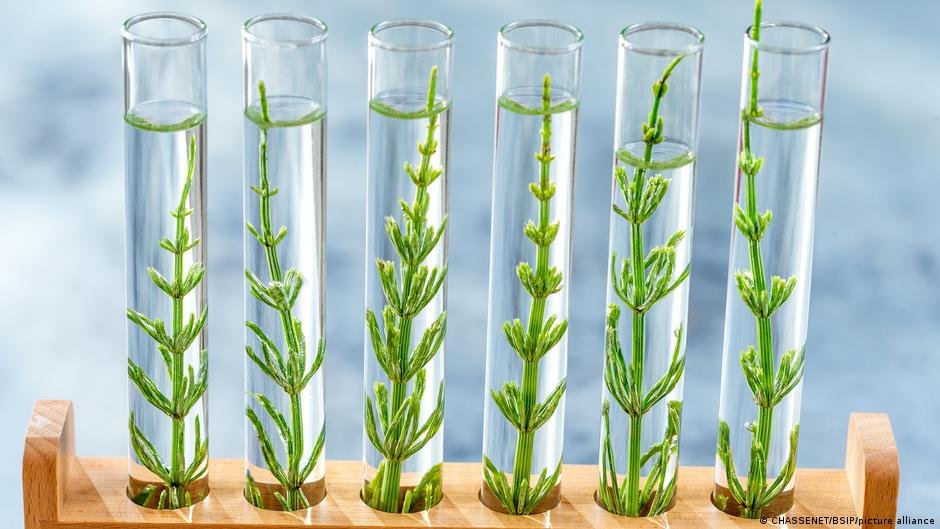
The European Parliament is expected to approve new rules to make it easier for farmers to grow crops gene-edited using new genomic technologies (NGT). Voting on the NGT is scheduled for June 17th.
If the EU gives the green light, it would be a major policy shift. The city of Brussels has maintained a cautious stance on genetically modified organisms since GMO regulations began in the 1990s.
From “Frankenfoods” to CRISPR crops
Thirty years ago, GMO agricultural products were often referred to as “Frankenstein foods” or “Frankenfoods.” Environmental activists and some media members have warned that GMOs can cause allergic reactions, cause antibiotic resistance and other long-term health effects.
Critics argued that genetically modified seeds could increase corporate control over farmers and that modified genes could leak into non-GM crops and the broader environment. And the European Union has regulated the technology more strictly than many other parts of the world.
The Frankenstein nickname reflected concerns that in traditional GMOs, genes of one species are introduced into another species through a process known as transgenics.
Argentinians eat genetically modified bread
To view this video, please enable JavaScript and consider upgrading to a web browser that supports HTML5 video.
New genetic techniques (NGT) are different. In many NGT applications, no foreign genes are added. Instead, it uses CRISPR, a Nobel Prize-winning gene editing tool, to modify existing genes in plants. CRISPR allows you to cut out and replace defective genes, essentially rewriting an organism’s genome.
NGTs: Natural change through nudges?
Under the new EU law, there are two groups of NGTs.
According to the European Parliament’s summary, NGT-1 includes crops with “a limited number and variety of changes that may have resulted from conventional breeding”. These will be treated in much the same way as conventional crops.
However, the new rules do not apply to NGT-2 plants. NGT-2 plants are defined as plants with 20 or more genetic modifications or plants that contain specific excluded traits such as herbicide tolerance.
“If a CRISPR-edited plant contains no foreign DNA and only retains changes that could also be produced by natural mutational processes, from a scientific point of view there is no compelling reason to treat it like a classical transgenic plant,” said Detlef Weigel, head of the molecular biology department at the Max Planck Institute for Biology in Germany.
“The EU is therefore moving in the right direction by distinguishing between NGT-1 and NGT-2 plants,” Weigel told DW.
“But it is important that the categories remain scientifically meaningful, transparent and verifiable,” he added. “We need regulations that are scientifically based, appropriate and practically enforceable.”
Proponents of the change argue that making NGT-1 available to farmers could help them weather climate change and enable the development of crops that are more resistant to drought, pests and disease. They say NGT-1 could also reduce the need for fertilizers and pesticides.
However, not all scientists agree that this technology should be treated differently than traditional GMOs.
GABA: More than just a tomato
Michael Antonio, professor of molecular genetics at King’s College London, said gene-edited plants are fundamentally different from conventionally bred crops because the CRISPR process itself can cause unintended changes to the new plants’ DNA.
“Scientific evidence shows that, taken as a whole, the CRISPR gene editing process causes large, random, unintentional damage sites in plant DNA, and that[these damage sites]can number in the hundreds or thousands,” Antonio told DW.
Antoniou uses GABA tomatoes as an example. These were the world’s first commercially available CRISPR gene-edited foods.
GABA tomatoes grown in Japan are rich in the neurotransmitter GABA and are marketed for their ability to lower blood pressure, improve sleep, and reduce temporary stress.
“Yes, it looks like a normal tomato, but are there any unintended changes in its biochemistry or composition?” he asked. “We don’t know.”
Can designer tomatoes solve global vitamin D deficiency?
To view this video, please enable JavaScript and consider upgrading to a web browser that supports HTML5 video.
Antoniou argues that the EU’s proposed rules do not adequately account for unintended genetic changes that can occur during the gene editing process. He believes developers should have an obligation to use molecular profiling techniques to determine how the broader genome has been modified.
Genetic modification of crops is ‘nothing new’
Weigel said CRISPR is an improvement on older methods used by plant breeders to create new crops, such as introducing chemicals or radiation to induce mutations. These techniques are often less predictable than CRISPR results, he said.
“CRISPR is more accurate in this respect than many older techniques,” Weigel said. “This does not automatically make the biology risk-free, just as not all naturally occurring plants are automatically edible. But it does make it difficult to understand why such plants are inherently more dangerous than conventionally bred plants.”
Are NGT crops edible? The World Health Organization says all genetically modified foods should be evaluated on a case-by-case basis. However, it added that currently available products are likely to pose a risk to human health.
“Don’t ban new technology” – Design better safeguards
Martin Keim, a professor of agricultural economics at the University of Bonn in Germany, argues that the EU is being too cautious in its approach to crop biotechnology, including old genetically modified techniques.
“Public acceptance issues have led to costly and lengthy regulatory procedures for genetically modified crops, not because they are truly dangerous, but because anti-GM activists have portrayed them as dangerous in public perception,” he told DW.
Why does genetic engineering have a bad image?
To view this video, please enable JavaScript and consider upgrading to a web browser that supports HTML5 video.
Qaim said that although practical experience with NGT is limited, the technology is likely to make new crop breeding faster, more accurate and more efficient.
“The best answer is usually not to ban specific technologies, but to identify smart policies that maintain competition and ensure everyone has fair access to relevant innovations,” he said.
Editor: Zulfiqar Abani
