


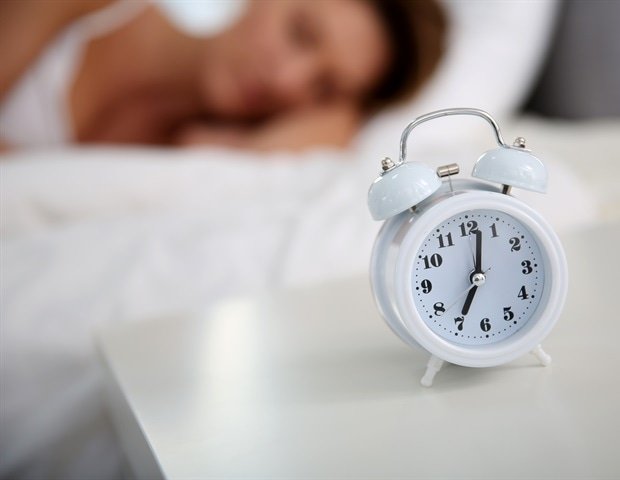
A research team from the University of Zurich (UZH) has discovered a biomarker for sleep deprivation in saliva. Acute sleep deprivation can be detected using just one saliva sample. This method could help improve road safety and safety in high-risk occupations in the future.
Good sleep is essential for our physical and mental health. Still, sleep problems are widespread. According to the latest Swiss Health Survey, around a third of the population reports that they suffer from sleep disorders. Women and young people between the ages of 15 and 39 are particularly affected.
Forensic research milestones
Sleep deprivation is widespread, but until now it has not been possible to directly and objectively measure sleep deprivation in body fluids. A research team from UZH’s Institute of Forensic Medicine and Institute of Pharmacology and Toxicology investigated whether sleep deprivation can be detected through metabolic changes in saliva.
Our study provides the first direct biomarker of sleep deprivation in saliva under realistic conditions and represents a milestone in forensic research. ”
Thomas Kremer, Professor of Forensic Pharmacology and Toxicology, UZH Institute of Forensic Medicine
For the study, researchers tested 20 healthy young men who typically slept seven to nine hours a night. Participants completed the three experimental conditions in random order. The control conditions were one night of no sleep, four consecutive nights of six hours of sleep, and a regular eight hours of sleep. The team then used high-resolution mass spectrometry to analyze the participants’ saliva and used machine learning techniques to identify molecular patterns associated with acute sleep deprivation.
10 biomarkers for sleep deprivation
“We found that acute sleep deprivation affects approximately 10% of all biomolecules in saliva. The challenge was to identify among tens of thousands of molecules that reliably signal fatigue. Using cutting-edge technology, we were able to identify 10 biomarkers that do just that,” said lead author Michael Scholz. As part of his doctoral research, he thoroughly investigated how fatigue in the body can be measured.
For rapid testing
The project is currently in its next phase. An extensive international field study will validate the patented biomarker set under realistic conditions. The researchers plan to investigate whether the method can reliably detect sleep deprivation in a variety of everyday situations, including shift work, alcohol, medication, and other factors.
In the long term, this research could lead to the development of rapid tests that can be used in the field to objectively detect fatigue. “Such tests have the potential to improve road safety and increase safety in work environments where alertness and concentration are important,” Scholz said.
sauce:
Reference magazines:
Scholz, M. others. (2026). Exploiting metabolic fingerprints of sleep deprivation and sleep restriction for forensic applications: A machine learning study in oral fluid metabolomics. Proteome Research Journal. DOI: 10.1021/acs.jproteome.5c01064. https://pubs.acs.org/doi/10.1021/acs.jproteome.5c01064
