


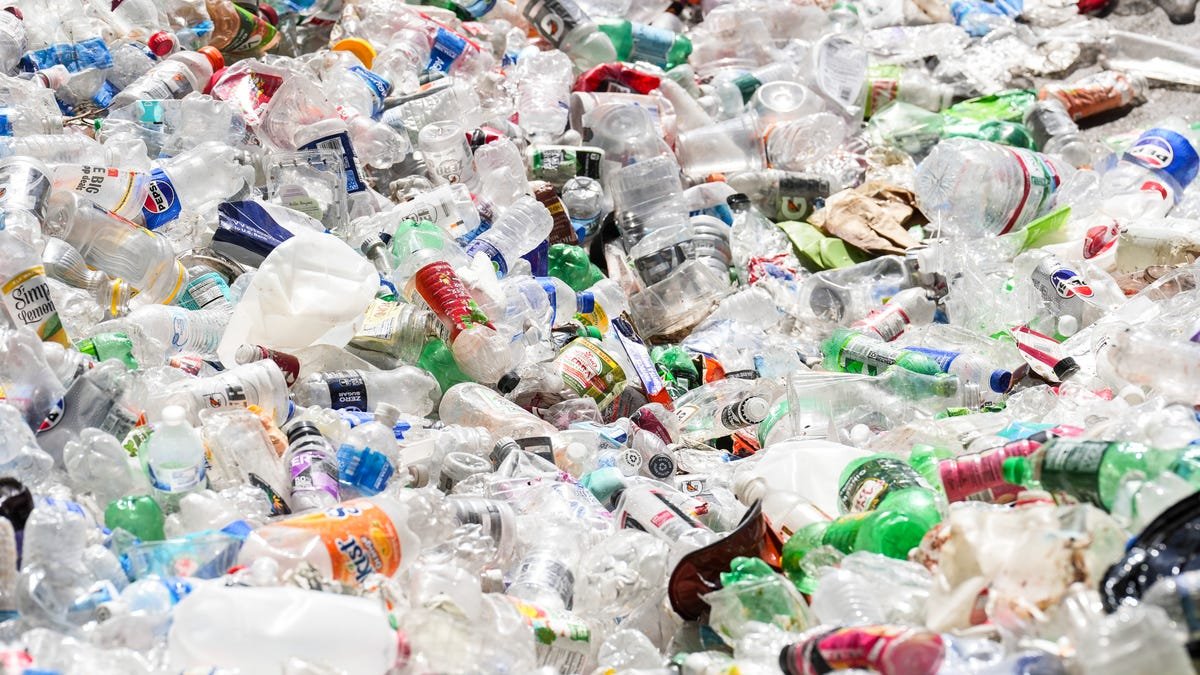


Louisville’s WestRock Recycling helps free up space in landfills
WestRock Recycling in Louisville helps free up space in landfills by sending paper, plastic, aluminum and more to facilities where it can be recycled.
Sam Upshaw Jr., Louisville Courier Journal
For more than two years, some of the plastic collected and sorted through Louisville’s recycling program was shipped to a controversial “chemical recycling” plant near Hebron, Ohio, which struggled to successfully recycle the plastic it received, emitting black smoke and toxic fumes in the process.
The plant, operated by Freepoint Ecosystems, about 40 miles east of Columbus, was designed to use a chemical process called pyrolysis to break down waste plastics into feedstock for new petrochemical products. Louisville’s recycling is separated and processed by contractors and is one of the sources of plastic input to the plant, the Courier-Journal previously reported.
But the Ohio factory failed to fulfill its promise to recycle plastic. Earlier this year, Freepoint told regulators that its factories fell below the required standards to convert at least 70% of processed plastics into new materials for nine consecutive months from the second half of 2025 to the first quarter of 2026.
As the chemical recycling process stalls, communities around the plant are reporting continued emissions of thick black smoke and worsening asthma symptoms, Cat Adams, an organizer with the Buckeye Environmental Network who has been monitoring the plant’s operations, told the Courier-Journal. The plant recently reported receiving multiple violation notices from the Ohio Department of Environmental Protection related to its operations and related pollution, which was first reported by The Reporting Project and Inside Climate News.
In late April, the Ohio EPA gave Freepoint 30 days to submit a plan showing how the Hebron facility would meet environmental standards. A month later, the factory’s employees were issued notices of termination, and the village of Hebron received notice that the factory would cease operations.
Louisville’s recycling program relies on contractor Smurfit Westlock to separate and process thousands of tons of plastic, cardboard, glass and other materials each year. The company sent Types 3-7 plastics sorted in Louisville to Freepoint’s Ohio plant from January 2023 to March 2025, Louisville Department of Public Works spokeswoman Kristen Shanahan confirmed to the Courier-Journal.
Plastics 3-7 include PVC, LDPE, etc., and are commonly used in plastic wrap, straws, food containers, etc. (On many containers and other plastic objects, look for the number inside the classic triangular “follow the arrow” symbol.)
The company’s contract with the city, obtained through Kentucky’s public records law, also reflected that between three and seven pieces of Louisville plastic were previously sent to a free point in Hebron.
It is unclear how much of Louisville’s plastic waste by weight was sent to Hebron during those two years, or whether the Ohio plant was the sole recipient of Louisville’s three to seven plastic wastes during that period. In 2024, Smurfit Westlock plant manager Bailey Rogers estimated that the Louisville facility was handling about 60 to 80 tons of three to seven types of plastic each month.
Shanahan said in a statement that Smurfit Westlock is currently sending three to seven plastics from Louisville to Storey Recycling in Fort Lauderdale, Florida. “There is language in our contract that requires materials to be recycled in an environmentally responsible manner,” she said, adding that if new issues arise, the city will “address them immediately with Smurfit Westlock.”
Robbie Johnson, a spokesperson for Smurfit Westlock’s North American operations, declined to comment on the Courier Journal’s list of questions about where the company would send No. 3-7 plastics in Louisville, saying only that the company “contracts with multiple sources to recycle No. 3-7 plastics” that are separated at its Louisville facility.
A Freepoint Ecosystems spokesperson would not comment on past violations at the Hebron plant or community concerns about contamination. The company said it was prioritizing “safety, environmental stewardship, regulatory compliance, and support for affected employees and contractors” in shutting down plant operations.
Louisville Recycling has successfully diverted hundreds of thousands of tons of materials from landfills, including large amounts of non-plastic materials such as glass, paper, cardboard, and metal, resulting in meaningful benefits for the environment.
But continuing problems at the Freepoint plant raise questions about whether the industry’s promise to recycle plastics, and well-intentioned plastic recycling efforts by Louisville residents and businesses, may have inadvertently contributed to air pollution in other areas. Approximately 4,000 people live within three miles of the Ohio plant.
Adams, an Ohio advocacy group, said black smoke emissions and other problems from the Freepoint plant “have been occurring almost ever since the facility began operations,” and that Louisville’s recycling program “almost always sends in plastic, which contributes to unpermitted air pollution incidents.”
Amanda Rowalt, Ohio field organizer for Mama’s Clean Air Force, said in an email that Freepoint has “taken advantage of the public’s genuine concern for the environment and concern for sustainability and has used waste collectors as sources of raw materials.” She said the industry’s promises of pyrolysis and advanced plastic recycling were “deceptive ploys to keep consumers happy with their plastic purchases.”
The world’s largest petrochemical companies are facing intense scrutiny over the feasibility of chemical recycling. The Natural Resources Defense Council called the process “a false solution to the plastic problem, failing to stem the flood of plastic waste and creating new harm.”
The American Chemistry Council, an industry group that advocates for plastics manufacturers, pushed back against criticism of pyrolysis, pointing to the billions of dollars the industry has invested in commercializing pyrolysis technology and using recycled plastics in packaging and other products. In 2022, Kentucky, like many other states, passed an advanced recycling law that regulates recycling as manufacturing rather than waste treatment.
Nevertheless, the types of plastics previously sent to Hebron from the Louisville sorting facility are still notoriously difficult to recycle into new materials. Ohio’s Freepoint’s problems are not the only example of pyrolysis falling short of industry promise, even as manufacturers continue to produce it at a breakneck pace.
Plastics take hundreds of years to break down in the environment, and their production (from extracting oil and gas to refining the materials) accounts for a significant portion of the global emissions that cause global warming. It is found as a contaminant almost everywhere on Earth, from rivers and rivers to human blood and placentas.
Experts are struggling to find effective ways to sustainably dispose of the world’s plastic waste through methods such as recycling. The answer, environmentalists say, is to use far fewer resources.
“The reality is that plastic is a problem for everyone,” Rowlt said. “…As an advocate for children and families, the solution is to move away from plastic. We need policies that support the transition to safer materials rather than remaining trapped in undesirable products.”
Connor Giffin is the Courier-Journal’s environmental reporter. Contact me directly at cgiffin@courier-journal.com or X @byconnorgiffin.
