


TThere are several ways to enter and exit the Jumla district of Nepal. Considered one of the most dangerous roads in the world, the Karnali Highway is the only land route through the Himalayas that connects the terraced valleys of Jumla with the rest of the country. As a result, its 120,000 people are almost completely self-sufficient, with most eating and selling what they grow.
They are vulnerable, suffering from food insecurity and malnutrition. In recent years, local beekeepers have lamented declining hives and declining honey production, observing that about half of the bees appear to have disappeared over the past decade. But these concerns ignore even more insidious effects.
“They thought bees were valuable for honey, but they didn’t really understand that bees were also essential for supporting crop production,” said Thomas Timberlake, an ecologist at the University of York.
In a study published last month in Nature,, Timberlake and his colleagues set out to quantify how important the region’s pollinators are to the health of people living in Jumla’s 10 remote villages.
Nepal’s isolated Jumla district is particularly vulnerable to pollinator loss because it already suffers from food shortages. Photo: Tom Timberlake
To do so, they tracked people’s diets, crop yields and agricultural income over a year, alongside interactions between pollinators and crops, including the painstaking process of counting pollen grains on the fuzzy bees’ bodies.
Pollinators were found to be directly responsible for more than 20% of the population’s intake of vitamin A, vitamin E, and folate, and 44% of agricultural income. This is the first study of its kind to provide direct evidence of a link between pollinators and human health.
“These kinds of communities are very vulnerable because they’re very isolated geographically. There’s no good trade links to them and they’re very poor,” Timberlake says. “If local fruit and vegetable yields go down, you can’t buy imported food to make up for it. They’ll just stop eating those fruits and vegetables.”
Ecologists have long emphasized the importance of pollinators to human health, but measuring their direct benefits to our well-being remains a developing area of research. It’s also an issue that is becoming increasingly urgent as the meadows grow quieter and the buzzing of bees fades to a whisper. For the past decade, scientists have been working to understand exactly how pollinators contribute to nutrition, and uncovering the hidden health costs of pollinator decline.
Timberlake warns that reducing crop, fruit and vegetable yields in places like Jumla will simply mean people won’t get the nutrients in those foods. Photo: Naomi Saville
Modeling study published in The Lancet in 2015 They found that if all the world’s pollinators collapsed, an additional 1.4 million people would die each year from malnutrition-related diseases. But Sam Myers, director of the Johns Hopkins Planetary Health Institute and co-author of the study, said he wanted to move beyond hypotheticals and assess real-world impacts. “We hope that pollinators don’t completely collapse. So what can we say about the fines we’re paying? today Is it because there is a lack of pollinators? ”
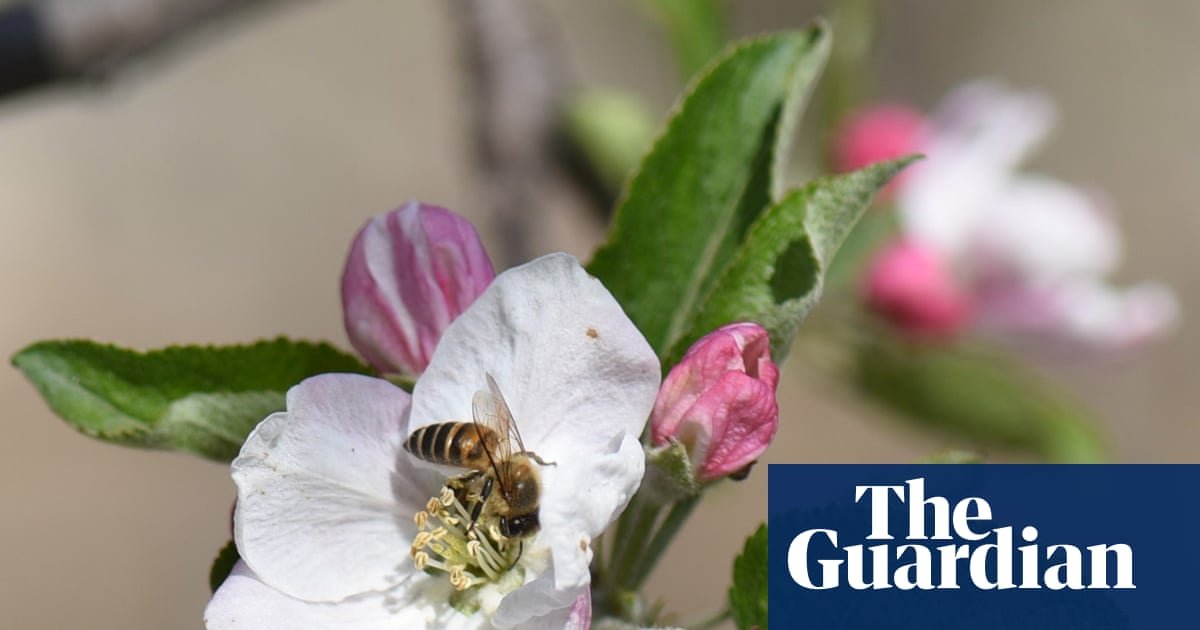
WWild birds, bats, and butterflies are all considered pollinators, but few species contribute as much to flowers and crops around the world as honey bees. Honey bees and wild bees are the most prolific pollinators, effortlessly moving pollen from the male anthers to the female stigmas of flowering plants. This process fertilizes the plants and allows them to reproduce, producing seeds and fruits. Approximately three-quarters of all agricultural crops depend on pollinator services.
Butterflies and bats are also pollinators, but to a lesser extent than bees. Photo: Daya Ram Bhusal
Experts say this is concerning because pollinators around the world are at risk. As forests, grasslands, and wildflower meadows are converted to industrial-scale agriculture and development, bees and butterflies are left without food or nesting habitat. Along with the climate crisis and the spread of invasive species, pesticides, particularly neonicotinoids, which interfere with honeybees’ nervous systems, are also taking a toll.
When IPBES, the intergovernmental platform for biodiversity science, last surveyed pollinator populations in 2016, it estimated that more than 40% of honey bee species may be at risk of extinction worldwide, but many lacked sufficient population data.
“The overall picture hasn’t changed,” said Simon Potts, a biologist at the University of Reading who co-chaired the review. “As far as we have data, the evidence shows that we are definitely seeing declines in most groups of wild pollinators. As always, the best evidence and data comes from North America and Europe.”
In 2025, the International Union for Conservation of Nature’s (IUCN) Red List of Threatened Species revealed that at least 172 species of bees are at risk of extinction in Europe.
Professor Potts cautions that although sharp declines have been recorded in wild pollinators, it is important to distinguish between these groups and managed honeybees when it comes to concerns about reduced pollination. Approximately half of the world’s crops are pollinated by bees (often honey bees), which are kept in artificial hives and treated like livestock to aid commercial agricultural production. These managed bee populations have remained fairly stable, despite the dramatic decline of wild species.
Double quotes Hopefully, decision makers will begin to explore best practices for ensuring healthy pollinator populations as part of ensuring healthy human populations. Sam Myers, Research Scientist
Still, the decline in wild pollinators is enough to cause negative health effects. A 2022 study published in the journal Environment Health Perspectives found that 3% to 5% of vegetable, fruit and nut production around the world is lost due to insufficient pollination.
The study, led by Myers, observed that managed honey bees were “unable to compensate for the loss of wild pollinators or to keep up with the growth of bee-dependent pollinator-dependent crops.” This makes the use of managed bees a risky solution to compensate for the loss of wild pollinators, the study says.
Timberlake’s research involved the painstaking process of counting individual bee pollen grains. Photo: Tom Timberlake
Myers and colleagues also used data from hundreds of farms around the world, yield information, diet-related health risks, and computer models that track global food trade to examine the link between reduced pollination and 500,000 additional deaths per year.
These deaths are not only confined to poor and isolated communities such as those seen in Jumla district. “Most of those deaths were in parts of Eastern Europe and former Soviet republics,” Myers said. Fruits, vegetables, nuts, and seeds can help prevent heart disease, stroke, and diabetes. “These metabolic diseases are more prevalent in areas where people have already transitioned to sedentary lifestyles and are eating a lot of red meat.
“If the world loses pollinators, those goods will become more expensive because harvests will be reduced. What that means for middle-class families is that they won’t be able to afford the most nutritious foods that help protect them.”
As temperatures rise and agriculture intensifies, developing countries will likely face additional health problems due to a decline in wild pollinators. Scientists recently used computer models to predict which regions face the greatest risk of poor crop pollination due to the climate emergency and a decline in pollinators due to agricultural expansion.
The results were published in the journal Science Advances., The researchers showed that tropical regions, particularly sub-Saharan Africa, northern South America, and Southeast Asia, are most vulnerable, with large losses expected for cocoa in Africa, mangoes in India, and watermelons in China. Such effects could endanger human well-being, the authors noted.
Farmers pollinate fruit trees by hand. Photo: Tom Timberlake
In many ways, Jumla symbolizes the changes taking place across the developing world. Beekeepers in western Nepal say the climate crisis and loss of flowers are the main reasons for the decline in bee numbers in their hives. Nepal is also entering a stage of rapid agricultural intensification. “With the expansion of crop monocultures and the introduction of new pesticides, (pollinator) habitat is being rapidly lost,” Timberlake said.
If bee numbers continue to decline and local harvests decline, “people will start consuming more pollinator-independent foods, such as grains and cereals, that don’t contain important nutrients,” he says.
BEE not only helps pollinate the plants we eat, but it also fertilizes plants we use medicinally. While most health and pollinator research focuses on nutrients from food, a 2022 study found that approximately 80% of the world’s population also relies on herbal medicine for primary health care. Ecologists estimate that about 28,000 medicinal plants are pollinated by insects, including echinacea, which boosts immunity, and chamomile, which helps with sleep disorders.
Lucas Garibaldi, director of Argentina’s Institute of Agroecology and Rural Development, says bees and butterflies also help pollinate green spaces, which benefits our mental health and improves the quality of the environment.
Garibaldi says drawing a clear link between human health and pollinator health remains a challenge. Four years ago, he set out to assess how many researchers had done so, but found only two peer-reviewed modeling studies on the topic. “Human health is determined by multiple causes,” he says. Even if yields decline, some people can easily buy food, while others cannot. And when assessing nutrition, “it’s very difficult to accurately isolate food from specific pollinators.”
Simple interventions such as planting wildflowers, providing nesting sites for bees, and reducing pesticide use can help restore pollinator populations and increase crop yields. Photo: Tom Timberlake
While most of us know that a healthy environment is tied to our own well-being, Garibaldi says measuring the health benefits of pollinators can help clearly communicate to the public the importance of protecting bees.
Meyers also believes that such research on happiness will play an important role in shaping public policy. Quantifying the health and economic benefits of conservation interventions can support government action. “Hopefully, decision makers will begin to explore best practices for ensuring healthy pollinator populations as part of ensuring healthy human populations.”
At least in Nepal, Timberlake says NGOs are working with the government to develop a national pollinator strategy. His research found that simple interventions such as planting wildflowers, providing nesting sites for honeybees, and cutting back on pesticides could increase farmers’ incomes by up to 30% and improve diets enough to save 9% of the population from nutritional deficiencies.
Click here for more coverage on age of extinction. You can also follow biodiversity reporters Phoebe Weston and Patrick Greenfield on the Guardian app for more nature coverage.
