


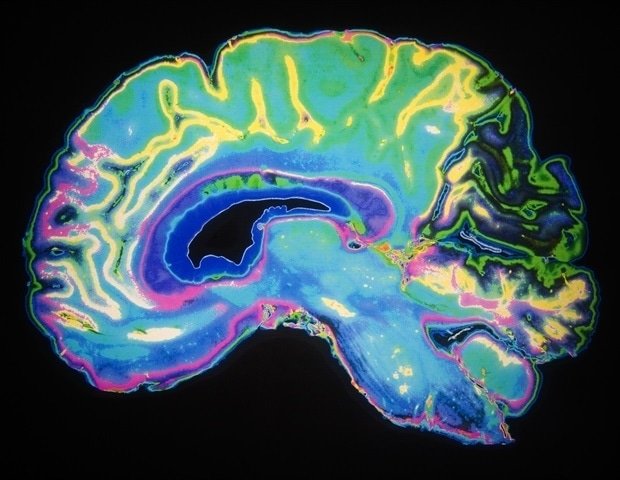
Brain stimulation techniques can correct abnormal activity in neural circuits involved in conditions such as Parkinson’s disease and depression. However, current transcranial stimulation methods delivered through the scalp only reach the surface of the brain, which limits their effectiveness.
Deep brain stimulation, on the other hand, can target deeper structures but requires surgical implantation of electrodes. A team from the Synapsy Center for Neuroscience and Mental Health Research at the University of Geneva (UNIGE), in collaboration with ETH Zurich, the Wyss Center Geneva and EPFL, has successfully refined a promising intermediate technique called ‘temporal interference stimulation’. This method could enable deeper, more targeted, non-invasive brain stimulation. This study can be found at: cell system.
The brain functions thanks to electrochemical signals that circulate through vast neural networks. In certain situations, these rhythms can be too weak, too strong, or poorly synchronized. Applying electrical stimulation to specific brain circuits can return activity to healthy, functional patterns.
“The principle is not to stimulate the whole brain, but to target specific networks whose activity is disrupted,” explains Valerio Zerbi, assistant professor in the Department of Psychiatry and Basic Neuroscience at the UNIGE School of Medicine and a member of the Synapsy Center. “However, some areas essential for movement, memory, and emotional regulation are buried deep in the brain and difficult to reach with noninvasive and precise methods.”
Promising but incomplete technology
Current non-invasive techniques, such as transcranial magnetic stimulation (TMS), transcranial direct current stimulation (tDCS), or transcranial alternating current stimulation (tACS), primarily affect the superficial layers of the brain. Conversely, deep brain stimulation (DBS) effectively targets deep structures but requires invasive surgery. Temporal interference stimulation (TIS) is an emerging alternative that can reach deep regions without surgery.
Its principle is based on the interference between two high-frequency electric fields applied from the scalp with a slight frequency offset. When these fields meet in the brain, their frequency differences produce slower signals to which neurons can respond. “Neurons are not very sensitive to very high frequencies, but they can detect the interference frequencies produced when two such signals interact,” explains Valerio Zerbi.
This interference theoretically makes it possible to target deep regions without strongly stimulating the tissues through which the signals pass, but until now the extent of peripheral effects throughout the brain had never been actually measured. ”
Valerio Zerbi, UNIGE Faculty of Medicine
Observe the effects on the whole brain
To assess off-target effects, the researchers stimulated a brain region known as the medial prefrontal cortex in mice. The researchers combined electrophysiology, calcium imaging, and functional MRI to capture the effects of TIS at target sites and throughout the brain.
“Previous studies have shown that this technique can stimulate deep areas, but without knowing exactly what is happening elsewhere, it cannot be safely applied to humans,” says Valerio Zerbi. “Thanks to functional MRI, we were able to visualize all activation regions and quantify off-target effects.” This result confirms that TIS indeed modulates neuronal activity in the target region, but also reveals undesired activation in other circuits.
Aiming for safer stimulation
To improve the accuracy of this technique, the researchers decided to add a third set of electrodes to generate a canceling electric field. This actively neutralizes the electric field in non-target areas without reducing the effect in targeted areas. “We introduced a field designed to suppress interference in undesired locations while preserving the effectiveness of desired stimuli,” the researchers explain. This breakthrough addresses one of the main obstacles to TIS and could be essential for targeting small, deep-rooted structures involved in psychiatric and neurological disorders such as depression, OCD, addiction, and even Parkinson’s disease.
Although these results do not yet allow TIS to become a direct alternative to deep brain stimulation, they significantly strengthen its clinical potential. Ultimately, this approach could complement existing treatments. The aim is not necessarily to replace existing treatments, but to have more precise and complementary non-invasive tools. “Understanding and managing the off-target effects of TIS to limit it was an essential step before considering broader clinical applications,” concludes Valerio Zerbi.
sauce:
Reference magazines:
Sabateyev, I., others. (2026) Multipair phase-modulated temporal interference electrical stimulation combined with fMRI. cell system. DOI: 10.1016/j.cels.2026.101610. https://www.sciencedirect.com/science/article/pii/S240547122600092X?via%3Dihub
