


Despite the Zimbabwean government’s theoretical commitment to reduce and regulate the use of mercury in mining, the toxic metal remains unrestricted in the country’s artisanal gold mining sector.
Zimbabwe is a party to the Minamata Convention.
The purpose of this Convention is to protect human health and the environment from anthropogenic emissions of mercury and mercury compounds. It sets out various measures to achieve that objective.
These measures include controlling the supply and trade of mercury and regulating mercury-added products and manufacturing processes. It also commits signatories to reducing and, where possible, eliminating the use of mercury in artisanal and small-scale gold mining.
However, Zimbabwe’s compliance with the Minamata Convention, while good on paper, appears to be way off base based on observations on the ground.
In Penhalonga, a mining region 20 kilometers from the border city of Mutare in eastern Zimbabwe, small blue tents are scattered carelessly on a hill opposite a shopping street.
Men and women of all ages go straight to the store. Their bodies, clothes and faces are covered with red clay. Often only the eyes and mouth can break through the mud.
These are small-scale artisanal miners. In the rows of shops, you’ll find vendors selling everything you need: food, clothing, shoes, beer, deodorant, and more.
Mercury is also easy to buy at these stores if you know who to ask.
It is being sold cautiously by traders looking to cash in on the downstream side of the ongoing gold boom.
The hill, decorated with blue tents, is home to the Red Wing Mine, which is open to miners for a fee and receives a commission from each miner’s share.
The murky and polluted Mutare River flows next to the hill, and numerous illegal placer miners are also searching for gold.
But there is more to the river than meets the eye, with sites where informal and illegal miners mine for gold.
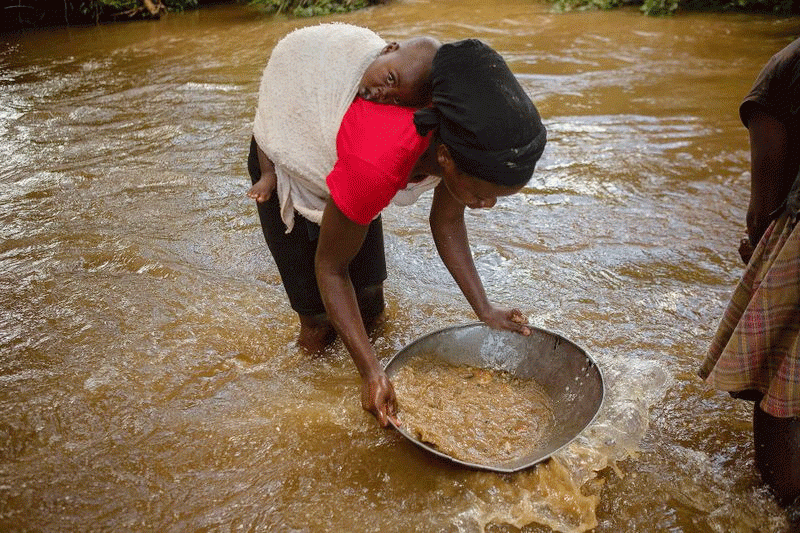
Knee-deep in the river, without any protective gear, men and women holding plastic dishes filled with mercury sift for gold. According to the latest census, the river is the only water source for Mutare, home to 225,000 residents.
“This is the easiest and cheapest way to get gold,” said one of the artisans who worked on the river. He requested anonymity because he uses mercury illegally.
“I don’t know about the health risks (of mercury) that you’re talking about,” he said.
Mercury is a highly toxic heavy metal that can damage the lungs, skin, and eyes, and cause severe neurological, cardiovascular, and kidney harm.
It is also particularly dangerous to the developing fetus. Exposure through inhaling mercury vapor or consuming contaminated fish can cause symptoms such as tremors, memory loss, and sensory disturbances.
Evelyn Makoni, another female artisanal miner from the Mutare riverbed, said she was aware of the dangers of mercury use to both humans and the environment. However, she added that using it is still her only means of survival.
“Right now, I’m worried about winning the gold medal. Everything else is secondary,” Makoni said. She is a divorced mother of two who came all the way from Bocha district in Manicaland province in search of a living as a miner.
“I have to support my two children and pay their school fees. Their father is not supporting them, so I have no choice but to use mercury and pan the riverbed,” she said.
The temptation to buy gold is triggered by the high price of gold being traded at home and abroad. One gram of gold currently trades for US$140 in Zimbabwe, according to figures released by Fidelity Gold Refinery, the country’s sole gold buyer, refiner and exporter.
On the banks of the river, a second group of miners who have legal mining contracts with Red Wing Mine also admit to using mercury as an integral part of their operations.
“Despite the damage to the lungs, eyes and skin, we have no choice but to rely on mercury, which is more efficient and faster to extract and detect gold (than other processes with less environmental impact, such as leaching),” said one artisanal miner who bought the rights to the Red Wing Mine.
The widespread use of mercury in alluvial and reef mining is not limited to the Penhalonga region. Our research revealed that sandstone mining and mercury use were also widespread 20 kilometers away along the Oji River, with artisanal miners meandering along the river in search of gold.
Mercury has been used for centuries by miners around the world as a cheap and easy way to extract and collect gold from ores and riverbeds.
In 2025, Zimbabwe recorded a record high of 46.7 tonnes of gold, an increase of 28% from the previous year’s production of 36.48 tonnes. According to the Reserve Bank of Zimbabwe, Zimbabwe’s gold export earnings in 2025 are expected to be approximately US$4.5 billion.
Experts say artisanal and small-scale miners account for a significant portion of Zimbabwe’s gold production, and their dependence complicates enforcement of environmental regulations, including those governing the widespread use of mercury.
One gram of unpolished gold in the palm of a miner’s hand in Shamba, Zimbabwe. (Photo: EPA/Aaron Yufmeli)
In July last year, the United Nations Environment Program (UNEP) concluded that 96% of Zimbabwe’s artisanal gold mining and processing plants were still using mercury. Miners, nearby communities, and ecosystems are chronically exposed to toxic pollution. UNEP further added that women and children engaged in or living near mining activities are severely affected.
The purpose of the Minamata Convention, which Zimbabwe ratified in 2017, is to protect human health and the environment from anthropogenic emissions and releases of mercury. To achieve this, the treaty sets out a range of measures, including regulating the supply and trade of mercury, phasing out mercury in existing mines, and regulating mercury-added products and manufacturing processes.
It also calls on countries to reduce and, where possible, eliminate the use of mercury in artisanal and small-scale gold mining.
However, implementation in Zimbabwe remains a challenge.
According to several miners interviewed for this article, a thriving black market remains untouched because dealers have campsites within a kilometer of stores where mercury is sold and are either “people with connections to powerful politicians” or “just pay hush money to the police.”
Mercury is openly traded in the shopping streets of Penhalonga. The police, whose police station is less than a kilometer away, are turning a blind eye.
The journalist posed as a gold dealer who wanted to buy mercury to use in gold sampling. He was introduced to a mercury dealer identified only as “Rasta.”
Rasta was found behind a store in Penhalonga. He said a teaspoon costs $10 and a tablespoon costs $20.
“Come when you’re ready. Mercury is abundant here,” Rasta said.
Smugglers are taking advantage of the porous border area to bring mercury into the country, according to Ministry of the Environment officials and Forbes Macipanda customs officials at the Mozambican border.
“Mercury is distributed through informal supply chains and import hubs, including South Africa, Dubai and China as the main sources (of supply). As part of the process of purchasing gold, gold kings and their intermediaries provide mercury directly to miners,” the border official said.
Asked for comment, the Environmental Management Agency (EMA) acknowledged that there were challenges in regulating mercury use, particularly in the artisanal and small-scale mining sector.
“While regulations[on the use of mercury]are in place and imports are regulated, the authorities are aware that mercury continues to be secretly and illegally imported for downstream applications in artisanal and small-scale gold mining (ASGM),” EMA spokesperson Amkhela Sidanji said.
“The Agency acknowledges that the sale of mercury on the black market, like any other illegal activity, is a complex challenge that requires a multi-stakeholder approach. However, Zimbabwe is moving to strengthen existing interventions by increasing the capacity of ports of entry with a focus on the detection of illicit shipments of mercury and its movement…Offenders found in illegal possession or use of mercury will be subject to penalties in accordance with environmental regulations.”
He added that through awareness campaigns, EMA is informing miners about the negative effects of mercury and other hazardous substances on human health and the environment. EMA is also promoting safer, mercury-free alternative technologies for gold extraction, she said.
According to a report by EMA, small-scale artisanal gold mining operations in Zimbabwe use more than 50 tonnes of mercury annually in gold processing. And such artisanal miners from Penhalonga, Oji and many other places across the country are added to the statistics.
*This report was produced by the South African Accountable Journalism Project (SA | AJP), an initiative of the Henry Nxumalo Foundation Henry Nxumalo Foundation, with funding from the European Union. Under no circumstances can it be considered to reflect the position of the EU.
Share this article on social
