


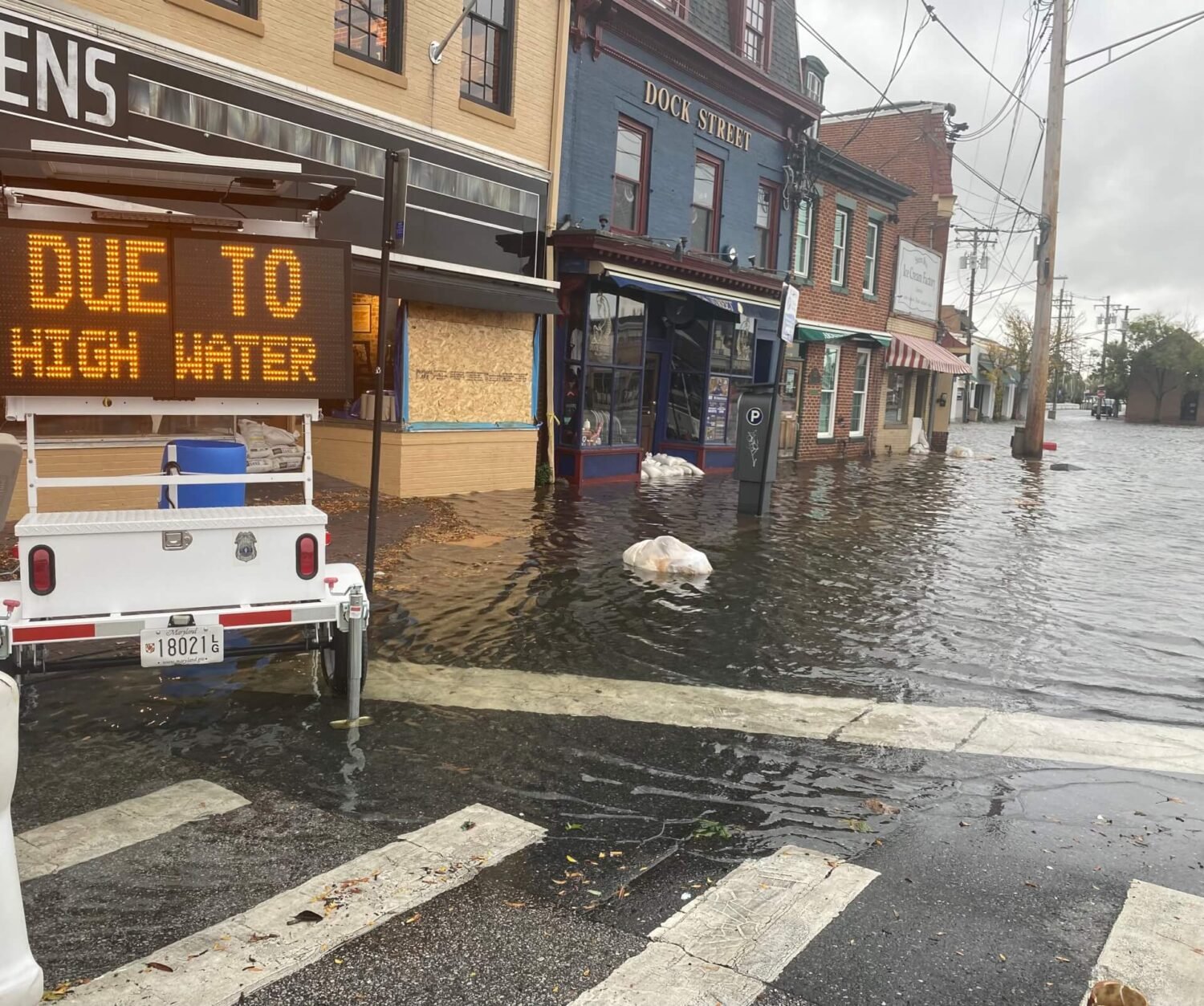
I’ve seen firsthand how climate change is changing Maryland. This is home, not some far away country.
Along the Chesapeake Bay, you’ll find that when the climate changes, everything changes. Where I live in Annapolis, flooding is a regular occurrence, even on sunny days. In Ellicott City, stronger storms tore up sidewalks and destroyed businesses along Main Street. In Baltimore, heavy rains strain aging infrastructure, flood basements and cause harmful sewage overflows. And on Smith Island and Tangier Island, where the land is naturally sinking, entire communities and cultures are increasingly at risk from rising sea levels and erosion due to climate change.
Marylanders should be concerned that the federal government recently repealed the Endangered Finding, a landmark finding that heat-trapping air pollution endangers public health and the environment. This would undermine efforts to prevent pollution that causes sea level rise, damages the Bay, and threatens Maryland’s economic pillars.
That’s why the Chesapeake Bay Foundation, represented by Earthjustice, joined the lawsuit to defend the endangered finding in court.
your opinion matters
Maryland Matters welcomes guest submissions. (email protected).
We suggest a limit of 750 words and reserve the right to edit or reject submissions. We no longer accept columns supporting candidates, and we no longer accept submissions from public officials or political candidates.
Opinions must be signed by at least one individual with their real name. Columns signed by organizations will not be accepted. Commentators must include a short bio and photo in the byline.
Writers’ views are their own.
Climate change is already hurting Maryland’s homes, businesses, tourism and agriculture. It comes at a high price, both literally and figuratively. Since 1984, Maryland has lost more than 25,000 acres of forest and about 3,500 acres of farmland to low tides. The cost of building seawalls to protect Maryland communities from flooding could exceed $27 billion by 2040, according to a recent study.
Our fisheries, from striped bass to oysters to blue crabs, will continue to suffer, as will the industries they support. Rising water temperatures and increasing polluted runoff create the perfect storm for harmful algae blooms and underwater dead zones where fish and crabs cannot survive.
Maryland recently launched a new study to understand how much climate change will cost the state. But it’s already clear that if the federal government rolls back on climate action, areas like Baltimore, Annapolis and Smith Island will be the first to pay the price. We can avoid threats not only to our state’s economy but to what makes Maryland unique and beautiful.
The path forward is clear. We must build a future bay where people and nature coexist. That means fixing broken sewage plants. That means supporting Maryland farmers’ efforts to prevent agricultural pollution. And that means holding the federal government accountable when it fails in its responsibility to protect public health and local economies.
The Chesapeake Bay has long been a test of how science, policy, and people can work together to solve complex challenges. Climate change is increasing risks.
There is still a chance for victory in the Chesapeake Bay and across the country. That means communities connected to Maryland’s wetlands and forests. That means the oyster restoration was a great success. That means local businesses thrive on the blessings of our beautiful waterways. That means a bay resilient enough to withstand what’s to come.
But we can only get there if we work together. When the federal government rolls back climate protections, places like Baltimore are abandoning their legal obligation to protect their citizens. Maryland’s leaders and advocates have no choice but to go to court.
Think about what is at stake. It’s about clean air, swimmable water, fresh local seafood, island-wide community, and family crab feasts that can be passed down for generations. These are not abstract ideas. They are what it means to be a Marylander. And they are worth fighting for.
