


(Part 1)
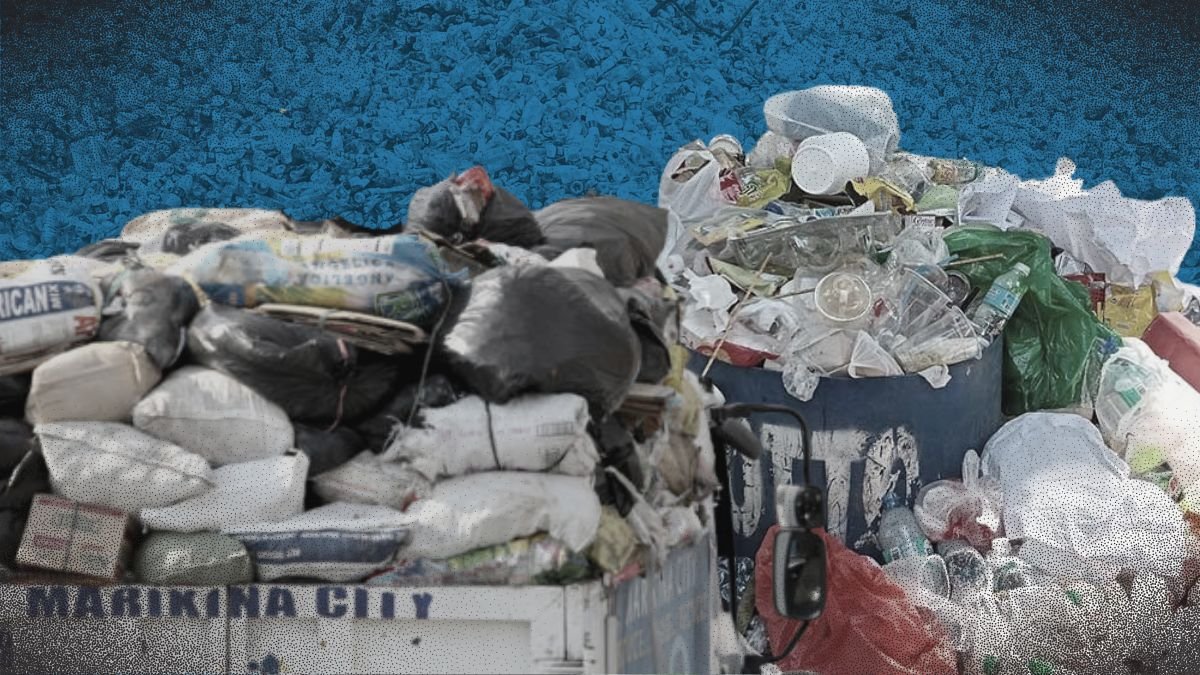
MANILA, PHILIPPINES—The Philippines’ plastic crisis is determined not only by the amount of plastic consumed, but also by how poorly the waste is managed after use.
The country will generate an estimated 1.51 million tonnes of plastic waste per year in 2025, according to Earth Action’s 2025 Plastic Overshoot Day report and data from the World Population Review.
More than half of that waste (approximately 55.56% or approximately 839,300 tonnes) is expected to be mismanaged by 2025, meaning it is left uncollected, openly dumped, incinerated or otherwise improperly disposed of. Much of it ends up in waterways, coastlines, and local communities.
Comparative estimates from Earth Action’s 2024 Plastic Overshoot Day report estimate approximately 842,000 tonnes of mismanaged plastic waste in 2024.
According to previous data from the Department of Environment and Natural Resources, up to 24% of the estimated 61,000 tons of solid waste generated daily in the Philippines is plastic, with the majority consisting of consumer goods packaging, cutlery, and shopping bags.
We reached out to the Department of Environment and Natural Resources’ Solid Waste Management Division for the latest plastic waste data, but have not yet received a response.
This gap between what is produced and what is managed defines the country’s plastic waste challenge.
Global comparisons show that the Philippines is in an outlier position in the plastics crisis. Although the Philippines is not the world’s largest per capita consumer of plastic, it ranks high in mismanagement of plastic waste. According to Earth Action’s 2025 Plastic Overshoot Day report and data from the World Population Review dataset, the Philippines ranks 31st in the world in total plastic waste generation, emitting an estimated 1.51 million tons annually.
While this is significantly lower than major waste emitters such as China, which generates around 56 million tons per year, and the United States and India, which each generate tens of millions of tons per year, the Philippines still generates more plastic waste overall than its less-populous Southeast Asian neighbors such as Singapore and Cambodia.
However, on a per capita basis, Filipinos produce only about 13 kilograms of plastic waste per year, far below the global average of 28 kilograms cited in the Earth Action report.
This figure is significantly lower than many high-income countries, such as Belgium, where the amount of plastic waste per person is over 140 kilograms per year, the United States, where it is over 120 kilograms, and Singapore, where the amount of plastic waste is around 76 kilograms per person, per year.
According to the report, the Philippines produces less plastic waste per capita than Malaysia or Thailand in Southeast Asia.
Despite having relatively low per capita consumption, the Philippines is expected to have approximately 55.56% of plastic waste mismanaged in 2025, making it one of the countries with the highest plastic leakage. Earth Action classifies the country as ‘high’ on the Waste Mismanagement Index.
This contrast highlights an important aspect of the plastic crisis. In other words, the environmental impact depends not only on how much plastic people consume, but also on whether waste management systems can effectively control what is thrown away.
Another estimate from Earth Action’s Plastic Overshoot Day 2025 report predicts that about 29,338 tons of microplastics could enter Philippine waterways in 2025, which equates to about 80 tons every day.
These numbers point to a broader problem: not just how much plastic is used, but how much is left uncontained.
A global system under pressure
The Philippines’ plastic waste crisis reflects broader global trends.
Plastic production has expanded rapidly over the past few decades, outpacing waste management systems in many regions of the world. Since the 1950s, the world has produced 8.3 billion tonnes of plastic, but only 9% has been recycled, with the majority accumulating in landfills and the environment, according to a study published in the journal 2017. scientific progress.
Recent data shows that this growth continues. Global plastic production will reach 430.9 million tonnes in 2024 and has steadily increased in recent years, with continued reliance on fossil-based plastics (mainly traditional synthetic polymers derived from non-renewable resources such as oil, natural gas and coal).
According to predictions, the problem is likely to grow further. The Organization for Economic Co-operation and Development estimates that plastic production, use and disposal could increase by 70% by 2040 if current patterns continue.
At the same time, leakage into natural ecosystems remains significant. A global assessment cited by the Pew Charitable Trusts warns that in a business-as-usual scenario, plastic entering the ocean could nearly triple by 2040.
Even where improvements are being made, progress has not kept pace with growth.
Earth Action’s Plastic Overshoot Day analysis states that “Despite more plastic waste being managed well, the amount of mismanaged plastic waste is not improving.”
Why the waste management gap matters
The plastic waste problem in the Philippines is often viewed from the perspective of the sheer volume. However, global comparisons suggest a more complex picture. The environmental impact depends not only on the amount of plastic consumed, but also on whether waste systems can effectively collect, process and contain waste materials.
As stated in the SWITCH-Asia report Philippine plastic policy:
“The annual per capita emissions of plastic waste are therefore well below the global average of 31.9 kg and the SWITCH-Asia countries average of 20.1 kg.”
However, reduced consumption does not necessarily lead to reduced environmental impact.
Earth Action’s 2025 estimates indicate that the Philippines could mismanage about 839,300 tons of plastic waste this year, representing 55.56% of the total plastic waste generation.
These numbers give the country a clear position in the world. So it’s not just the world’s biggest consumer of plastic, it’s a country where a significant portion of its waste escapes the formal system.
“Plastic pollution has reached enormous proportions around the world, due to continued plastic production and lack of sound waste management, especially in low- and middle-income countries such as the Philippines,” said the international non-governmental organization World Wide Fund for Nature.
“Sachet Economy”
If gaps in waste management explain how plastic ends up in the environment, sachets help explain why the amounts persist. Throughout the Philippines, plastic is used and consumed in its smallest and most widespread form.
Sachets are small, single-use bags used to hold everyday items and make up the majority of the country’s plastic waste stream. A report from the Global Alliance for Incinator Alternatives states:
“Accounting for an estimated 52 per cent of the residual plastic waste stream, sachets are accumulating in the environment, polluting natural landscapes, clogging waterways, harming wildlife and threatening livelihoods such as tourism and fishing.”
According to GAIA Philippines’ 2019 estimates based on waste assessments and brand audits, Filipinos consume approximately 164 million bags every day, which equates to nearly 60 billion bags annually.
At the personal level, the average Filipino uses 591 sachets, 174 shopping bags and 163 lab bags (small, thin translucent plastic bags used to pack small groceries and groceries) in a year, according to GAIA.
However, the challenge goes beyond volume. It’s in the nature of the sachet itself.
Of the approximately 164 million sachets thrown away every day, approximately 62% (which equates to approximately 101 million bags) are made from multi-layered materials that combine aluminum, adhesives, and plastics such as PVC and polystyrene, and are designed for durability but not recovery.
These multi-layer bags are typically used for liquids such as shampoo and powdered beverages such as milk, juice, and coffee. These account for approximately 62% of all sachets thrown away each day, or approximately 101 million bags.
The remaining 38%, or approximately 62 million bags, are single-walled plastic, commonly used to package snacks and detergent bars.
“Effectively, the total number of sachets discarded in a year is enough to fill the entire Metro Manila with one foot of sachets,” GAIA said.
Their widespread use is closely related to the country’s “Tingi” culture, the practice of purchasing goods in small, affordable quantities. For many households, sachets make basic products more accessible, but this accessibility comes with trade-offs.
“Sachets are widely perceived as affordable, convenient and essential, but that is only because their true costs are externalized, borne disproportionately by society and not by the companies that have profited enormously from the sachet economy,” GAIA said.
This dynamic is reinforced by the way products are marketed and sold. According to Greenpeace Philippines:
“Multinational companies and other large retailers are capitalizing on the appeal of single-serve retail in sachet form to sell tingi products at price points accessible to low-income households.”
But the burden of waste lies elsewhere.
“Companies profit from the sale of sachets and then take no responsibility for the plastic waste their products produce,” Greenpeace said.
what happens next
The question is not just how plastic is used or consumed, but how it is designed, produced and managed once it is disposed of. Across the country, waste systems are left abandoned to process materials that are difficult and often impossible to recover.
Data shows that a significant portion of plastic waste does not remain within the formal system. It escapes into waterways, coastlines and communities, which are shaped not only by consumer behavior but also by the structures and limitations of the waste management system itself.
In the second part of this series, INQUIRER investigates how plastic moves through the system – from production to trade to disposal – and why so much plastic slips through the cracks.
The Inquirer contacted DENR for updated data on plastic waste generation and management in the Philippines. There was no response from the agency at the time of publication.
(This story is SEA vs. plastic A project of the Southeast Asia Editors Network in partnership with AAJA-Asia and Temasek Foundation. )
