


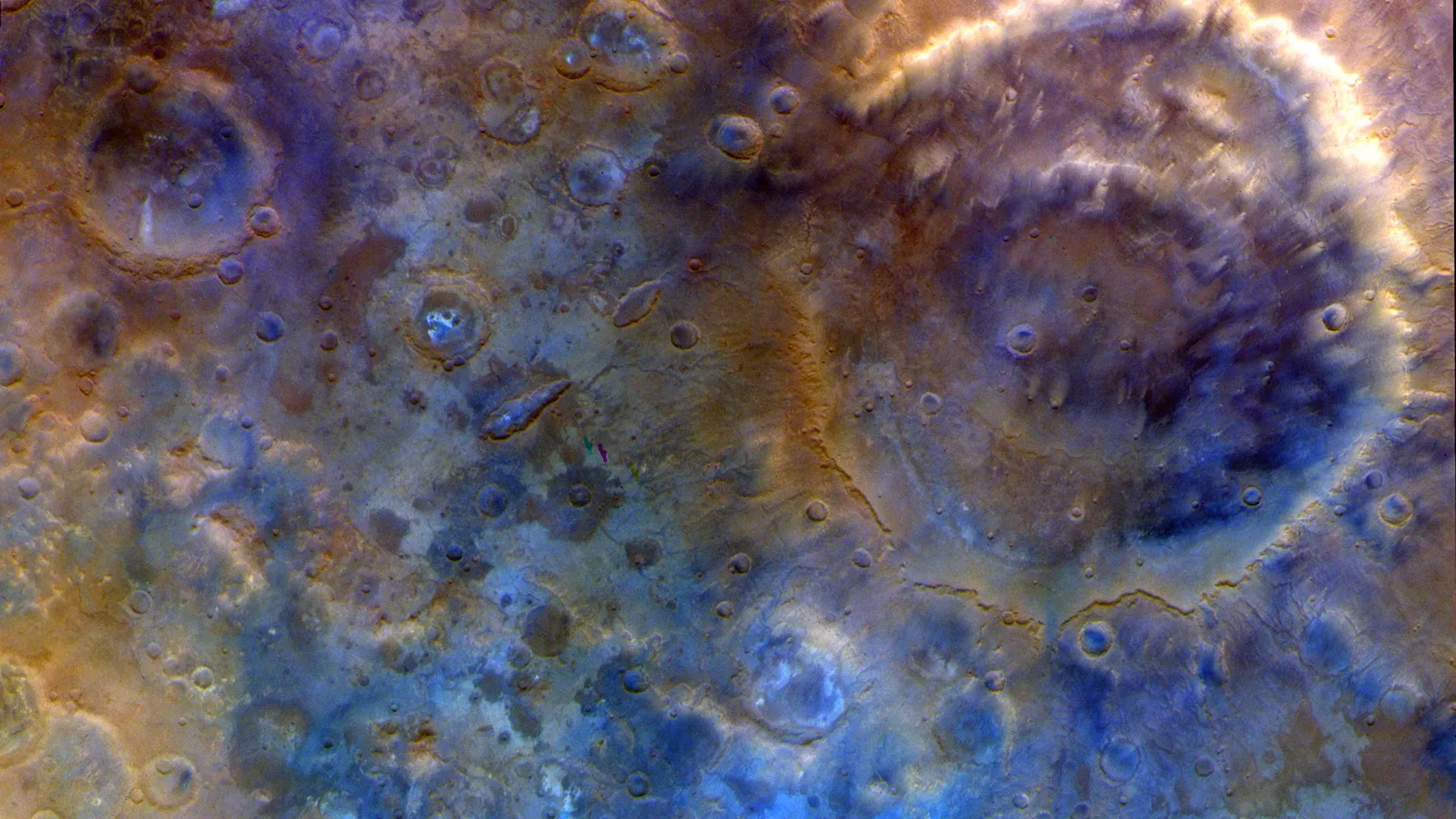
NASA’s Psyche spacecraft approached Mars on May 15, flying within 2,864 miles (4,609 kilometers) of the planet’s surface, continuing its long journey through deep space. During the encounter, the spacecraft took a series of images. It included an impressive sight of the double-ring Huygens crater, surrounded by Mars’ cratered southern highlands.
This image was taken using Psyche’s multispectral imager equipment and highlights the Red Planet’s rugged and ancient terrain.
Mars gravity assist powers spirit missions
The Mars flyby was more than just a photo opportunity. NASA used the planet’s gravity to increase the spacecraft’s speed and adjust its orbit without consuming any onboard fuel. This technique, known as gravity assist, helped put Psyche on the right trajectory for its final destination, the metal-rich asteroid Psyche.
By harnessing Mars’ gravity, mission planners were able to save valuable propellant for later stages of the mission while giving the spacecraft significant rear thrust.
Journey to the potential planetary core
NASA expects the Psyche spacecraft to arrive at the asteroid in August 2029. Once there, it will enter orbit and begin mapping the asteroid’s surface while collecting scientific data.
Researchers are particularly interested in Psyche because it may represent the exposed metallic core of an ancient planetesimal, the building block of planets that formed early in the solar system’s history. If this theory is correct, the asteroid could provide scientists with a rare opportunity to study materials normally hidden deep within rocky planets like Earth.
