


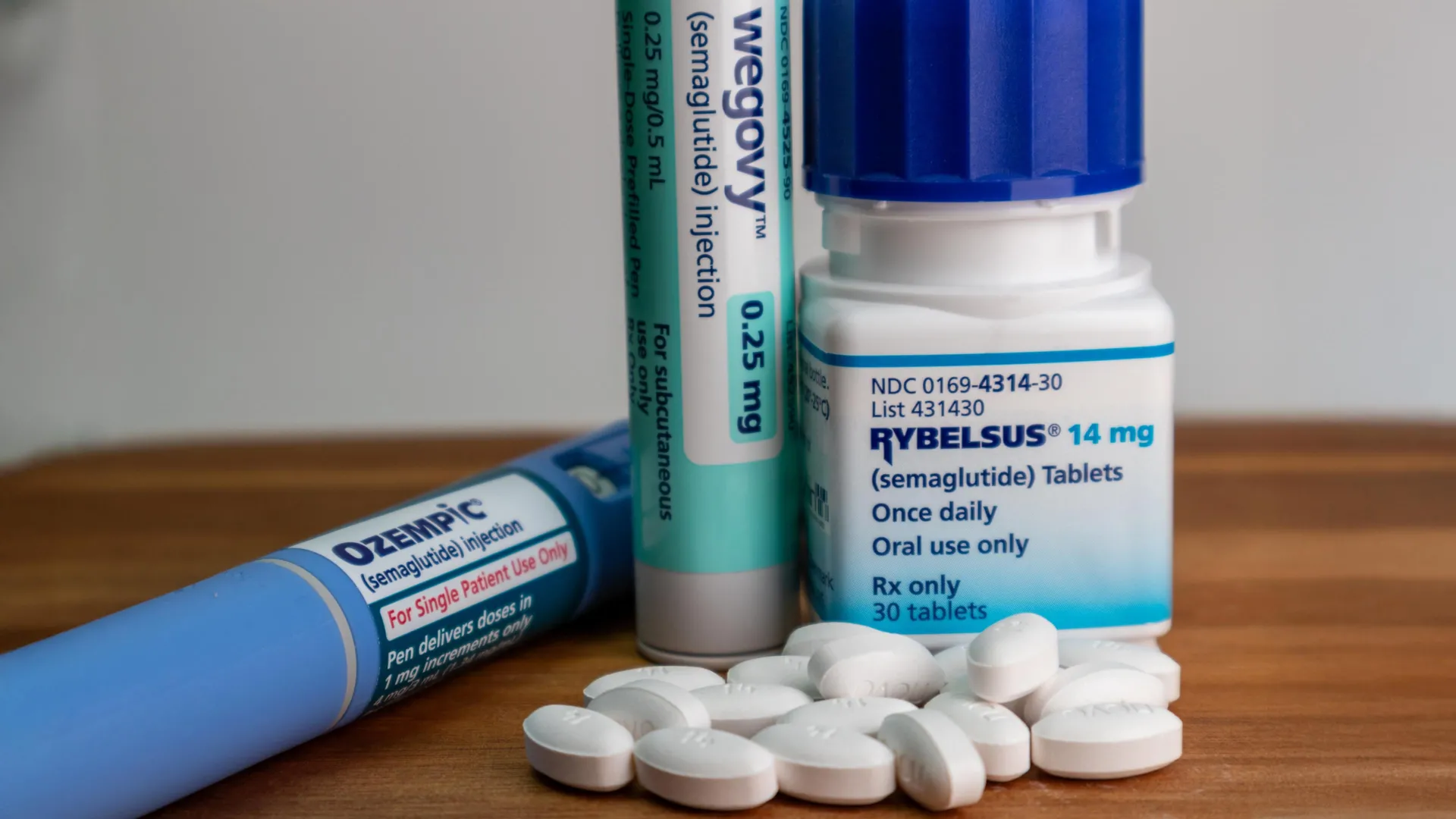
A new study suggests that the popular weight loss drug Wigovy may have a higher risk of a rare eye disease that can lead to sudden vision loss compared to other semaglutide drugs.
This condition is called ischemic optic neuropathy (ION) and occurs when blood flow to the optic nerve is reduced or blocked. This can result in sudden partial or complete blindness in one or both eyes.
Researchers reported that Wegovy showed the strongest association with IONs among the semaglutide-based GLP-1 drugs analyzed in the study. British Society of Ophthalmology Journal. The findings also suggest that risk signals are nearly five times stronger for Wegoby than for Ozempic.
Although the condition appears to be rare, researchers say the discovery raises important safety questions as the use of GLP-1 drugs continues to expand around the world.
Analysis of FDA safety reports
To investigate the potential association, researchers reviewed reports submitted to the U.S. Food and Drug Administration (FDA) Adverse Event Reporting System (FAERS) from December 2017 to December 2024.
The database contains reports of unintended adverse side effects related to medicines. In total, researchers examined more than 30.6 million adverse event reports.
Of those, 31,774 involved the drug semaglutide. The average age of those in the report was 56 years old, and 54% were women.
The analysis focused on several GLP-1 treatments, including Ozempic, an injectable drug for type 2 diabetes, Wigovy, an injectable drug to treat obesity, and Libersus, an oral semaglutide pill. Researchers also evaluated tirzepatide drugs such as Mounjaro and Zepbound.
Wegovy showed the strongest signal
Ozempic generated far more reports overall due to its early approval, while Wegovy showed the strongest association with ION.
Researchers identified 28 reports of ION associated with Wegovy and 47 reports associated with Ozempic. Despite the low number of reports, Wegovy’s statistical signal was very strong, with odds nearly 75 times higher than expected. The odds for Ozempic were almost 19, while the odds for the generic semaglutide product were 21.
No cases of ION have been reported with Rybelsus, the oral tablet version of semaglutide.
The study also found significant differences between men and women. Men using Wegovy had the highest overall signal, with odds 116 times higher than expected. Among women, Ozempic showed the strongest signal.
Further analysis suggested that the odds of ION were more than three times higher in men than in women.
Why researchers think Wegovy may be different
Researchers believe there are several factors that could explain the stronger signal seen in Wegovy.
Injectable medications tend to work faster than oral medications, and Wigovy is prescribed in higher doses than Ozempic. The authors suggested that high doses of Wegovy may increase the risk of decreased blood supply to the optic nerve through mechanisms such as decreased blood pressure, fluid loss, and autonomic nervous system instability.
However, he emphasized that a direct clinical causal relationship has not been proven.
“In contrast, the limited uptake and slow uptake of Libersus likely explains the absence of detectable signal,” the researchers wrote.
They also noted that the media attention surrounding Wegovy may have increased reporting of side effects, which may have influenced the results.
Researchers call for urgent follow-up research
The FDA reporting system has important limitations. It is not possible to determine how often this condition actually occurs, and the report does not include detailed information about the patient’s health or the severity of the disease.
Still, the researchers said the study results provide early evidence that the risks may depend on both the prescription and dosage of the semaglutide drug.
“This study provides the first evidence of formulation- and dose-dependent ION risk, with the strongest association observed with Wegovy,” the researchers concluded.
“These findings highlight potential dose-dependent safety concerns and require urgent prospective evaluation to guide prescribing and regulatory policy.”
The authors of a related commentary agreed that this finding deserves further attention by ophthalmologists and researchers.
“These findings join a growing body of emerging literature reporting ocular complications from (anti-obesity drugs) and warrant further scrutiny and urgent clarification for ophthalmologists,” the researchers wrote.
Increased use of GLP-1 drugs raises concerns
Researchers noted that obesity rates remain high in many countries, particularly the UK, with 29% of adults being obese and 64% overweight or obese.
At the same time, GLP-1 therapeutics are increasingly being investigated for benefits beyond weight loss and diabetes treatment. Research shows that these drugs may also help reduce risks associated with cardiovascular disease, stroke, and dementia.
Because of this expanded use, experts predict that prescriptions for the drug will continue to increase.
The authors of the commentary also noted the growing debate about the use of anti-obesity drugs in children over 12 years of age and warned that wider use could increase the number of rare eye complications seen later in life.
At the same time, the researchers noted that GLP-1 drugs may have an effect on some eye diseases, such as age-related macular degeneration and uveitis.
Still, they cautioned that these potential benefits must be weighed against the possibility of rare but serious complications such as ION.
