


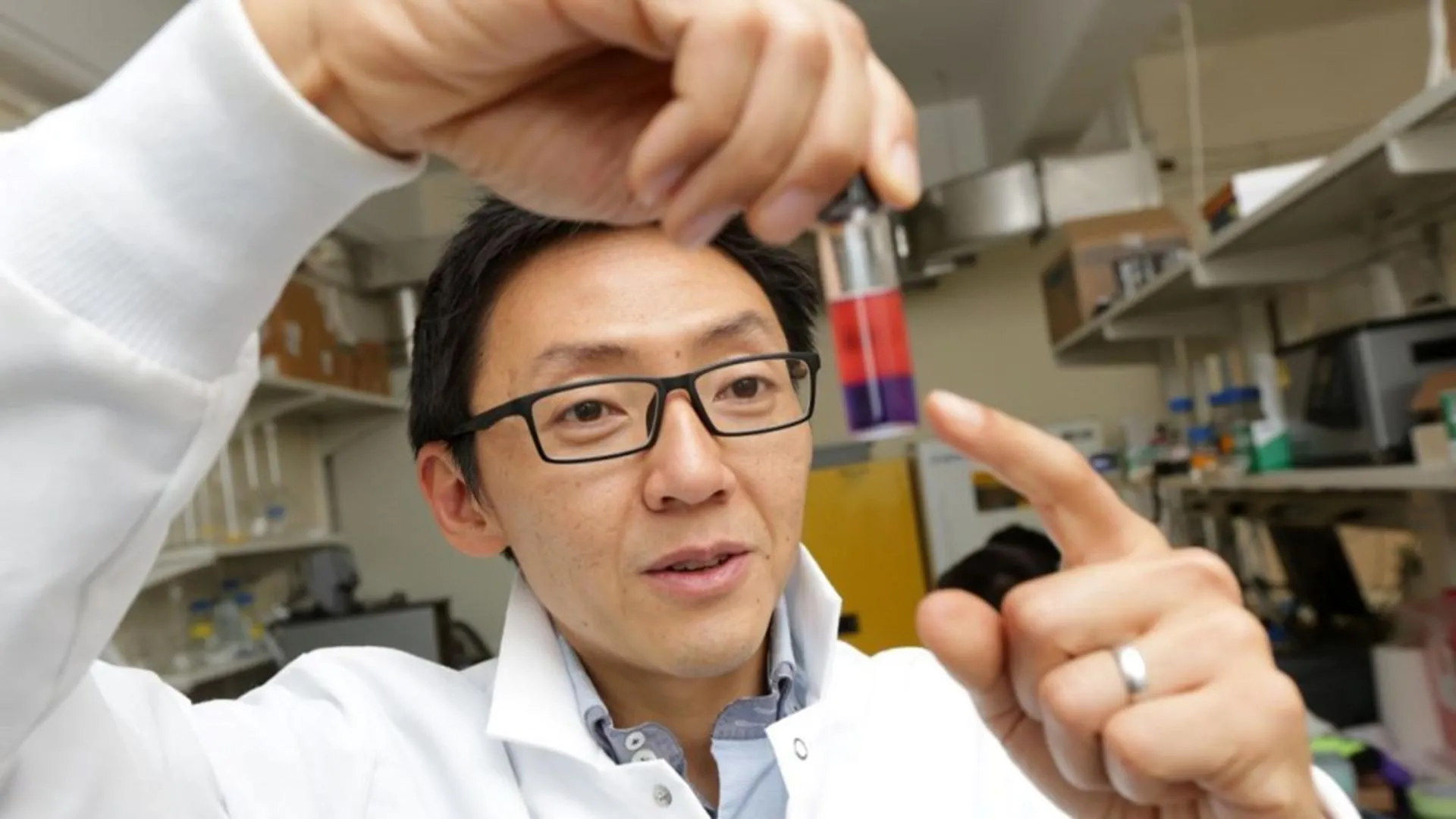
Demand for lithium is surging as automakers increase production of electric vehicles and energy companies build large battery systems to support wind and solar power generation. However, the lithium production process remains time-consuming and environmentally costly. Current extraction methods are most effective for high-quality deposits located in limited areas, but they also consume vast amounts of land and water.
Now, researchers at Columbia Engineering have developed a new lithium extraction technology that can speed up production, reduce pollution and tap into reserves that are difficult to access with existing technologies.
Their findings were published in the journal Jouledescribes a process called switchable solvent selective extraction, or S3E (pronounced S-three-ee). This method uses temperature-responsive solvents to directly extract lithium from salty underground brine, even when the lithium concentration is low or mixed with other minerals that are difficult to separate.
New lithium extraction method shows strong selectivity
According to the research team, S3E showed excellent selectivity during testing. The system extracted lithium up to 10 times faster than sodium and up to 12 times faster than potassium. We also removed magnesium, one of the most common contaminants in lithium brine, through a chemical precipitation step that separates unwanted materials.
Unlike many current direct lithium extraction systems, S3E does not rely on specialized bonding chemicals or extensive post-processing. Instead, it relies on a unique method of interaction between lithium ions and water molecules in the solvent, whose behavior changes with temperature.
At room temperature, the solvent absorbs lithium and water from the brine. Upon heating, the system releases purified lithium and water while regenerating the solvent, allowing it to be reused repeatedly.
Why does current lithium production matter?
Approximately 40% of the world’s lithium supply comes from salty underground brines found beneath desert regions. Most growers rely on solar evaporation methods. The process involves pumping salt water into large outdoor ponds and leaving it exposed to the sun for months or even years until enough water evaporates.
This approach is only practical in limited locations, such as the Atacama Desert in Chile and parts of Nevada, because it relies heavily on dry climates, flat terrain, and large areas of land. It also requires the use of large amounts of water in areas that are already under water stress.
“Solar evaporation alone will not meet future demand,” said Ngai Yin Yip, La von D’Adlson Kulm associate professor of geoenvironmental engineering at Columbia University. “And there are promising lithium-rich salt waters, such as the Salton Sea in California, where this method simply cannot be used.”
Solton sea lithium could power millions of EV batteries
To test the system, researchers used synthetic brine designed to mimic conditions in California’s Salton Sea, a geothermal region believed to contain enough lithium to power more than 375 million EV batteries.
After four extraction cycles using the same solvent batch, the team recovered nearly 40% of the lithium. The results suggest that this technology could eventually support continuous large-scale operations.
“This is a new way to directly extract lithium,” Yip said. “It’s fast, selective, and easily scalable. It can also be powered by low-grade heat from waste sources or solar collectors.”
The researchers emphasized that the project is still in the proof-of-concept stage and has not been fully optimized for efficiency or maximum lithium recovery. Still, they believe S3E could be a viable alternative to evaporation ponds and hard-rock mining, which currently make up most of the world’s lithium production despite their environmental drawbacks.
Cleaner lithium production for clean energy transition
As demand for batteries continues to rise around the world, cleaner lithium extraction technologies may become increasingly important in the transition to clean energy.
“We always talk about green energy,” Yip said. “But little is said about how dirty some supply chains are. If we want a truly sustainable transition, we need cleaner ways to obtain the materials we rely on. This is a step in that direction.”
