


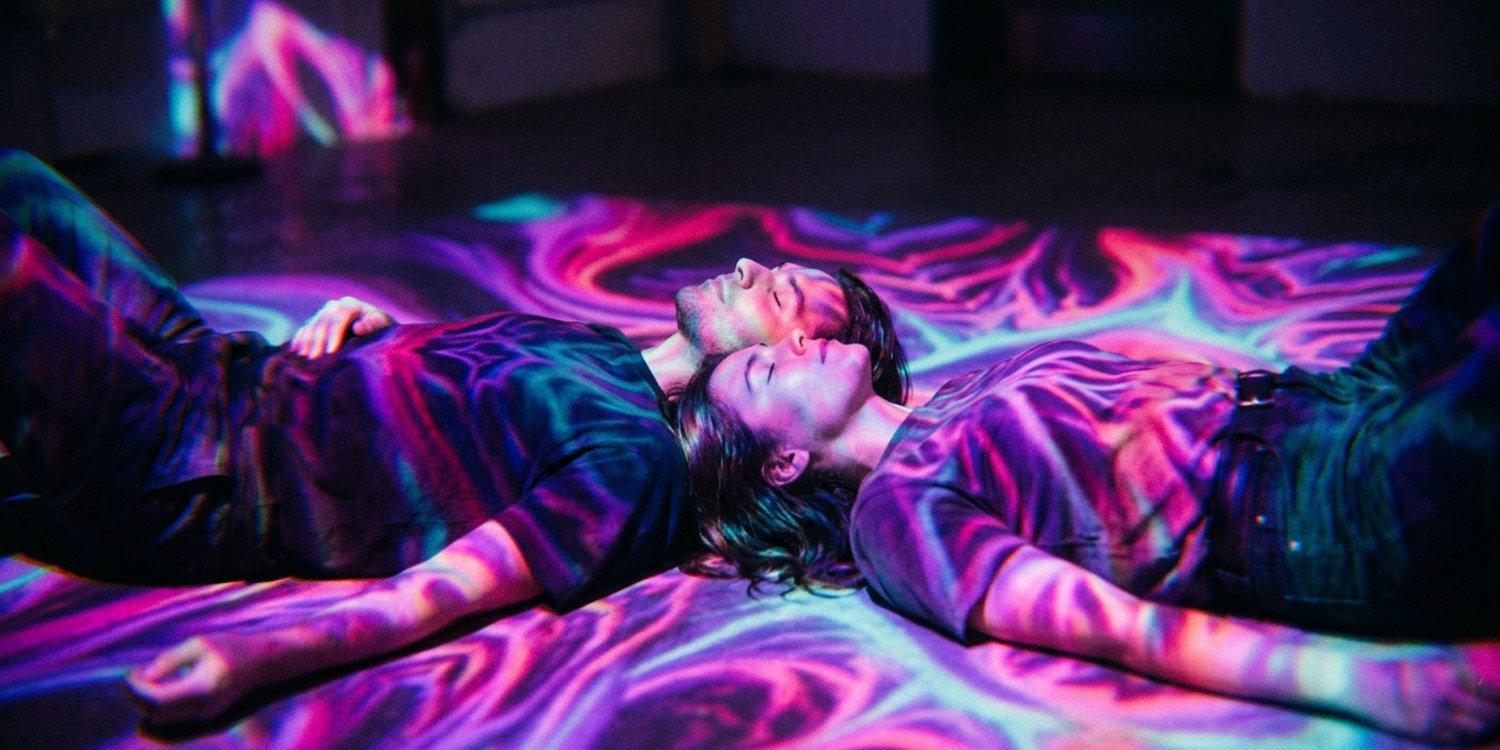
Taking traditional psychedelic substances with a romantic partner can deepen mutual understanding and improve the quality of the relationship. In contrast, using these substances alone can lead to a lack of synchronization between partners, which can lead to relationship dissolution in the future. A new study focusing on these relationship dynamics was recently published in the Journal of Psychoactive Drugs.
Psychology holds that people understand themselves and the wider world through their relationships with others. Romantic partners are particularly motivated to actively adjust their opinions and develop a common perspective on life in order to create a stable social environment. Researchers call this psychological phenomenon shared reality. When couples have a high degree of this mutual perspective, they understand external events in very similar ways.
This mutual understanding builds trust and strengthens the underlying bond between two people. Simply experiencing everyday life events together over long periods of time, such as eating a meal, dealing with a challenge, or taking a walk, often forms a powerful shared reality.
However, a psychedelic experience is a completely different type of event. This is a powerful transformative state that alters a person’s sensory perception, emotional regulation, and cognitive processing. These profound neurological changes are completely internal and therefore completely invisible to an outside observer.
If only one member of a couple ingests a substance such as psilocybin or LSD, the experience cannot be directly observed or felt by the sober partner. After the effects of the drug, two people may emerge with contrasting perceptions of reality. Mismatched perceptions of reality are known to undermine the quality of relationships and create emotional distance over time.
Most research in modern health psychology focuses on individual patients and treats mental health as an isolated internal struggle. Scientific research on psychedelic therapy has largely supported this individualistic approach, largely ignoring the social environment to which patients return. However, observational studies of group-based psychedelic rituals have shown that social processes act as the primary catalyst for healing.
Concepts like emotional support and recognition of shared humanity can help transform chaotic psychedelic experiences into lasting psychological improvements. This reflects general behavioral health evidence that lifestyle interventions, such as smoking cessation, are often more effective when targeted at households rather than individuals.
Treatments that utilize substances that are not considered classic psychedelics already incorporate a relational framework. New treatments using MDMA to deal with trauma have shown positive behavioral results when the partner is included in the process. Similarly, the drug ketamine has been incorporated into couple-oriented therapeutic interventions and is expected to permanently improve empathy, emotional vulnerability, and perspective-taking.
Talea Cornelius, a researcher at Columbia University Irving Medical Center, and Tommaso Barba, a researcher at Imperial College London, wanted to understand how social context shapes the outcomes of classic serotonergic psychedelics. They thought that sharing an intense, perspective-changing journey might have profound relationship benefits for romantic couples. They also theorized that distancing one’s partner from the experience could create a psychological rift.
To test these ideas, Cornelius and Barba designed an online survey to understand relationship dynamics before and after psychedelic events. They recruited adults who had previously taken moderate to strong doses of classic psychedelic drugs. Study participants had to be in a romantic relationship at the time of drug use, but could report on past or current relationships.
Researchers collected information from approximately 800 participants. Within this group, a small number of couples participated together and anonymously linked the survey using a unique identification code. Although the majority of respondents participated as individuals without a partner, they still provided detailed reports on their relationship dynamics.
Participants reflected on their most meaningful psychedelic events using traditional substances. Traditional psychedelics refer to compounds that alter perception primarily by interacting with the serotonin system in the brain. The researchers noted that nearly half of the sample reported using psilocybin, while just over a quarter used LSD, and the remaining sample selected substances including DMT.
To quantify the abstract concept of mutual understanding, the study utilized a specialized psychological questionnaire. Participants rated their agreement with statements regarding specific psychedelic sessions. For example, we asked whether they seemed to be on the same wavelength with their partner when the experience was occurring. They also assessed whether they shared the same understanding of what was happening at that moment.
Following these questions, participants used established psychological measures to evaluate various aspects of their relationships before and after the psychedelic event. These everyday characteristics include emotional intimacy, spiritual connection, physical intimacy, and general relationship satisfaction. The survey also collected ratings of interpersonal tenderness, feelings of commitment, and how often couples experienced long-term conflict.
One specific indicator of interest was overlap between self and other. This is a concept that measures the extent to which a person feels their identity is fused with their partner’s identity. Study participants selected visual diagrams depicting varying degrees of overlapping circles to indicate their level of interpersonal intimacy before and after a drug experience.
The resulting data confirmed the research team’s original hypothesis. Participants who took psychedelic substances with a significant other reported significantly more positive behavioral changes than those who went through the experience alone. Engaging in experiences together was associated with higher scores in nearly every relationship category.
Couples who shared drug use found that their physical and emotional intimacy improved significantly. They also reported higher levels of collaboration, a greater willingness to see things from their partner’s perspective, and an increased openness to new experiences in life. Notably, the physical time partners chose to spend together after the event also increased significantly.
To understand why these enhancements occurred, the researchers used statistical analysis that included a shared reality questionnaire. They found that increased mutual understanding led to better relationship outcomes. Sharing a psychedelic state allowed partners to feel like they were feeling on the exact same wavelength, which increased overall relationship satisfaction.
The findings also revealed potential risks for people who did not share their psychedelic journeys. For those reporting on past romantic relationships, taking psychedelic drugs alone was associated with a much lower degree of shared reality about the event. This lack of common understanding was indirectly related to the decision to ultimately end the relationship.
Researchers theorized that when intense inner changes occur without a partner, couples’ established worldviews are disrupted. Although taking the drug did not directly destroy the partnership, the resulting misalignment in perception of reality seems to have acted as a stepping stone toward breakup.
These results may have direct clinical application to new psychiatric treatments. Modern treatments can inadvertently degrade a couple’s shared reality by treating only one side of the relationship. If a patient experiences a major change in the way they see the world, untreated partners may have a hard time empathizing, creating unexpected emotional distance within the household.
At the same time, the authors cautioned that the deep bonding power of psychedelics requires strict ethical boundaries in clinical practice. In environments dealing with domestic distress, artificially increasing emotional vulnerability can be dangerous. Psychedelic therapy for couples in abusive situations requires a robust screening process to ensure that the substance does not put individuals into dangerous or coercive dynamics.
This study has several limitations that prevent researchers from identifying exact cause and effect. Cross-sectional designs rely entirely on participants recalling past events at a single point in time, which can introduce recall bias. Additionally, intentionally asking participants to rank their most meaningful experiences may bias results toward unusually influential events.
The study sample lacked racial diversity, as nearly 80 percent of those surveyed identified as white. Because the data is entirely observational, it is possible that couples who already had strong communication skills were naturally more likely to take psychedelics together. Experimental studies are needed to isolate the true psychological effects of drugs.
Future research should follow couples over time to see if the benefits of the relationship fade over time. Because nearly all participants in the current study matched their partner’s drug choices, researchers could also investigate whether partners need to take the exact same substances to receive a reward. Focusing on objective brain activity, such as neural synchronization during shared psychedelic states, may provide even deeper insights.
The study, “The Association between Couples’ Psychedelic Use and Shared Reality and Relational Well-Being,” was authored by Talea Cornelius and Tommaso Barba.
