

Close Menu

    Subscribe to Updates

    Get the latest creative news from FooBar about art, design and business.

    What's Hot

    Scientists were wrong about this ‘rule-breaking’ particle

    May 19, 2026

    Nourish raises $100 million and plans to expand care model with physicians

    May 19, 2026

    Miniaturization in medical technology

    May 19, 2026
    Facebook X (Twitter) Instagram
    Facebook X (Twitter) Instagram
    Health Magazine
    • Home
    • Environmental Health
    • Health Technology
    • Medical Research
    • Mental Health
    • Nutrition Science
    • Pharma
    • Public Health
    • Discover
      • Daily Health Tips
      • Financial Health & Stability
      • Holistic Health & Wellness
      • Mental Health
      • Nutrition & Dietary Trends
      • Professional & Personal Growth
    • Our Mission
    Health Magazine
    Home » News » Airborne microplastics may be warming the planet in ways overlooked by scientists – Earth.com
    Environmental Health

    Airborne microplastics may be warming the planet in ways overlooked by scientists – Earth.com

    healthadminBy healthadminMay 18, 2026No Comments5 Mins Read
    Airborne microplastics may be warming the planet in ways overlooked by scientists – Earth.com
    Share
    Facebook Twitter Reddit Telegram Pinterest Email


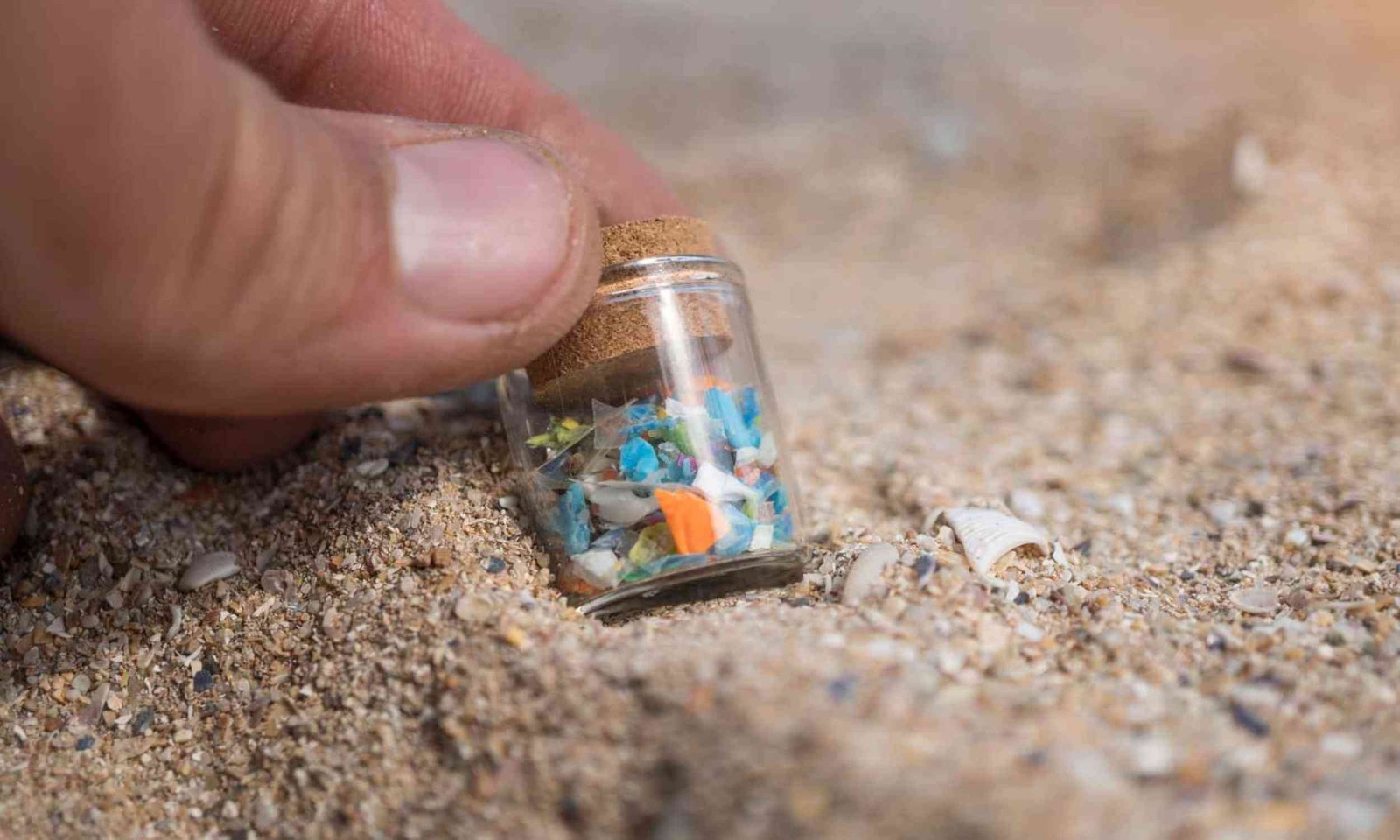
    When climate scientists first tried to estimate how airborne microplastics contributed to global warming, they modeled it as colorless, essentially transparent beads floating in the wind.

    This is the simplest assumption and, for many years, the only one with sufficient data behind it.


    earth snap

    Real plastic in the air is rarely transparent. It is stained, printed and weathered. And a new study found that these colored particles absorb about 75 times more sunlight than transparent particles.

    That gap is large enough to draw plastics into a conversation that scientists are only just beginning to have.

    How do microplastics become airborne?

    Plastic doesn’t just end up in rivers or scattered on beaches. The pieces get airborne, travel thousands of miles on the wind, and settle somewhere on Earth.

    Researchers have plucked it from the skies over remote mountains, glacial snow, and the open ocean. Previous research has shown that there are no more untouched places on Earth.

    For many years, that fact was treated primarily as a pollution issue. The new study, led by Hongbo Hu, a professor of environmental science at Fudan University in Shanghai, treats this as a climate issue.

    Floating plastic catches sunlight

    Fu’s team started in the lab by measuring how real plastic particles absorb light. These measurements are input into atmospheric models that track where particles move around the world. They focused on microplastics, which are pieces smaller than a few millimeters, and nanoplastics, which are much smaller.

    Clear plastic pieces fresh from the factory have little effect on sunlight. However, the dyed and colored parts that make up most real plastic absorb light about 75 times more strongly than the clear ones. This changes the image.

    amazing heater

    By absorbing light, the particles warm the surrounding air. Black carbon, the soot from the combustion of fuels and biomass, has long been on the climate register for this very reason.

    Until this study, no one had quantified whether airborne plastics could play the same role on a global scale. According to Fu’s model, it could do so at a level equivalent to about 16 percent of the amount produced by black carbon.

    That’s an absolutely modest amount. But the results are surprising for a substance that most people still imagine as a coastal pollutant, rather than as something that upsets the Earth’s energy balance from miles overhead.

    Beyond the garbage field

    Global averages underestimate local stories. At least according to models, the North Pacific’s subtropical gyre is a rotating eddy that traps garbage patches, and airborne plastic particles generate about 4.7 times more warming than black carbon in the same area.

    Two things seem to be causing this gap. Marine debris releases plastic into the atmosphere through wave action and sea spray. And because the gyre is under relatively clear skies, there isn’t much soot around to interfere with the signal.

    A previous paper published in 2021 estimated the warming impact of airborne plastic using assumptions about clean, colorless material.

    New analysis suggests these numbers are too low because the world’s real plastic is dyed, printed, and weathered.

    Aging of airborne microplastics

    One might expect that the interaction between plastic and light would change depending on the sun and weather. They are possible, but in the opposite direction. White particles slowly turn yellow and absorb more light. The red ones are bleached and absorb less.

    In the overall aerial mix, the two effects nearly cancel each other out. Modeling shows that plastic debris appears to continue to have a warming effect as long as it remains suspended in the air, regardless of age.

    big unknown

    How much plastic is actually there? This is up to an open question. Direct measurements exist in a few cities and a few remote locations, and the team’s model fills in estimates for the rest of the globe.

    Greg Carmichael, Karl Kammermeyer Professor of Chemical and Biochemical Engineering at the University of Iowa and co-author of this paper, helped build much of the basic research on black carbon decades ago.

    “They are important enough that we need to take them seriously and further quantify their role,” Carmichael said of airborne plastic debris. He added that observations globally are still too sparse to identify global concentrations with complete confidence.

    Airborne microplastics and climate models

    For the first time, microplastic pollution in the atmosphere has been given a number on the climate register. It’s not a small thing.

    Its contribution to global warming is large enough to rank alongside soot and other recognized warming particles as a factor that scientists now need to consider.

    Two results follow. Climate models can start treating plastic in the atmosphere as a warming factor, rather than ignoring it.

    The push to reduce plastic production is usually discussed on health and ecological grounds, but now climate change is also being discussed.

    Reducing the amount of plastic in circulation, especially dyed or colored plastic, also reduces the amount of plastic blown away by the wind. And this will help reduce global warming from causes that the world has only just begun to count.

    This study nature climate change.

    —–

    Like what you read? Subscribe to our newsletter for fascinating articles, exclusive content and the latest updates.

    Check us out on EarthSnap, the free app from Eric Ralls and Earth.com.

    —–


    Source link

    Visited 3 times, 3 visit(s) today
    Share. Facebook Twitter Pinterest LinkedIn Telegram Reddit Email
    Previous ArticleCDC bans travelers from Ebola-affected countries for 30 days
    Next Article Prenatal air pollution is associated with ADHD symptoms in school-age children, but not clinical diagnosis
    healthadmin

    Related Posts

    High levels of toxic ‘forever chemicals’ found off the coast of southern England | Marine life

    May 19, 2026

    The power company mega-merger is all about data centers.

    May 18, 2026

    Violent tornado that could sweep up oil spill

    May 18, 2026

    ‘Miracle mineral’ asbestos linked to mesothelioma still kills veterans

    May 18, 2026

    Who tests Cañon’s tap water? Not the EPA or CDPHE.

    May 18, 2026

    State officials and local residents respond to ongoing PFAS contamination concerns in Bennington County

    May 17, 2026
    Add A Comment
    Leave A Reply Cancel Reply

    Categories

    • Daily Health Tips
    • Discover
    • Environmental Health
    • Exercise & Fitness
    • Featured
    • Featured Videos
    • Financial Health & Stability
    • Fitness
    • Fitness Updates
    • Health
    • Health Technology
    • Healthy Aging
    • Healthy Living
    • Holistic Healing
    • Holistic Health & Wellness
    • Medical Research
    • Medical Research & Insights
    • Mental Health
    • Mental Wellness
    • Natural Remedies
    • New Workouts
    • Nutrition
    • Nutrition & Dietary Trends
    • Nutrition & Superfoods
    • Nutrition Science
    • Pharma
    • Preventive Healthcare
    • Professional & Personal Growth
    • Public Health
    • Public Health & Awareness
    • Selected
    • Sleep & Recovery
    • Top Programs
    • Weight Management
    • Workouts
    Popular Posts
    • 1773313737_bacteria_-_Sebastian_Kaulitzki_46826fb7971649bfaca04a9b4cef3309-620x480.jpgHow Sino Biological ProPure™ redefines ultra-low… March 12, 2026
    • the-pros-and-cons-of-paleo-dietsThe Pros and Cons of Paleo Diets: What Science Really Says April 16, 2025
    • pexels-david-bartus-442116The food industry needs to act now to cut greenhouse… January 2, 2022
    • 1773729862_TagImage-3347-458389964760995353448-620x480.jpgDespite safety concerns, parents underestimate the… March 17, 2026
    • 1773209206_futuristic_techno_design_on_background_of_supercomputer_data_center_-_Image_-_Timofeev_Vladimir_M1_4.jpegMulti-agent AI systems outperform single models… March 11, 2026
    • 1774403998_image_28620e4b6b0047f7ab9154b41d739db1-620x480.jpgGait pattern helps distinguish between Lewy body… March 24, 2026

    Demo
    Stay In Touch
    • Facebook
    • Twitter
    • Pinterest
    • Instagram
    • YouTube
    • Vimeo
    Don't Miss

    Scientists were wrong about this ‘rule-breaking’ particle

    By healthadminMay 19, 2026

    For decades, a puzzling contradiction about tiny subatomic particles called muons fueled speculation that physicists…

    Nourish raises $100 million and plans to expand care model with physicians

    May 19, 2026

    Miniaturization in medical technology

    May 19, 2026

    Real-time narration, head safety, and wearable biometrics

    May 19, 2026

    Subscribe to Updates

    Get the latest creative news from SmartMag about art & design.

    HealthxMagazine
    HealthxMagazine

    At HealthX Magazine, we are dedicated to empowering entrepreneurs, doctors, chiropractors, healthcare professionals, personal trainers, executives, thought leaders, and anyone striving for optimal health.

    Our Picks

    Real-time narration, head safety, and wearable biometrics

    May 19, 2026

    President Trump buys stock in drug companies as government ramps up obesity drugs

    May 19, 2026

    Jury awards $885 million verdict in Takeda Pharmaceutical antitrust delay damages lawsuit

    May 19, 2026
    New Comments
      Facebook X (Twitter) Instagram Pinterest
      • Home
      • Privacy Policy
      • Our Mission
      © 2026 ThemeSphere. Designed by ThemeSphere.

      Type above and press Enter to search. Press Esc to cancel.