


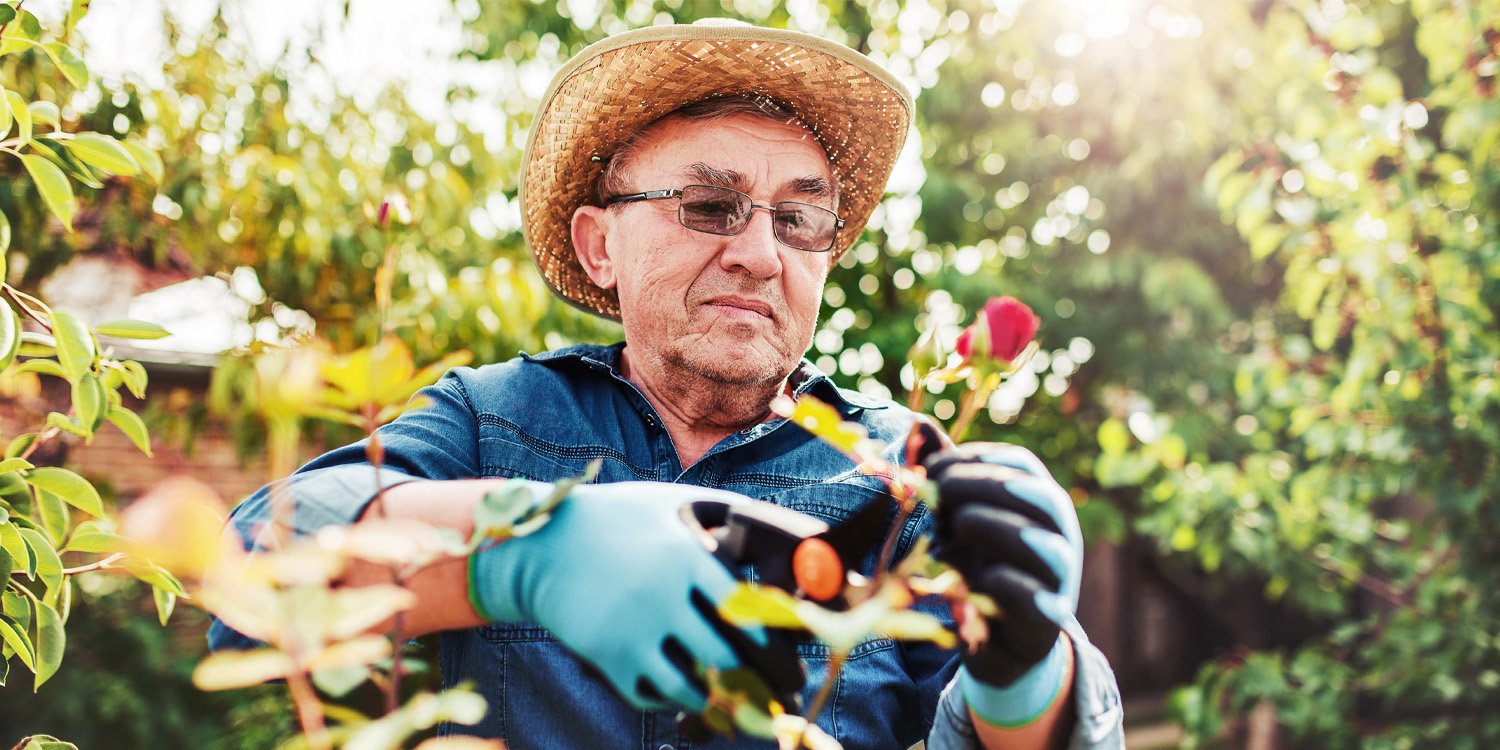
Analysis of 1921 data from the Lothian birth cohort found that older people who engaged in frequent gardening tended to have better psychological well-being, stronger physical function and a 22% lower risk of death. Over the long term, frequent gardening was associated with lower walking speed and slower progression of cellular aging indicators from ages 79 to 90. Comparing medians, frequent gardeners lived more than a year longer than their non-gardening peers. The paper was published in. Journal of Environmental Psychology.
In modern times, people are living longer than ever before, resulting in a rapid increase in the world’s elderly population. It is estimated that by 2030, one in six people worldwide will be over the age of 60, and this number is expected to rise to more than 2.1 billion by 2050. Supporting healthy aging has therefore become an urgent public priority.
Healthy aging means growing old while maintaining as much physical, mental, emotional, and social health as possible. The goal is not just to live longer, but to live better. This does not mean avoiding all diseases, as health problems naturally become more common with age. Rather, it means preserving function, independence, dignity, and quality of life for as long as possible.
Study author Janie Corey and colleagues investigated whether gardening frequency was associated with baseline levels and long-term trends in a wide range of markers of aging, including psychological well-being, physical functioning, biological aging, and mortality risk.
They analyzed data from the 1921 Lothian Birth Cohort, a Scottish research cohort comprised of people born in 1921 and primarily living in the Lothian area around Edinburgh, Scotland. It is one of the longest running longitudinal studies in the world, following people from the elderly to their 90s, and conducting repeated health assessments. Participants in this study took the National Intelligence Assessment (1932 Scottish Mental Survey) when they were 11 years old. Since then, they have been retested several times, mostly through old age.
This particular analysis established a baseline using data collected from 1999 to 2001, when study participants were approximately 79 years old. The researchers then followed these people for the next 11 years (following them at ages 83, 87, and 90), measuring physical and biological decline, and tracking mortality data for 25 years.
After excluding participants for whom horticultural data were not available, the baseline sample consisted of 475 individuals. At the beginning of the study, participants were asked how often they gardened as part of a broader lifestyle questionnaire. Study participants also completed assessments of quality of life (WHOQOL-BREF) and psychological health (14-item Hospital Anxiety and Depression Scale).
Trained nurses assessed lung function, gait speed, grip strength, and functional capacity (i.e., difficulty with basic and instrumental activities of daily living using the 9-item Townsend Scale) in participants aged 79, 87, and 90 years. The indicators of biological aging used in the study were an assessment of telomere length (from participants’ peripheral blood DNA) and DNA methylation-based PhenoAge, a biomarker of biological aging based on age-related changes in DNA molecules. (extracted from a blood sample). The study authors also tracked mortality rates for study participants through 2025. By 2025, 469 of the 473 participants tracked had died. Only four people (103 years old) survived.
Baseline results for 79-year-olds showed that gardening more frequently improved overall quality of life and improved psychological well-being. People who reported frequent gardening tended to have better indicators of physical aging at age 79. This means improved lung function, faster walking speed, stronger grip strength, and improved functional capacity.
In the long term, we found that the more often you gardened, the slower your walking speed decreased over time. However, no relationship was found between changes in lung function and grip strength over time. Furthermore, participants who engaged in gardening more often had longer telomeres at the beginning of the observation period and tended to have slower telomere attrition over time.
Telomeres are protective caps of DNA proteins at the ends of chromosomes. Telomeres are used as biomarkers of biological aging because they generally shorten with cell division. Older people tend to have shorter telomeres. Slower decline means that people who garden frequently age biologically at a slower rate than people who don’t garden.
Finally, a statistical model revealed that participants who engaged in frequent gardening had a 22% lower risk of death over a 25-year follow-up period. Importantly, this survival advantage remains robust even after accounting for a vast number of confounding variables, including age, gender, education, social class, living alone, perceived neighborhood quality, pre-existing medical conditions, and general physical activity. The fact that the effects persisted even after controlling for general physical activity suggests that gardening has unique, health-protecting effects that go beyond simply burning calories.
Overall, the median age of death for participants who never gardened was 88.4 years, compared to 89.7 years for those who reported frequent gardening, an increase of more than a year.
“Our results suggest that gardening supports health and longevity and may have a potential impact on aging in older adults,” the study authors concluded.
This study contributes to scientific knowledge about the association between gardening activities and well-being in old age. However, it should be noted that observational study designs do not allow definitive causal inferences to be drawn from the results. People who engaged in more frequent gardening may simply have been in better health and able to engage in such physical activity. Although the researchers attempted to control for baseline health and activity levels, the observed long-term changes may still reflect underlying factors responsible for improved health rather than a direct result of gardening.
The paper, ‘Gardening, healthy aging and longevity: longitudinal evidence from 25 years of the 1921 Lothian birth cohort’, was authored by Janie Corey, Alison Patti, Sarah E. Harris, Ian J. Deary and Simon R. Cox.
