


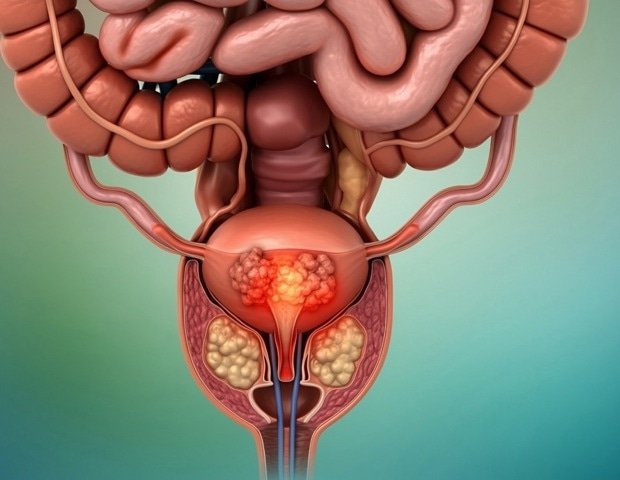
For men with advanced prostate cancer who have failed standard hormone therapy, treatment options are limited and time is of the essence. As the disease progresses, the window for effective and less burdensome treatments begins to close.
A multicenter clinical trial led by researchers at the Medical University of South Carolina (MUSC) and Emory University tested whether an experimental drug can extend the effectiveness of existing treatments. This study cancer medicineexplored new strategies to overcome treatment resistance in advanced prostate cancer.
This is a very difficult population to treat. There is a clear need for new options in these patients, as their cancer is already resistant to standard treatments. ”
Dr. Besim Ogretmen, Study Co-author, Associate Director of Basic Sciences, Medical University of South Carolina Hollings Cancer Center
Trying to extend the lifespan of existing treatments
This study focused on men with metastatic castration-resistant prostate cancer. Prostate cancer is metastatic castration-resistant prostate cancer, a progressive disease that no longer responds to hormone-blocking treatments.
These treatments, the drugs abiraterone and enzalutamide, are standard of care. Although initially very effective, most patients eventually develop resistance and move on to chemotherapy, which has limited options and often has significant side effects.
“We’re always looking for new pathways to target,” said Omar Kuchuk, M.D., oncologist and Collel Professor of Genitourinary Cancers. She helped lead patient enrollment and clinical efforts at Emory University’s Winship Cancer Center. “After androgen receptor therapy failure, precise options for individualized treatment are limited.”
Rather than replacing these standard treatments, the researchers tested whether adding oral drugs could increase efficacy, improve patient outcomes, and extend the duration of response.
From the discovery of MUSC to clinical trials
Opaganib, the experimental drug at the center of the research, has its roots in MUSC.
Opaganib, a first-in-class treatment, was developed based on basic research led by Dr. Charles Smith and advanced through years of laboratory and early-stage research at MUSC. This included early-stage clinical trials conducted at Hollings, followed by mid-stage clinical trials led by Hollings oncologist and now professor emeritus, Michael Lilly, M.D., who helped move the drug from early discovery to patient treatment.
“This was built on years of preclinical and early clinical research,” Ogletman said. “The goal was to take what we learned in the lab and see if we could improve patient outcomes.”
Importantly, opaganib works differently than standard treatments. Rather than targeting hormones, it blocks pathways involved in sphingolipid metabolism, a process used by cells to manage lipids, or fats, that affect cell survival. Researchers are increasingly focusing on this pathway because disruptions in fat metabolism can cause cancers to grow and become resistant to treatment.
“There aren’t many drugs in the clinic that target this pathway,” Kuczuk says. “So it’s very exciting and very different from the treatments we currently use.”
Early signs of effectiveness
In this phase 2 trial, 66 patients whose cancer had already progressed received opaganib in combination with abiraterone or enzalutamide.
Approximately 15% of patients treated with opaganib plus abiraterone and 9% of patients treated with enzalutamide experienced disease control at week 16, which fell short of the study’s primary goal. But a closer look reveals a more nuanced picture.
Some patients showed signs of clear biological response, such as decreased prostate-specific antigen (PSA) levels and periods of stable disease. These findings suggest that the treatment may slow disease progression and allow patients to continue treatment for longer.
“Even if that percentage is small, those are real patients,” Ogletman stressed. “We’re talking about people who are benefiting from this treatment when others aren’t.”
Beyond efficacy, drug tolerability is also an important part of this story. Combination therapy was generally manageable, with most side effects mild to moderate. Some patients experienced more severe side effects, but most patients improved after reducing the dose or discontinuing the drug.
The path to precision medicine
According to the researchers, this discovery represents an important step forward in uncovering new biological pathways that target prostate cancer. The next important step is to identify which patients are most likely to benefit from the drug combination.
Researchers now plan to use blood samples taken from participants to look for biomarkers, measurable signals in the blood, that can predict response. This approach has the potential to improve treatments for smaller patient groups, a hallmark of precision medicine.
“We can look at changes in lipids in patients who responded and patients who did not respond,” Ogletman said. “This may help stratify patients and better match treatments to the right patients.”
This research, supported in part by a Program Project Grant from the National Cancer Institute (NCI) to Ogletman and team, also highlights the power of collaboration in bringing together teams at MUSC and Emory to move discoveries from the lab to clinical trials.
“This was a great collaboration between both institutions,” Kuczuk said. “This is a very novel approach, and we were excited to be part of bringing it into clinical practice.”
“This type of research relies on strong collaboration between academic researchers, clinicians, and industry partners,” Ogletman added. “By doing so, we can offer new treatments to patients for whom there are no effective treatments.”
Looking forward, researchers hope that refining this approach and developing next-generation drugs that target the same pathway could expand treatment options, and there is growing optimism that these treatments could become part of future treatment strategies.
sauce:
Medical University of South Carolina
Reference magazines:
Brown, J.T. others (2026) Phase II trial of adding opaganib in metastatic castration-resistant prostate cancer after disease progression on abiraterone or enzalutamide. cancer medicine. DOI:10.1002/cam4.71633. https://onlinelibrary.wiley.com/doi/10.1002/cam4.716339.
