


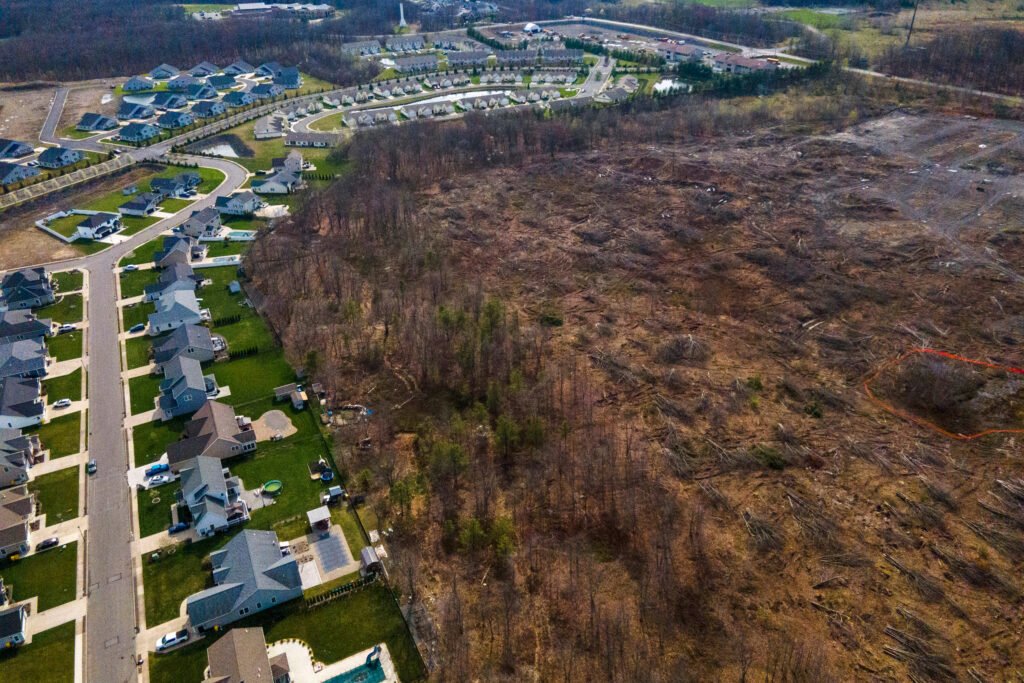
The latest example of opposition to rapid data center development in Pennsylvania occurred at a town hall meeting filled with complaints about how the state is handling its proliferation.
In front of about 225 people, more than 20 speakers spoke during a two-hour online forum late Wednesday about rising electricity prices, heavy water use, noise pollution and resistance to industries that are responsible for rural industrialization. Gov. Josh Shapiro has been a frequent target as he tries to thread the needle on data center welcome while proposing some guardrails.
“This is a matter of public trust and transparency,” said Jennifer Dussart, a small business owner who lives in Mechanicsburg near the state capital. “Too many Americans only learn about these projects after the decisions have been made. We are being bulldozed, and when citizens raise concerns, they are often dismissed as uninformed, emotional, or anti-progress.”
According to the Data Center Proposal Tracker, there are nearly 60 data centers in Pennsylvania that have been formally proposed, are in the early planning stages, have received construction approval, or are under construction.
Karen Ferridan of the environmental nonprofit Better Path Coalition, which organized the town hall, said the Pennsylvania Data Center Resistance Facebook group, which she started in January with a few dozen members, now has more than 12,000 followers.
Kelly Donia, a resident of East Whiteland Township in southeastern Pennsylvania, said she lives near the proposed data center site and is a Democrat who was excited by speculation that Shapiro would be the Democratic Party’s vice presidential nominee in 2024. But she said she no longer supports him because he is courting data centers.
“He’s losing ground,” she said. “I want him to hear this voice loud and unusually clear. I’m going to make it my job to make sure this man is never elected to any public office again.”
A November Emerson College poll found that Pennsylvanians are divided on data center development, with 38% in favor and 35% opposed, but opposition to such development closer to home is even more pronounced. A February Quinnipiac University poll of registered voters in the state found even more opposition, with 68% saying they opposed establishing an AI data center in their area.
The Shapiro administration said it is seeking to protect communities while reaping the economic benefits of the burgeoning data center industry.
“If companies want full federal support, including access to tax credits and faster permitting, they must meet stringent expectations regarding transparency, environmental protection, and community impact,” Shapiro spokeswoman Rosie Rapowski said in a statement. “It’s not about lowering the bar for projects, it’s about setting a higher bar and making sure development happens responsibly and in a way that benefits Pennsylvanians.”
Mr. Shapiro proposed standards in February as part of his budget speech, including that new data centers seeking state aid would have to either provide their own power rather than off the grid, or provide sufficient funding for their power needs and associated transmission infrastructure.
Feridan said Shapiro did not respond to several invitations to the town hall, which he believes the state should have hosted to give people a chance to voice their concerns about the data center.
This story is funded by readers like you.
Our nonprofit newsroom provides free advertising for our award-winning climate coverage. We rely on donations from readers like you to continue our work. Donate now to support our work.
donate now
Pennsylvania Data Center Partners, a developer of large data centers, did not respond to a request for comment. But the Data Center Coalition, an industry group, said the industry will generate $1.9 billion in state and local taxes in Pennsylvania in 2024 and use less water than some other business sectors.
“Data Center strives to be a responsible and responsive neighbor in Pennsylvania’s communities,” Dan Diorio, vice president of Allied Policy, said in a statement. “The industry is committed to paying the full price for the energy it uses.”
Colby Wesner of Concerned Citizens of Montour County, an activist group that has successfully fought against data centers, criticized the House member for passing HB 2151, a bill sponsored by Shapiro. The bill would require state officials to draft a model ordinance that towns could use to respond to data center applications.
Supporters say its use is voluntary and would help local officials protect the quality of life in their communities. But Wesner believes the ordinance would benefit the industry if enacted, saying, “There’s no reason why this ordinance wouldn’t be a data center developer’s dream.”
Donia asked the township to change its zoning to give it the legal right to deny data center applications in unwanted locations. Without carefully zoned land, the town is vulnerable to lawsuits from developers, she said.
“What happens when your town has terrible ordinances and you add bad zoning on top of that? You get a hyperscale data center,” she said.
Speaking at the town hall event, Republican state Rep. Jamie Walsh said the surge in data center projects in Pennsylvania is being driven by tax breaks for developers granted in a 2021 law that lawmakers should repeal. In Virginia, which has the largest number of data centers, developers must pay sales and use taxes, but there is no such requirement in Pennsylvania, he said.
“That made Pennsylvania a target. Virginia has to pay taxes on what’s in those buildings. Pennsylvania will never know that. That’s why we’re ground zero,” said Walsh, who represents Luzerne County in northeastern Pennsylvania.
State Sen. Katie Mass, a Democrat who represents parts of Philadelphia’s suburbs, plans to introduce a bill that would give state and local governments a three-year moratorium on data center development so they can first study and plan for the industry. He announced the bill in a legislative memo in February and plans to introduce it soon, a spokesperson said.
Muth told activists at City Hall that the data center industry is not doing enough to fully disclose its plans to the public. “This was all planned long before any of us had a clue. So don’t think you missed all this,” she said. “You should have done that. No one wanted you to know about it.”
Michael Sauers, a former school teacher from Bloomsburg, southwest of Scranton, called on officials to revise the Pennsylvania Municipal Planning Code, an ordinance first promulgated in 1970.
“This needs to be strengthened to ensure that communities can say no to unwanted developments that are being forced on them,” he says. “Communities must be empowered to reject top-down development that gives them little or no say in the future.”
This article was updated on May 15, 2026 to include a new statement from the Data Center Coalition..
About this story
As you may have noticed, this article, like all news we publish, is free to read. That’s because Inside Climate News is a 501c3 nonprofit organization. We don’t charge subscription fees, keep our news behind paywalls, or fill our website with ads. We provide climate and environmental news free to you and anyone who wants it.
That’s not all. We also share our news for free with dozens of other news organizations across the country. Many of them cannot afford to do their own environmental journalism. We’ve established bureaus across the country to report on local news, partner with local newsrooms and co-publish stories to ensure this important work is shared as widely as possible.
The two of us started ICN in 2007. Six years later, we won the Pulitzer Prize for national reporting and now run the nation’s oldest and largest dedicated climate newsroom. We tell the story in its entirety. We hold polluters accountable. We expose environmental injustice. We debunk misinformation. We explore solutions and inspire action.
Donations from readers like you fund all aspects of our work. If you haven’t already, will you support our ongoing work, our coverage of the biggest crises facing our planet, and help us reach more readers in more places?
Please make a tax-deductible donation. Any of those things make a difference.
thank you,
