


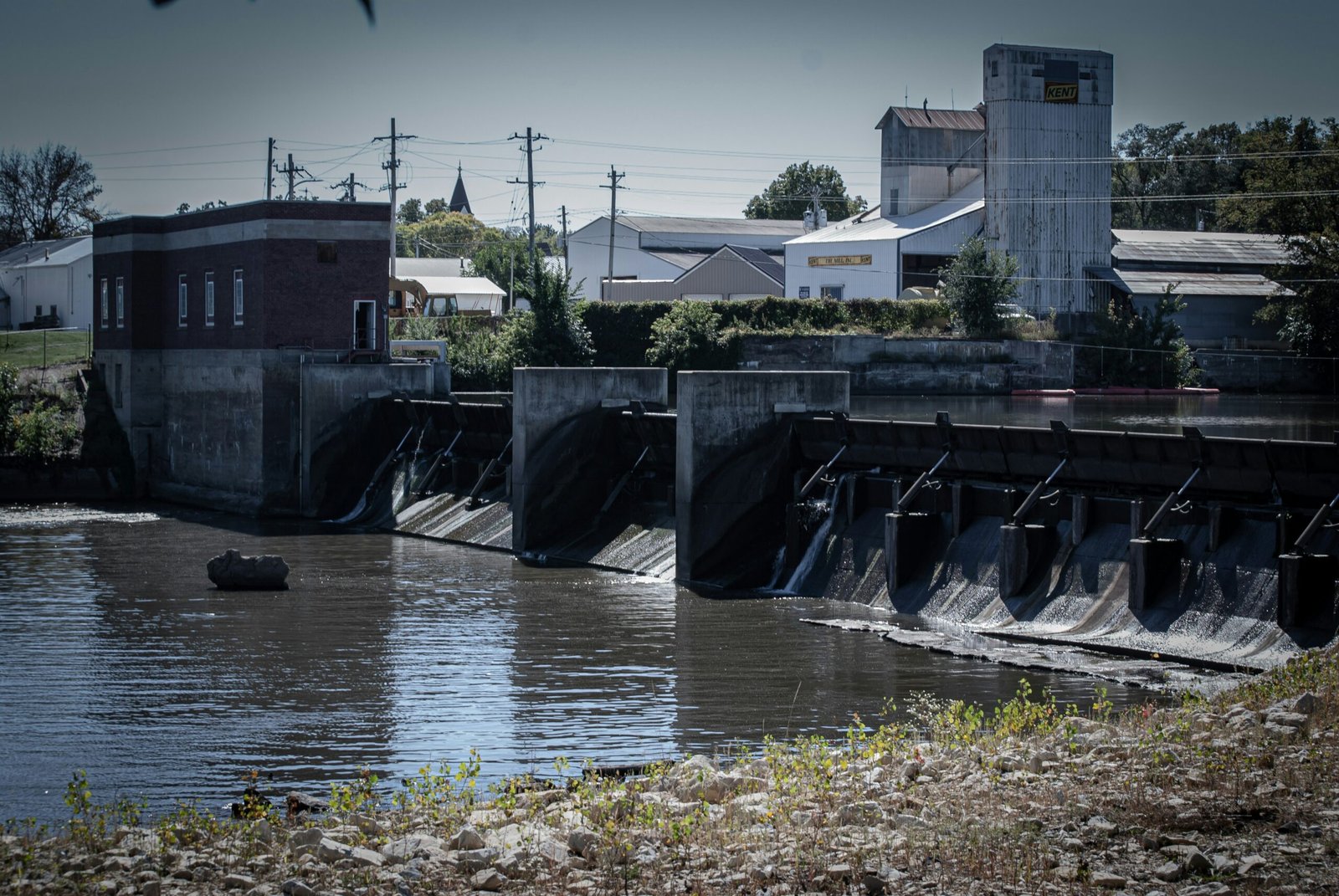
U.S. regulators illegally withdrew responsibility for polluted waterways in Iowa after meeting with officials from the state’s powerful agricultural lobby, according to a lawsuit filed Thursday.
The lawsuit, brought by the advocacy group Food & Water Watch, the Iowa Environmental Council, and the Center for Environmental Law and Policy, focuses on the U.S. Environmental Protection Agency’s (EPA) July 2025 decision to remove seven waterways from the Iowa Department of Natural Resources’ list of “impaired” waters. The petition seeks a court order requiring the EPA to re-register the waterway.
Being listed as “degraded” is important because it requires state officials to develop and implement plans to control pollution and restore water to a non-degraded state.
The EPA previously determined that portions of the Cedar, Des Moines, Iowa, Raccoon, and South Skunk rivers were contaminated with toxic levels of nitrates that exceeded federal safety standards and should be listed as impaired. These waterways provide drinking water to hundreds of thousands of people, and the nitrates that contaminate these waters are linked to cancer and other health problems and pose a public health threat.
But the agency’s attitude publicly changed just days after agency officials met with top representatives of the state Department of Agriculture for the stated purpose of discussing a list of impaired waterways, according to documents. The Department of Agriculture has opposed listing the waterway as a nitrate-impaired waterway.
The meeting was held on July 1 of last year, and EPA took action on July 11 to withdraw the inclusion of seven waterway segments on the impaired list.
The lawsuit comes at a time of heightened concern in Iowa, amid intense political debate over how to balance the interests of Iowa’s vital agricultural economic interests with public concerns over agricultural pollution. Iowa has the second highest cancer rate in the nation and is one of only three states where cancer rates are increasing.
“President Trump’s EPA is creating a serious public health crisis in Iowa,” Food and Water Inspector General staff attorney Dani Reprugle said in a statement. “While factory farms are contaminating the drinking water of hundreds of thousands of people with dangerous levels of toxic nitrates, the EPA is leaving Iowans out to dry. We cannot allow that to happen. The EPA’s irresponsible overturning of Iowa’s nitrate pollution crisis will not stand up in court.”
A scientific report released last year found that agricultural operations across Iowa are a major contributor to the state’s significant water pollution problems, with most of the nitrates polluting major waterways coming from agricultural operations, including corn growers and livestock farms.
A recent report from the Iowa Environmental Council and the Harkin Institute added to the concerns by finding that Iowa’s waterways have the worst nitrate pollution in the country.
“Iowa’s cities, towns, and rural communities face worsening health problems from nitrate pollution,” said Michael Schmidt, general counsel for the Iowa Environmental Council. said in a statement. “Pretending the problem doesn’t exist is not a legal option. Instead, EPA must protect Iowans and follow the Clean Water Act by acknowledging that nitrates are contaminating drinking water sources across the state.”
EPA said it does not comment on pending litigation.
Featured image by Niko Vassios on Unsplash.
-
Carrie Gillum is editor-in-chief of The New Lede and a veteran investigative journalist with more than 30 years of experience covering U.S. news, including 17 years (1998-2015) as a senior correspondent for Reuters International. She is the author of Whitewashing: A Story of Herbicides, Cancer, and the Corruption of Science, which exposed the agricultural corruption of the Monsanto corporation. The book won the coveted Rachel Carson Book Award from the Association of Environmental Journalists in 2018. Her second book, the narrative law thriller The Monsanto Documents, was released on March 2, 2021.
She also contributed chapters to a textbook on environmental journalism and a book on pesticide use in Africa.
Gillam testified about his research as an invited expert before the European Parliament in 2017 and was a featured speaker at the World Democracy Forum in Strasbourg, France in 2019. He has also been a keynote speaker and panel speaker at events and universities in North America, Australia, the Netherlands, Brussels, and France.
Gillam is a regular contributor to the Guardian. Her work has also appeared in The New York Times, Huffington Post, Time, and other outlets.
In 2022, Gillum helped launch The New Lede as a journalism initiative of the Environmental Working Group.
Gillum is a member of the Association of Environmental Journalists.
