


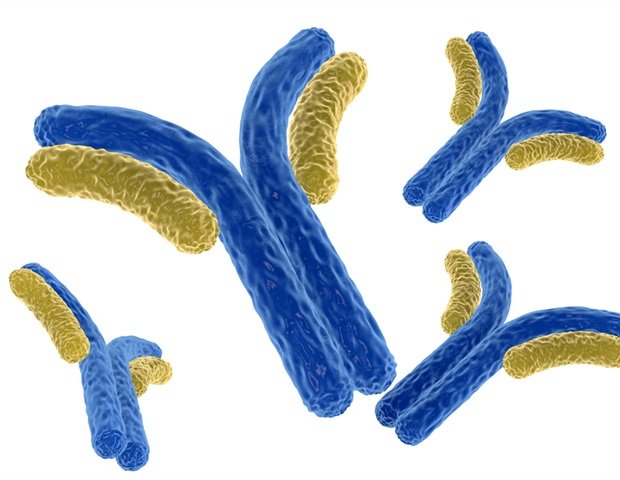
An international research group recently demonstrated that the antibody NG101 promotes regeneration of injured spinal cord tissue. Now, under the guidance of scientists from the University of Zurich and Balgrist University Hospital, the group has revealed for the first time how the therapy works in practice. This new antibody boost allows new nerve fibers to form functional connections again, allowing patients to become more independent.
Spinal cord injuries, often caused by sports or traffic accidents, can cause quadriplegia or paraplegia, severely limiting independence. At the end of 2024, an international research group led by the University of Zurich (UZH) and Bargrist University Hospital completed a multinational clinical trial in which patients with acute spinal cord injury were successfully treated with the novel antibody NG101. The results showed that NG101 promoted regression of spinal cord lesions and preserved existing neural tissue.
Antibodies neutralize useless proteins
NG101, discovered at UZH about 30 years ago, targets Nogo-A, a protein found in the sheaths of nerve fibers in the spinal cord and brain. This protein blocks the healing of damaged nerve fibers in the spinal cord after acute injury. By neutralizing Nogo-A, NG101 removes this barrier to growth and healing, thereby promoting nerve fiber regeneration and supporting functional regeneration of spinal cord tissue.
Visible results in the spinal cord
The research team’s latest study reveals another important piece of the puzzle.
In our new study, using advanced imaging methods, we were able to show for the first time how this antibody therapy works directly in the spinal cord. ”
Patrick Freund, Professor at UZH and Director of the Spinal Cord Injury Center at Bargrist University Hospital
Magnetic resonance imaging data revealed two important effects. First, spinal cord injuries healed faster in the presence of NG101. This suggests that nerve fibers were able to regenerate in the tissue surrounding the injury. Second, the loss of nerve tissue was significantly slowed and offset by the regrowth of new nerve fibers. Previous animal experiments conducted by the researchers had already demonstrated how important this step is. This is because newly formed nerve fibers need to find a way to travel across or around the injury site to repair the pathways that connect the brain and spinal cord.
New connections to peripheral nerves
The group’s latest findings suggest that it is precisely this process that is supported by NG101. “This allows the surviving and newly regenerated nerve fibers to re-establish connections with the spinal centers that control the nerves of the hands, arms and legs,” says Professor Freund, who led the study. “These connections are essential for relaying signals from the brain to the muscles.” For some patients, this means an increased chance of regaining arm and hand function.
NG101 has been shown to not only improve spinal cord function, but also change spinal cord structure that supports neural tissue regeneration. This is an important step towards new and effective treatments for spinal cord injuries. “We can now visualize the effects of treatment early and in an objective way,” says Freund. “This opens up the possibility of using future treatments more strategically and conducting more reliable assessments of their outcomes.”
sauce:
Reference magazines:
Furner, L. others. (2026). Anti-Nogo-A NG101 treatment induces microstructural and macrostructural changes in the spinal cord after spinal cord injury. nature communications. DOI: 10.1038/s41467-026-71412-0. https://www.nature.com/articles/s41467-026-71412-0
