


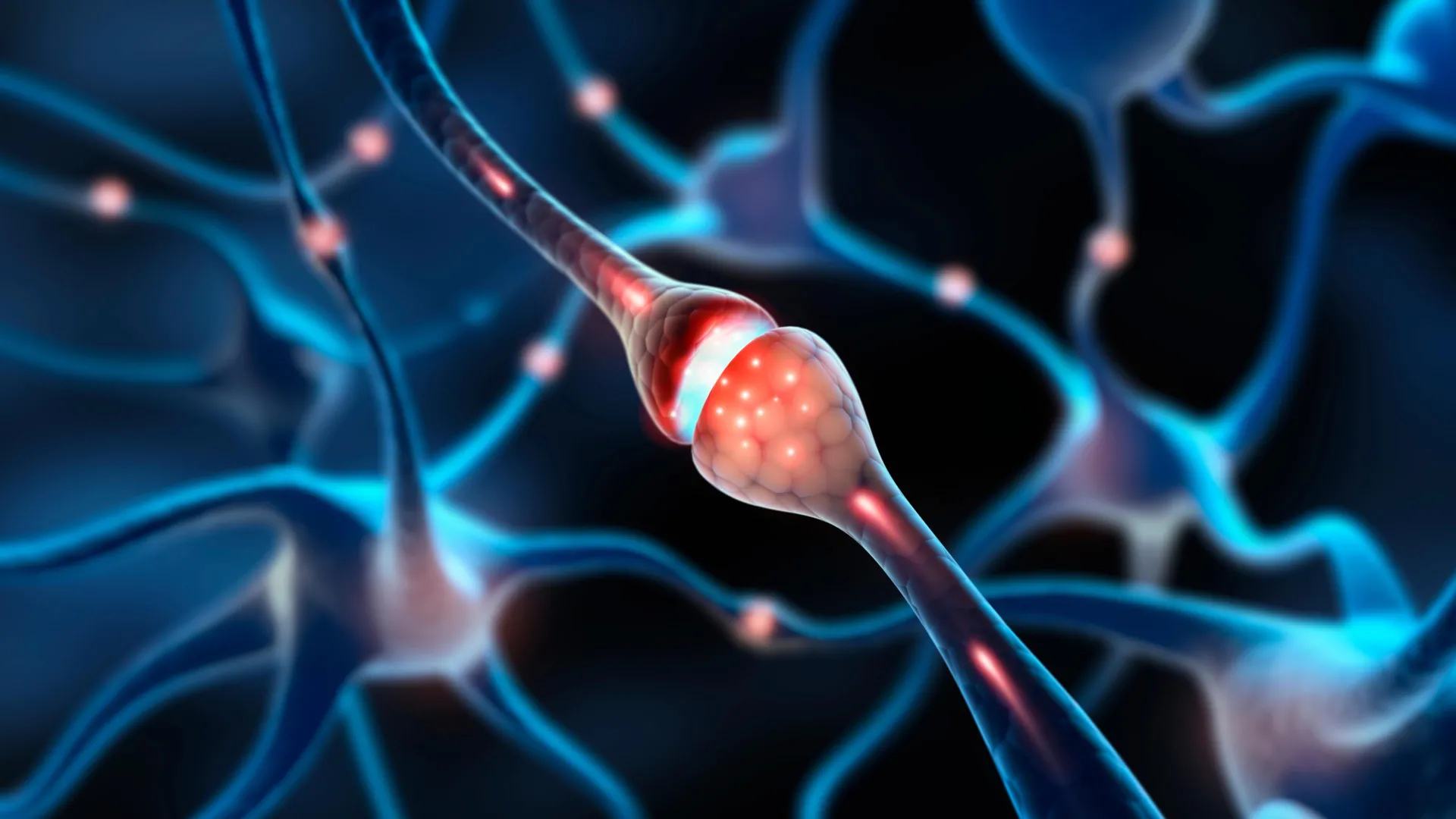
Neuroscientists at MIT have discovered a surprising feature of the adult brain. It contains millions of “silent synapses”. These are immature connections between neurons that remain inactive until they are needed to form a new memory.
For many years, scientists believed that these silent synapses existed only during the early stages of development, when the brain is rapidly learning about the world. However, the MIT team found that in adult mice, approximately 30 percent of the synapses in the brain cortex are still silent. This suggests that the adult brain stores large amounts of unused connections that can be activated when new information arrives.
Researchers say this hidden pool of synapses may explain how the brain continues to learn throughout life without destroying existing memories.
“These silent synapses seek out new connections, and when presented with important new information, the connections between related neurons become stronger. This allows the brain to create new memories without overwriting important, difficult-to-change memories stored in mature synapses,” says Dimitra Vardalaki, an MIT graduate student and lead author of the study.
Mark Harnett, associate professor of neuroscience and cognitive science, is the paper’s lead author. nature. Kwanghun Chung, associate professor of chemical engineering at MIT, is also an author.
Reconsidering how memory works in the adult brain
Silent synapses were first identified decades ago, primarily in young animals. Early stages of development are thought to help the brain absorb large amounts of new information about the environment. Scientists thought that in mice, these synapses disappeared by about 12 days after birth (equivalent to one month in humans).
However, some researchers doubted that they could persist into adulthood. Clues come from the study of addiction, which is often considered a form of maladaptive learning. These studies suggest that silent synapses may reappear or remain in the adult brain.
Theoretical research by neuroscientists Stefano Fusci and Larry Abbott also suggests that the brain requires a combination of flexible and stable synapses. Some connections can be easily changed to support new learning, while others require stable connections to retain long-term memory.
Discover opportunities with advanced imaging
The MIT team wasn’t initially looking for silent synapses. They were following up on previous work showing that dendrites, the branch-like extensions of neurons, process signals differently depending on their location.
To investigate this further, the researchers measured neurotransmitter receptors along the dendrites using a technique called eMAP (epitope-conserved proteome amplification analysis). This method physically expands brain tissue, allowing scientists to label proteins and observe them in great detail.
During this imaging, the researchers noticed something unexpected.
“The first thing we saw, which was very strange and unexpected, was that there were filopodia everywhere,” Harnett said.
Filopodia are small projections that extend from dendrites. They have been observed before, but their function was unknown because they are so small and difficult to study with traditional tools.
Characteristics of filopodia and silent synapses
Using eMAP technology, the research team found much higher levels of filopodia than previously reported across multiple regions of the adult mouse brain, including the visual cortex. These structures contained NMDA receptors but no AMPA receptors.
This detail is very important. Active synapses typically have both receptor types, working together to transmit signals using the neurotransmitter glutamate. NMDA receptors cannot transmit electrical signals on their own under normal conditions because they are blocked by magnesium ions. Without AMPA receptors, these connections remain electrically inactive and are therefore called “silent.”
Turn on silent synapses
To test whether these filopodia function as silent synapses, the researchers used a modified patch-clamp technique. This allowed us to measure the electrical activity of individual filopodia while simulating glutamate release.
They found that glutamate alone did not produce a signal unless the block of NMDA receptors was removed experimentally. This provided strong evidence that these structures act as silent synapses.
The team then showed that it is possible to activate, or “unsilence,” these connections. The combination of glutamate release and electrical signals from neurons caused AMPA receptors to accumulate at synapses. This turns a silent connection into a fully functional connection that can send signals.
Importantly, this process is much easier than modifying already active synapses.
“If you start with synapses that are already working, that plasticity protocol won’t work,” Harnett says. “Synapses in the adult brain have a fairly high threshold, probably because they want those memories to be quite resilient; they don’t want them to be overwritten all the time. Filopodia, on the other hand, can be captured and form new memories.”
A brain that combines flexibility and stability
These findings support the idea that the brain balances flexibility and stability by maintaining a reserve of highly adaptable synapses.
“This paper is, to my knowledge, the first real evidence of how this actually works in the mammalian brain,” Harnett says. “Filopodia make the memory system flexible and robust. We need flexibility to acquire new information, but we also need stability to retain important information.”
What this means for aging and brain health
Researchers are now investigating whether similar silent synapses exist in the human brain. They also want to understand how these connections change with age and neurological condition.
“It’s quite possible that changing the amount of flexibility in our memory systems makes it much more difficult to change our behaviors and habits and take in new information,” Harnett says. “You could also imagine finding some of the molecular players involved in filopodia and manipulating some of those things to try to restore flexible memory as we age.”
More recent neuroscience research continues to explore how synaptic plasticity supports lifelong learning. Research on the aging brain suggests that reduced synaptic flexibility may contribute to memory decline, while research on neurodegenerative diseases such as Alzheimer’s disease points to disruptions in synapse formation and function. There is also growing interest in targeting synaptic mechanisms to improve cognitive resilience and learning abilities later in life.
Taken together, these findings paint a picture of the brain that is far more dynamic than previously believed. Rather than being fixed, it appears that hidden connections are maintained, allowing new experiences to be activated when needed.
This research was funded by the Boehringer Ingelheim Foundation, the National Institutes of Health, the James W. and Patricia T. Poitras Fund at the Massachusetts Institute of Technology, the Klingenstein-Simmons Scholarship, the Valley Foundation Scholarship, and the McKnight Scholarship.
