

Close Menu

    Subscribe to Updates

    Get the latest creative news from FooBar about art, design and business.

    What's Hot

    3 in 10 adults use AI or social media for health information

    June 29, 2026

    A simple blood test could identify the most effective obesity drugs

    June 29, 2026

    Clarifying the 2025-2030 Dietary Guidelines Contradictions

    June 29, 2026
    Facebook X (Twitter) Instagram
    Facebook X (Twitter) Instagram
    Health Magazine
    • Home
    • Environmental Health
    • Health Technology
    • Medical Research
    • Mental Health
    • Nutrition Science
    • Pharma
    • Public Health
    • Discover
      • Daily Health Tips
      • Financial Health & Stability
      • Holistic Health & Wellness
      • Mental Health
      • Nutrition & Dietary Trends
      • Professional & Personal Growth
    • Our Mission
    Health Magazine
    Home » News » This simple blood test may detect depression before symptoms appear
    Nutrition Science

    This simple blood test may detect depression before symptoms appear

    healthadminBy healthadminMay 4, 2026No Comments5 Mins Read
    This simple blood test may detect depression before symptoms appear
    Share
    Facebook Twitter Reddit Telegram Pinterest Email


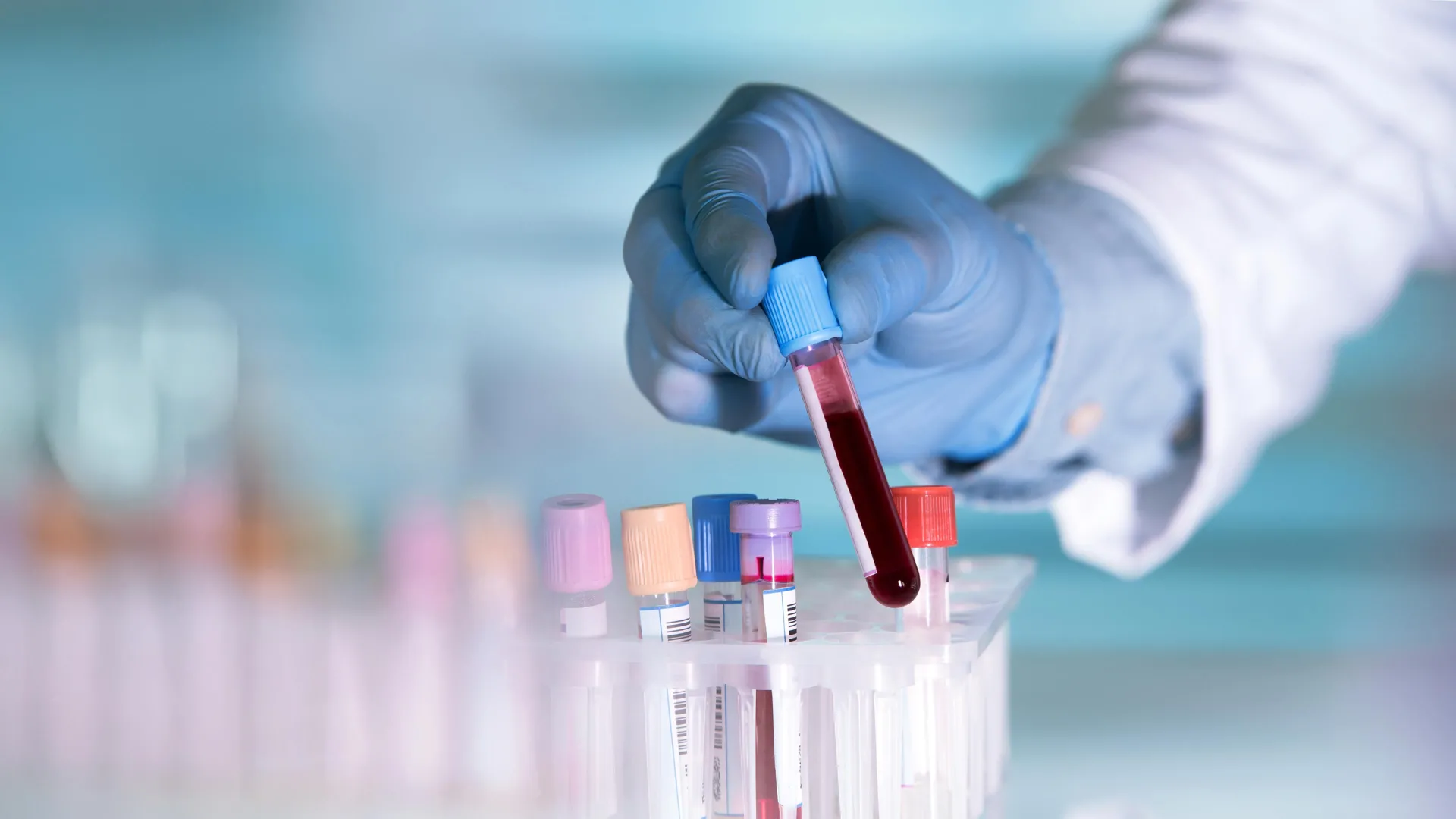
    Blood tests that track how certain white blood cells age may help identify depression, focusing on emotional and cognitive symptoms rather than physical symptoms.

    This study Journals of Gerontology, Series A: Biological Sciences and MedicineThis brings scientists closer to finding a reliable biological marker for depression, a condition that affects nearly one in five adults in the United States.

    Blood-based clues may improve depression diagnosis

    Currently, depression is diagnosed based on what patients report about their symptoms. Although doctors may order laboratory tests to rule out other illnesses, there is still no objective biological test that can confirm depression or detect depression early.

    One problem is that depression isn’t the same for everyone. Some people experience physical (or somatic) symptoms such as fatigue, changes in appetite, and restlessness, while others primarily suffer from emotional and cognitive effects. These may include feelings of hopelessness, difficulty thinking clearly, or an inability to feel pleasure and loss of interest in activities you previously enjoyed.

    “Depression is not a one-size-fits-all disease and can look very different from person to person, which is why it’s so important to consider a range of symptoms and not just a clinical label,” said study author Nicole Beaulieu Perez, an assistant professor at New York University’s Rory Myers School of Nursing. “Our study reveals the unique biological underpinnings of mental health that are often obscured by broad diagnostic categories.”

    Depression, immune health, and HIV

    Depression is especially common in people with immune-related diseases such as HIV. This higher risk may be due to a combination of chronic inflammation, social stigma, and economic challenges. Women living with HIV are particularly affected, and depression can interfere with their ability to stay engaged in treatment and take antiretroviral medications consistently.

    “For women with HIV who may be experiencing depression, we want to better understand what’s going on and catch it early so it doesn’t negatively impact their overall health,” Perez said.

    Research on biological aging using epigenetic clocks

    To better understand the biology behind depression, researchers looked at signs of accelerated aging within the body. Biological age does not necessarily correspond to a person’s chronological age, but can be estimated using an “epigenetic clock.” These tools measure chemical changes in DNA that occur over time.

    The study included 440 women (261 living with HIV and 179 uninfected with HIV) from the Women’s Interagency HIV Study. Depressive symptoms were assessed using the Center for Epidemiological Studies Depression Scale (CES-D), a 20-item questionnaire that assesses both somatic and non-somatic symptoms.

    Blood samples were also analyzed to measure biological aging using two types of epigenetic clocks. One assessed aging across multiple cell types and tissues, and the other focused specifically on monocytes, a type of white blood cell involved in the immune response. Monocytes play an important role in HIV infection and are often elevated in patients with depression.

    Aging of immune cells is associated with emotional symptoms

    The results showed that monocyte aging is strongly associated with non-somatic symptoms of depression. These included anhedonia, hopelessness, and feelings of failure in both HIV-infected and uninfected women.

    “This is particularly interesting because people with HIV often present with physical symptoms such as fatigue that are caused by a chronic illness rather than a diagnosis of depression. But this turns that idea on its head, as we found that these measures were related to mood and cognitive symptoms, rather than physical symptoms,” Perez said.

    In contrast, a broader epigenetic clock that measured multiple cell types showed no association with depressive symptoms.

    Towards early detection and personalized treatment

    Perez emphasized that further research is needed to translate these findings into clinical care. Still, the results point to a future in which biological tests can detect depression earlier and more accurately.

    Such advances could ultimately support more individualized treatment approaches, such as identifying which drugs are most effective for specific individuals.

    “We think about the adage ‘what gets measured gets managed.’ An ambitious goal in mental health would be to combine subjective experience with objective biological testing,” Perez said. “Our findings bring us one step closer to this goal of precision mental health care, especially for high-risk populations, by providing a biological framework that may guide future diagnosis and treatment.”

    Other study authors include Ke Xu of Yale University; Yanxun Xu, Lang Lang, Gypsyamber D’Souza, and Leah Rubin from Johns Hopkins University; Kathryn Anastos of Albert Einstein College of Medicine; Maria Alcaide of the University of Miami Miller School of Medicine; Marge Cohen of Stroger Hospital, Cook County Health System; Sudeep Shrestha of the University of Alabama at Birmingham. Andrew Edmonds of UNC-Chapel Hill. Jacqueline Myers of Downstate Health Sciences University; Sable Kasaye of Georgetown University; Igo Ofokun of Emory University; and Bradley Awizerat of New York University.

    This research was supported by the National Institute of Mental Health (F32MH129151, P30MH075673) and the National Institute on Minority Health and Health Disparities (K08MD019998).


    Source link

    Visited 8 times, 1 visit(s) today
    Share. Facebook Twitter Pinterest LinkedIn Telegram Reddit Email
    Previous ArticleGLP-1 displaces oncology to become the biggest value driver for late-stage pipelines
    Next Article Study finds that relying on chatbots when you’re lonely can make your feelings of loneliness worse
    healthadmin

    Related Posts

    Clarifying the 2025-2030 Dietary Guidelines Contradictions

    June 29, 2026

    Millions of people take omega-3 fish oil for brain health, but new study finds no benefit

    June 29, 2026

    These fat-filled brain cells may be worsening multiple sclerosis

    June 29, 2026

    Physicists create strange new quantum state called fractional Fermi sea

    June 29, 2026

    Brain activity under anesthesia casts doubt on what we know about consciousness

    June 29, 2026

    These tiny soil microbes could save crops from salty farmland

    June 29, 2026
    Add A Comment

    Comments are closed.

    Categories

    • Daily Health Tips
    • Discover
    • Environmental Health
    • Exercise & Fitness
    • Featured
    • Featured Videos
    • Financial Health & Stability
    • Fitness
    • Fitness Updates
    • Health
    • Health Technology
    • Healthy Aging
    • Healthy Living
    • Holistic Healing
    • Holistic Health & Wellness
    • Medical Research
    • Medical Research & Insights
    • Mental Health
    • Mental Wellness
    • Natural Remedies
    • New Workouts
    • Nutrition
    • Nutrition & Dietary Trends
    • Nutrition & Superfoods
    • Nutrition Science
    • Pharma
    • Preventive Healthcare
    • Professional & Personal Growth
    • Public Health
    • Public Health & Awareness
    • Selected
    • Sleep & Recovery
    • Top Programs
    • Weight Management
    • Workouts
    Popular Posts
    • 1773313737_bacteria_-_Sebastian_Kaulitzki_46826fb7971649bfaca04a9b4cef3309-620x480.jpgHow Sino Biological ProPure™ redefines ultra-low… March 12, 2026
    • pexels-david-bartus-442116The food industry needs to act now to cut greenhouse… January 2, 2022
    • 1773729862_TagImage-3347-458389964760995353448-620x480.jpgDespite safety concerns, parents underestimate the… March 17, 2026
    • 1773209206_futuristic_techno_design_on_background_of_supercomputer_data_center_-_Image_-_Timofeev_Vladimir_M1_4.jpegMulti-agent AI systems outperform single models… March 11, 2026
    • 1774403998_image_28620e4b6b0047f7ab9154b41d739db1-620x480.jpgGait pattern helps distinguish between Lewy body… March 24, 2026
    • Leukemia-620x480.jpgBiomimetic platform powers CAR T therapy for… March 9, 2026

    Demo
    Stay In Touch
    • Facebook
    • Twitter
    • Pinterest
    • Instagram
    • YouTube
    • Vimeo
    Don't Miss

    3 in 10 adults use AI or social media for health information

    By healthadminJune 29, 2026

    According to a recent KFF Tracking Poll on Health Information and Trust, approximately 3 in…

    A simple blood test could identify the most effective obesity drugs

    June 29, 2026

    Clarifying the 2025-2030 Dietary Guidelines Contradictions

    June 29, 2026

    Doctronic and Simple HealthKit partners to connect at-home screening with AI-powered clinical care

    June 29, 2026

    Subscribe to Updates

    Get the latest creative news from SmartMag about art & design.

    HealthxMagazine
    HealthxMagazine

    At HealthX Magazine, we are dedicated to empowering entrepreneurs, doctors, chiropractors, healthcare professionals, personal trainers, executives, thought leaders, and anyone striving for optimal health.

    Our Picks

    Doctronic and Simple HealthKit partners to connect at-home screening with AI-powered clinical care

    June 29, 2026

    988 Hotline, Private ER, Pulmonary Hypertension: Morning rounds

    June 29, 2026

    Study finds that authoritarianism acts as a psychological bridge for dark personalities

    June 29, 2026
    New Comments
      Facebook X (Twitter) Instagram Pinterest
      • Home
      • Privacy Policy
      • Our Mission
      © 2026 ThemeSphere. Designed by ThemeSphere.

      Type above and press Enter to search. Press Esc to cancel.