


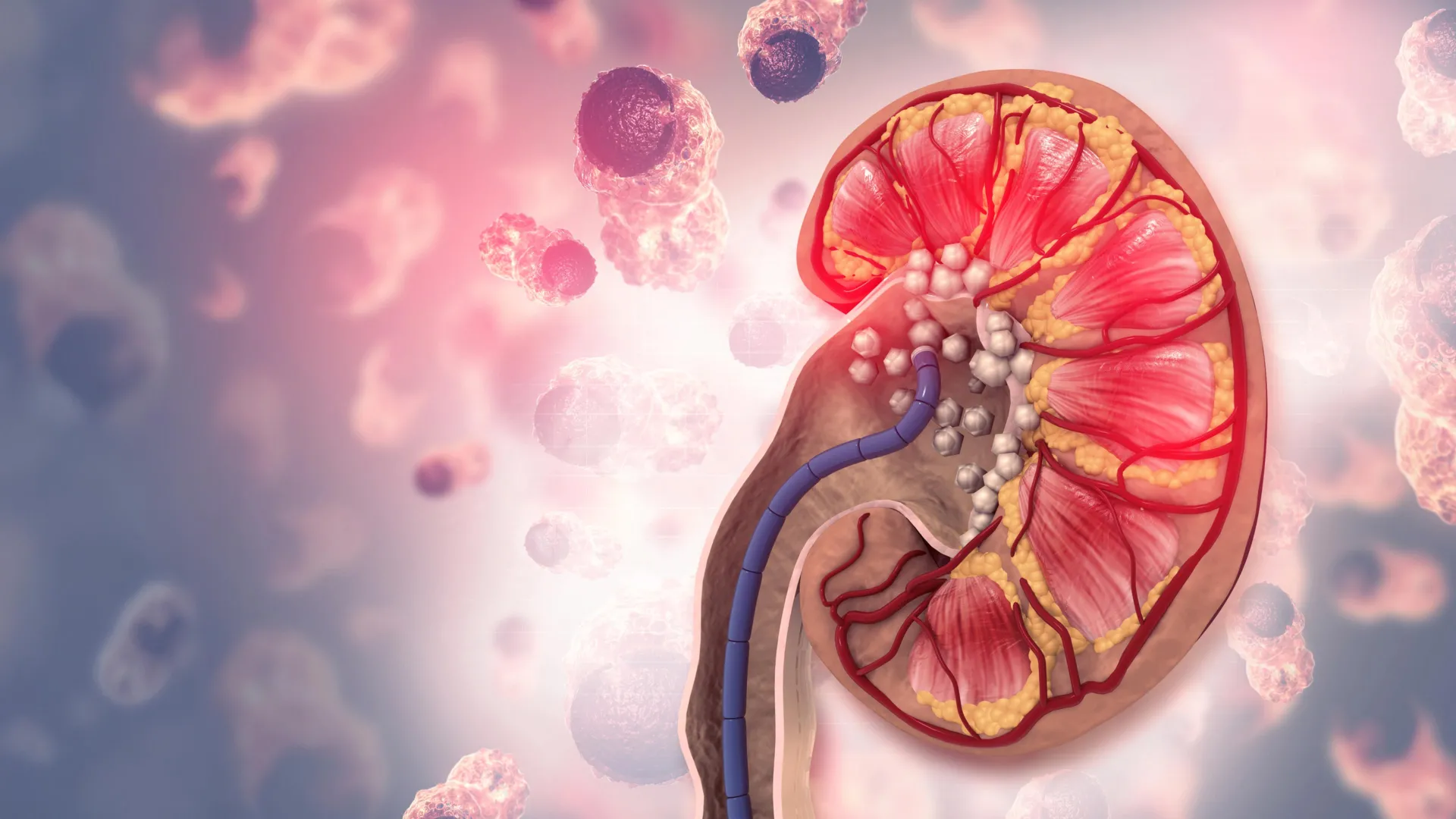
Kidney stones are known to cause severe pain that is often debilitating. It can interfere with daily life and frequently send people to the emergency room. Approximately 1 in 11 people in the United States will develop a kidney stone, and nearly half will later experience another stone.
A large new clinical trial led by the Urolithiasis Research Network and coordinated by Duke Clinical Research Institute aimed to answer important questions. Can a structured behavioral program help people drink enough water to prevent kidney stone recurrence?
Recently published research results are lancetFind out why kidney stones remain difficult to prevent, even when people are motivated and have ongoing support.
“The study results show that despite the importance of high fluid intake to prevent stone recurrence, achieving and maintaining very high fluid intake is more difficult for patients with urolithiasis than we often think,” said Charles Scales, M.D., corresponding author and co-senior author of the paper and an associate professor in the Department of Urology and Population Health Sciences at Duke University School of Medicine.
“Difficulties with adherence may contribute to the relatively high stone recurrence rates in people with this chronic disease,” Scales said.
Smart bottles and coaching still not enough
Participants in this study were randomly assigned to either standard care or a behavioral hydration program designed to increase fluid intake. The program included Bluetooth-enabled smart water bottles that tracked participants’ drinking, as well as personalized hydration goals (“hydration prescriptions”), text reminders, financial incentives, and health coaching.
Each participant’s “water prescription” was calculated by comparing their normal urine output with the amount needed to achieve a daily goal of at least 2.5 liters.
Although people in the program did drink more alcohol and their average urine output increased, the improvements weren’t enough to significantly reduce the group’s overall rate of symptomatic kidney stone recurrence.
Largest behavioral study of its kind
The trial enrolled 1,658 youth and adults from six major clinical centers in the United States: UT Southwestern Medical Center, Washington University in St. Louis, University of Pennsylvania/Children’s Hospital of Philadelphia, Washington University, Mayo Clinic, and Cleveland Clinic. The researchers followed the participants for two years and monitored their results.
This study stands out because it directly measured whether kidney stones recurred, rather than focusing solely on water intake or urine output. The researchers used regular surveys and image processing to determine whether new stones were forming or existing stones were growing.
Why is it so hard to stay hydrated?
The results highlight how difficult it is for people to consistently drink large amounts of water every day, even with the support of technology and coaching. The findings suggest that no single hydration goal will work for everyone, as fluid needs vary depending on factors such as age, body size, lifestyle, and overall health.
“This study advances the field toward more accurate prevention in adolescents and adults,” said co-senior author Gregory E. Tashian, MD, chief pediatric urologist in the Department of Urology and principal investigator of the trial at Children’s Hospital of Philadelphia.
“Rather than asking all patients to achieve the same fluid goals, we need to determine who benefits from which goals, understand why nonadherence occurs, and develop behavioral and medical interventions that reliably reduce stone recurrence,” Tashian said.
Towards more individualized kidney stone prevention
Researchers say the findings demonstrate the need for new approaches to prevention. These may include more individualized hydration goals, strategies to overcome barriers related to work and daily life, and potential treatments to help maintain mineral dissolution in the urine.
“Kidney stone disease is a chronic disease that causes unpredictable and sometimes excruciatingly painful symptoms that can interfere with work, sleep, productivity, and overall life,” said Alana Desai, MD, lead author of the study and principal investigator at the Washington University Research Institute in St. Louis.
“Most people would appreciate simple measures to reduce the likelihood of experiencing another event,” Desai said.
In addition to Scales, Tasian, and Desai, study authors include Naim M. Maalouf, Jonathan D. Harper, Sri Sivalingam, John C. Lieske, H. Henry Lai, Peter P. Reese, Hunter Wessels, Hongqiu Yang, Hussein R. Al-Khalidi, and Ziya Kirkali.
This study, along with other research from the Urolithiasis Research Network, was funded by the National Institute of Diabetes and Digestive and Kidney Diseases.
