

Close Menu

    Subscribe to Updates

    Get the latest creative news from FooBar about art, design and business.

    What's Hot

    Scientists reverse autism-like symptoms in mice by restoring shortened nerve cell structures

    June 30, 2026

    Navigating the Top Clinical Trial Challenges in 2026

    June 30, 2026

    Scientists may have finally discovered how Alzheimer’s disease spreads to the brain

    June 30, 2026
    Facebook X (Twitter) Instagram
    Facebook X (Twitter) Instagram
    Health Magazine
    • Home
    • Environmental Health
    • Health Technology
    • Medical Research
    • Mental Health
    • Nutrition Science
    • Pharma
    • Public Health
    • Discover
      • Daily Health Tips
      • Financial Health & Stability
      • Holistic Health & Wellness
      • Mental Health
      • Nutrition & Dietary Trends
      • Professional & Personal Growth
    • Our Mission
    Health Magazine
    Home » News » Researchers use light-activated nanozymes to treat malignant brain tumors
    Discover

    Researchers use light-activated nanozymes to treat malignant brain tumors

    healthadminBy healthadminApril 29, 2026No Comments3 Mins Read
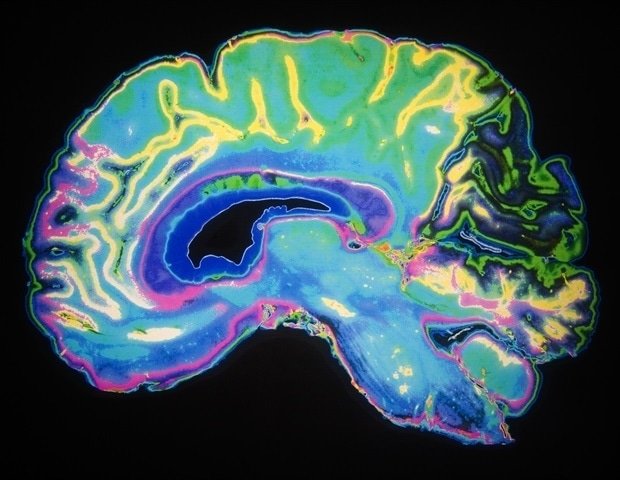
    Researchers use light-activated nanozymes to treat malignant brain tumors
    Share
    Facebook Twitter Reddit Telegram Pinterest Email


    Brain tumors are not always successfully treated with conventional treatments. A team from Empa and the hospital network HOCH Health Ostschweiz is therefore developing a nanozyme that can directly attack cancer cells in the brain during tumor surgery. This project was made possible thanks to the generous support of several foundations.

    Among malignant brain tumors, astrocytomas are particularly common and equally dangerous. Surgical removal of this actively growing tumor can be difficult because the cells invade surrounding healthy tissue. Furthermore, in 7 out of 10 cases, the cancer recurs after treatment, and the prognosis is correspondingly poor. The five-year survival rate is only about 5%. Now, a team at the hospital network HOCH Health Ostschweiz in Empa and St. Gallen, led by neurosurgeon Isabelle Hostetler, hopes to improve the chances of curing this type of tumor with a new, gentler treatment based on so-called nanozymes. This project is being carried out thanks to the generous support of the Hedy Groh-Meyer Foundation, the Swiss Cancer Foundation and four other foundations.

    bypass the blood-brain barrier

    Currently, treatment for astrocytomas includes a combination of surgery, radiation, and chemotherapy. However, the location of the tumor, i.e. the brain, poses a problem, especially with drug therapy. This is because the blood-brain barrier, the body’s own protective mechanism that protects organs from harmful effects from the bloodstream, prevents certain therapeutic drugs from reaching the brain.

    Empa researcher Giacomo Reina and his team at the Institute for Health Nanomaterials in St. Gallen now hope to circumvent this barrier with a clever approach. They are developing biocompatible nanomaterials that can act as nanomedicines that can be used directly in the field during brain tumor surgery. “Cancer cells are particularly metabolically active, so drugs accumulate specifically in tumor tissue,” says Reyna. Another advantage is that nanozymes can be activated with near-infrared light to obtain particularly precise and controllable effects.

    Gentle but powerful

    This new treatment combines several mechanisms of action. Nanozymes, nanomaterials with enzyme-like activities, can, for example, activate inactive precursors of drugs or generate reactive oxygen compounds that damage tumor cells. Their small size allows them to penetrate deep into tissues and attack malignant cells several millimeters away. Furthermore, thanks to its ability to be activated by IR light, the dosage and side effects of the treatment can be minimized.

    The team is now ready to tackle its ambitious goals. At the end of the four-year project, nanomedicine should be ready for clinical trials as a minimally invasive and low-impact treatment to existing treatments. Researchers have high expectations as follows. ”Nanozymes may even prevent astrocytoma recurrence if the tumor is already resistant to conventional chemotherapy” says Giacomo Reina. Furthermore, this approach has promising potential for the treatment of other brain and spinal cord tumors.

    Empa Research Initiative “Oncology”

    Cancer remains one of the biggest challenges to public health in Switzerland, with around 45,000 new infections and 17,000 deaths each year. Empa’s Oncology Initiative aims to address this problem with an innovative materials-based approach that takes into account a patient’s genetic and metabolic fingerprint. Empa’s five laboratories bring together expertise in (nano)materials science, sensor technology, imaging, and advanced in vitro and in silico models to develop new strategies for diagnosis, monitoring, and treatment. The aim is to implement these innovative approaches in collaboration with clinic and industry partners. The first phase of this initiative will run from 2025 to 2035. Another example of a project in the oncology effort is investigating thyroid cancer using innovative 3D imaging technology. This technology allows for a more precise and above all non-destructive analysis of biopsy samples.


    Source link

    Visited 5 times, 1 visit(s) today
    Share. Facebook Twitter Pinterest LinkedIn Telegram Reddit Email
    Previous ArticleCells filter physical forces based on duration to detect disease
    Next Article Survey shows women are confused about when to start mammograms
    healthadmin

    Related Posts

    Review assesses effectiveness of creatine as add-on therapy for depression

    June 30, 2026

    New diagnostic tool bypasses blood-brain barrier to detect autism early

    June 30, 2026

    Researchers map structural changes in viruses during dehydration process

    June 30, 2026

    Niigata University study updates Alzheimer’s disease risk for APOE-e4 homozygotes

    June 30, 2026

    Pharmacy experts call for hybrid digital-human model in NHS healthcare

    June 30, 2026

    Genetic study links KDF1 mutations to dental epithelial tissue disorders

    June 30, 2026
    Add A Comment

    Comments are closed.

    Categories

    • Daily Health Tips
    • Discover
    • Environmental Health
    • Exercise & Fitness
    • Featured
    • Featured Videos
    • Financial Health & Stability
    • Fitness
    • Fitness Updates
    • Health
    • Health Technology
    • Healthy Aging
    • Healthy Living
    • Holistic Healing
    • Holistic Health & Wellness
    • Medical Research
    • Medical Research & Insights
    • Mental Health
    • Mental Wellness
    • Natural Remedies
    • New Workouts
    • Nutrition
    • Nutrition & Dietary Trends
    • Nutrition & Superfoods
    • Nutrition Science
    • Pharma
    • Preventive Healthcare
    • Professional & Personal Growth
    • Public Health
    • Public Health & Awareness
    • Selected
    • Sleep & Recovery
    • Top Programs
    • Weight Management
    • Workouts
    Popular Posts
    • 1773313737_bacteria_-_Sebastian_Kaulitzki_46826fb7971649bfaca04a9b4cef3309-620x480.jpgHow Sino Biological ProPure™ redefines ultra-low… March 12, 2026
    • pexels-david-bartus-442116The food industry needs to act now to cut greenhouse… January 2, 2022
    • 1773729862_TagImage-3347-458389964760995353448-620x480.jpgDespite safety concerns, parents underestimate the… March 17, 2026
    • 1773209206_futuristic_techno_design_on_background_of_supercomputer_data_center_-_Image_-_Timofeev_Vladimir_M1_4.jpegMulti-agent AI systems outperform single models… March 11, 2026
    • 1774403998_image_28620e4b6b0047f7ab9154b41d739db1-620x480.jpgGait pattern helps distinguish between Lewy body… March 24, 2026
    • Leukemia-620x480.jpgBiomimetic platform powers CAR T therapy for… March 9, 2026

    Demo
    Stay In Touch
    • Facebook
    • Twitter
    • Pinterest
    • Instagram
    • YouTube
    • Vimeo
    Don't Miss

    Scientists reverse autism-like symptoms in mice by restoring shortened nerve cell structures

    By healthadminJune 30, 2026

    Recent research published in cell death and disease Suggests that certain cellular abnormalities in the…

    Navigating the Top Clinical Trial Challenges in 2026

    June 30, 2026

    Scientists may have finally discovered how Alzheimer’s disease spreads to the brain

    June 30, 2026

    Scientists accidentally discovered the inherent tendency of counterclockwise movement in humans

    June 30, 2026

    Subscribe to Updates

    Get the latest creative news from SmartMag about art & design.

    HealthxMagazine
    HealthxMagazine

    At HealthX Magazine, we are dedicated to empowering entrepreneurs, doctors, chiropractors, healthcare professionals, personal trainers, executives, thought leaders, and anyone striving for optimal health.

    Our Picks

    Scientists accidentally discovered the inherent tendency of counterclockwise movement in humans

    June 30, 2026

    Delhi plans to ban petrol rickshaws and scooters to cut toxic fumes | India

    June 30, 2026

    Researchers discover new species of beetle hiding right next to their lab

    June 30, 2026
    New Comments
      Facebook X (Twitter) Instagram Pinterest
      • Home
      • Privacy Policy
      • Our Mission
      © 2026 ThemeSphere. Designed by ThemeSphere.

      Type above and press Enter to search. Press Esc to cancel.