


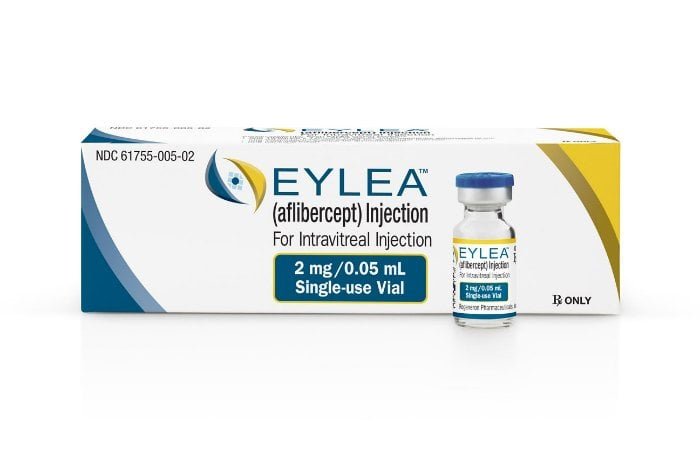
Sales of the eye disease drug continue to decline as regulatory delays continue to plague Regeneron’s efforts to develop Eylea.
In the first quarter of this year, the Eylea franchise generated $941 million in revenue in the U.S., down 10% year over year and down 13% sequentially. It was the first time since the second quarter of 2018 that the franchise failed to achieve at least $1 billion in quarterly sales in the United States.
Sales of Eylea’s high-dose formulations increased 52% year-over-year to $468 million, but were down 7% from the record high of $506 million in the fourth quarter of last year. Meanwhile, sales of Eylea’s original formulation decreased 36% year over year to $473 million.
Regeneron’s first quarter report sent the company’s stock price down 6%.
The entry of a formidable challenger, Roche’s Babismo, which was launched in 2022 and had global sales of CHF 1.02 billion ($1.3 billion) in the first quarter, contributed to Eyrie’s decline. However, regulatory setbacks, most of which are related to manufacturing, also have an impact, hindering Eyrie HD’s development.
Regeneron announced Wednesday that the FDA’s decision date for the second contract manufacturing application for the prefilled syringe (PFS) version of Iry HD has been set for April 26. The company offered no explanation for the delay.
Regeneron is looking to bring another third-party manufacturer online after receiving a complete response letter (CRL) from the FDA in October citing unresolved issues at the Indiana plant of its primary manufacturing partner, Novo Nordisk.
Regeneron has resubmitted a PFS application seeking approval for the troubled facility formerly owned by Catalent. Regeneron CEO Len Schleifer said on a conference call that the plant is being re-inspected by the FDA.
“Regeneron and both third-party filler manufacturers are working closely with the FDA to resolve all outstanding issues, and we expect regulatory decisions for one or both applications to be made this quarter,” Schleifer added.
In the competition with Roche, Regeneron has always been one step behind. The Swiss company received FDA approval for its PFS version of Vabysmo in July 2024.
Still, there is hope that the company can regain some of the market share it lost, as commercial division chief Marion McCourt pointed out some of the benefits of Eyrie HD on a conference call.
“Following recent label enhancements including retinal vein occlusion (RVO) and additional dosing options ranging from every 4 weeks to every 20 weeks, Eyrie HD now has the broadest label and greatest dosing flexibility of any anti-VEGF drug,” McCourt said.
McCourt added that if Regeneron receives PFS approval, it will “provide a best-in-class device to retinal specialists and facilitate the continued adoption of Eylea HD.”
Compensating for the lack of success of Regeneron’s Eylea franchise is Dupixent’s continued upward trajectory. The treatment, in partnership with Sanofi, generated global sales of $4.9 billion in the first quarter, up 33%.
Of this, Regeneron realized $1.6 billion in collaboration revenue from Dupixent, which helped drive the company’s quarterly revenue to $3.6 billion, up 19% year-over-year.
