


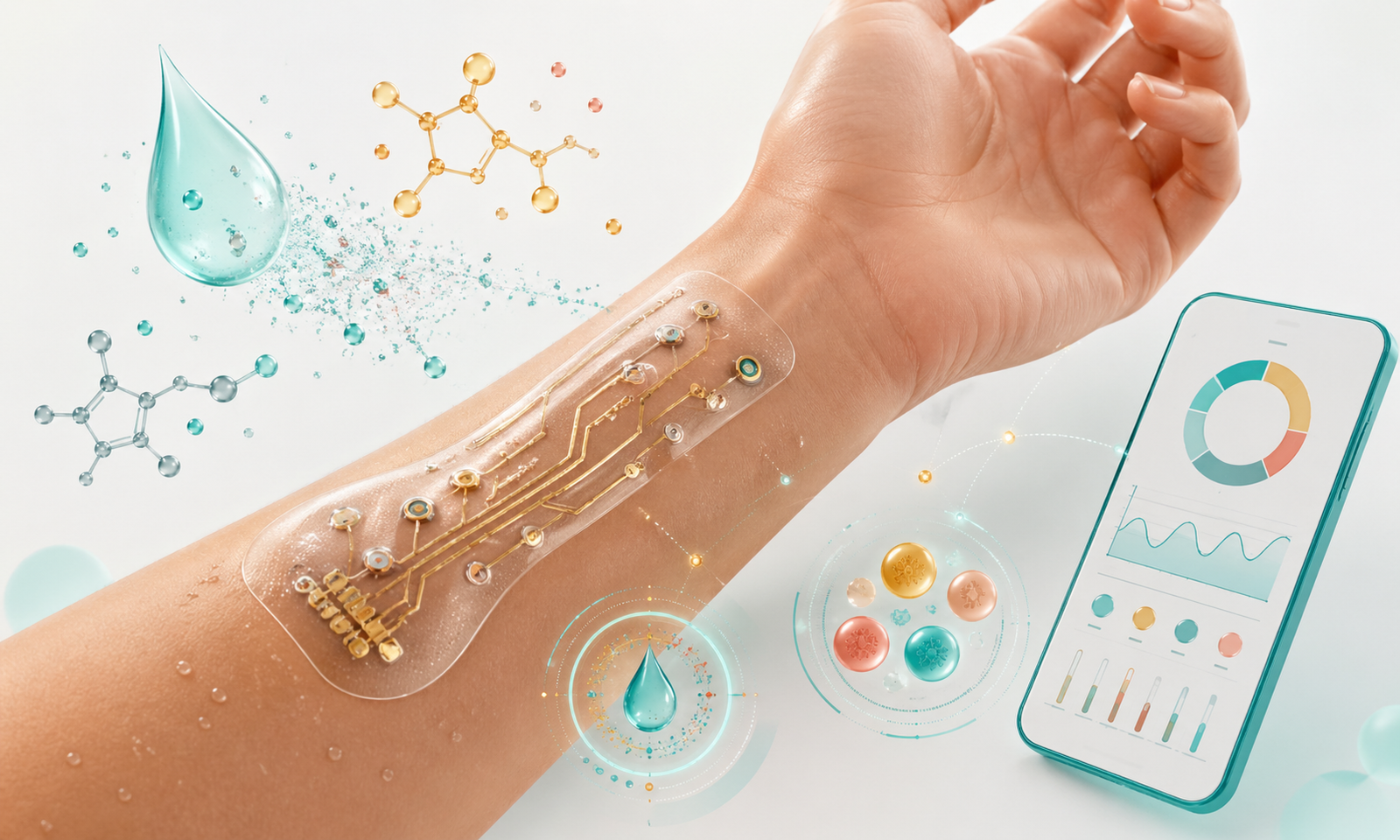
The flexible skin patch detected trace vitamins in sweat and tracked changes in vitamin B9 after meals and supplements, providing an initial step in non-invasive, personalized nutritional monitoring.
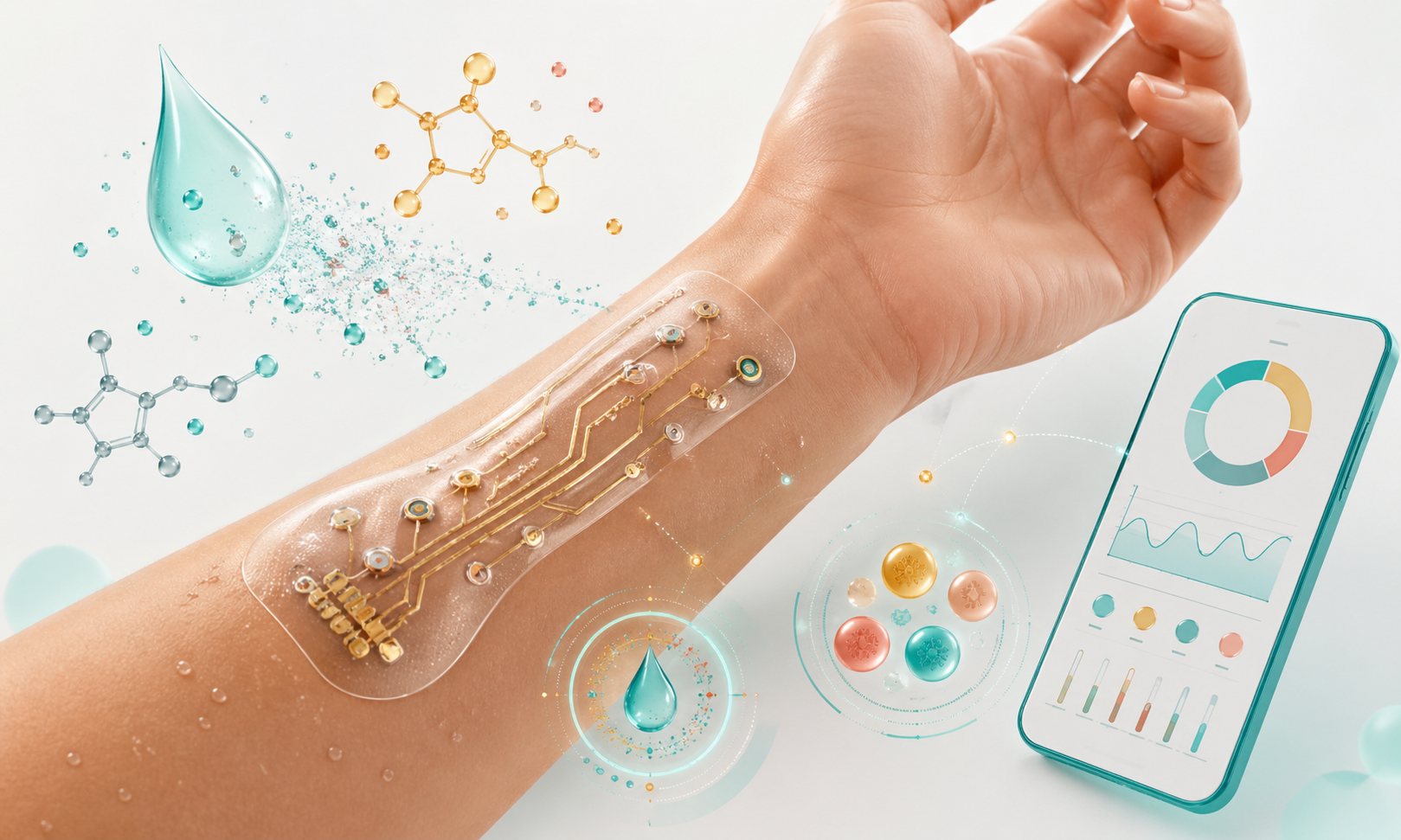
Research: Real-time monitoring of nanomolar vitamins in sweat using an electrochemical skin-worn device. Image credit: AI-generated image
In a recent study published in the journal nature communicationsa group of researchers developed and validated a non-invasive wearable device that can monitor multiple vitamins in human sweat in real time for personalized nutritional supplementation.
Background of wearable sweat vitamin monitoring
More than 2 billion people around the world suffer from “hidden hunger,” meaning they are consuming enough calories but lacking in micronutrients. This has serious health implications, including anemia, weakened immune system, and developmental problems. Blood tests for vitamins are invasive, time-consuming, and do not allow for regular monitoring.
Recently, the development of wearable health technologies has changed the way we monitor our body parameters, but it is very difficult to monitor micronutrients because they are present in low concentrations in available biological fluids such as sweat. Therefore, non-invasive and real-time approaches would provide new ways to improve nutrient delivery.
Further research is needed to support accurate repeat evaluation of vitamins outside of clinical settings.
Design of wearable electrochemical vitamin sensor
This study used a wearable electrochemical sensing platform that can sensitively detect multiple vitamins in sweat simultaneously.
The system consisted of a patch that sticks to the skin and bends as the body moves, and was integrated with a reusable electronic device. It incorporates a screen-printed multi-electrode array for simultaneous detection of vitamins, pH, and ionic strength.
The electrodes were reinforced with a nanocomposite of gold nanoflowers and carbon codoped with sulfur and nitrogen to increase the surface area for electron transfer and biomolecule attachment.
Vitamin-specific antibodies and binding proteins were immobilized on the electrode surface by chemical activation. A competitive binding assay was used in which sweat vitamins and enzyme-labeled vitamin analogues competed for binding sites, producing a measurable electrochemical signal.
Sweat was induced noninvasively by iontophoresis using a mild electrical current and collected via a microfluidic system integrated into the patch. The device enabled real-time analysis of sweat composition with an embedded sensor that compensates for variations in pH and ionic strength to improve accuracy.
Data collection and processing took place with a wireless system connected to a smartphone application.
Validation includes comparison with enzyme-linked immunosorbent assay (ELISA) measurements and testing in human participants under controlled dietary and supplement conditions.
Although the platform is designed to detect six vitamins, human validation primarily focused on vitamin B9.
Sweat vitamin detection and verification results
The wearable biosensor can detect nanomolar levels of six essential vitamins (vitamin B1, vitamin B2, vitamin B7, vitamin B9 (folic acid), vitamin B12, and vitamin D) within the physiological range. The device achieved high sensitivity with a low detection limit of 0.33 nanomolar for vitamin B9 and exhibited superior performance compared to many existing wearable sensors.
The nanocomposite electrode design significantly increases signal strength, allowing reliable detection even in the complex matrix of sweat.
This system was highly selective as it distinguished the target vitamin from other components found in sweat. Minimal cross-reactivity is observed, ensuring accurate multivitamin monitoring. Reproducibility testing confirmed consistent performance across multiple devices, highlighting its scalability and practical ease of use.
In human trials, the device tracked changes in vitamin B9 in sweat after meals and supplement intake. After taking a 5 mg vitamin B9 supplement, the vitamin levels in sweat increased by more than 3.6 times within a few hours using the sensor. This shows that the sensor can measure rapid physiological changes. Dietary intake of vitamin B9-rich foods also caused an increase in the amount of vitamin B9 in sweat.
A strong correlation was observed between sweat and serum vitamin B9 levels (r = 0.849), suggesting that sweat vitamin B9 may be useful for non-invasive trend monitoring of systemic vitamin status, although clinically it is not yet compatible with serum tests. Validation against ELISA measurements showed excellent agreement with a correlation coefficient of 0.989 after calibration using pH and ionic strength data.
The study also found that differences in lifestyle were associated with differences in vitamin levels. For example, the biochemical effects of tobacco depend on nutrient metabolism, and smokers had lower vitamin B9 concentrations in both serum and sweat compared to non-smokers. This finding highlights the potential of this device for monitoring population-specific nutritional risks.
Furthermore, the system showed stable performance in controlled onboard tests. For example, researchers collected sweat from multiple areas of the body over several hours while maintaining consistent performance.
The microfluidic design of the device allows for efficient sweat collection and fast response time (within minutes). However, the human experiments were preliminary and involved a small cohort of young adults, so larger and more diverse studies are needed.
What does personalized nutritional monitoring mean?
This study represents a promising step in non-invasive health monitoring by demonstrating a wearable device capable of real-time vitamin tracking through sweat. This platform has the potential to support personalized nutrition due to its high sensitivity and ability to detect multiple analytes.
The technology is designed to measure multiple nutrients simultaneously, and further validation and calibration could help track vitamin trends and guide personalized nutritional strategies.
Additionally, information provided by this technology on the effects of lifestyle habits (such as smoking) on vitamin levels could support public health efforts.
This new technology could ultimately help shift the way people assess their vitamin status from occasional routine tests to more frequent monitoring based on an individual’s lifestyle and nutritional needs.
Reference magazines:
- Wang, X., Wang, Y., Li, Y., Sun, Y., Mao, P., Liu, S., Ou, J., Wang, X., Ren, F., and Zhang, H. (2026). Real-time monitoring of nanomolar vitamins in sweat using an electrochemical skin-worn device. Nature Communications. DOI: 10.1038/s41467-026-72356-1, https://www.nature.com/articles/s41467-026-72356-1
