


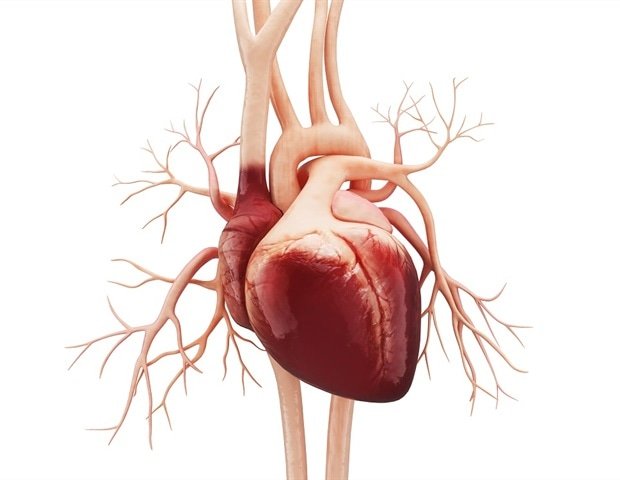
As the demand for heart transplants continues to far outstrip the number of donor hearts available, experts at the International Society for Heart and Lung Transplantation (ISHLT)’s 46th Annual Meeting and Scientific Sessions today considered the important question of how to allocate this scarce lifesaving resource.
In a presentation titled “Allocation Models Beyond the United States: Scoring or Status? A Global Perspective,” Guillaume Coutin, MD, highlighted how different countries are approaching this complex challenge and why no single system has emerged as the optimal solution.
Approximately 7,000 heart transplants are performed worldwide each year, but approximately 10 to 15 percent of patients on heart waiting lists die before receiving a transplant. “The shortage of donor hearts is the main limiting factor in performing more heart transplants,” said Dr. Coutens, a cardiologist in the Department of Heart Transplantation at the Georges Pompidou European Hospital in Paris. “Because donor hearts are limited, allocation systems must carefully balance competing priorities, including saving critically ill patients, maximizing transplant success, and ensuring equity.”
Two main allocation schemes
In a study of 24 countries, Dr. Coutens identified 11 different allocation schemes. However, most fall into two main categories:
- status-based system (Used in 23 countries) Assigns patients to priority levels based on disease severity and treatment status. Patients receiving life support treatments such as ECMO (an advanced life support machine that temporarily takes over the functions of a failing heart or lungs) are usually given top priority.
- score-based system A statistical model (used in France) is used to estimate both the risk of death within the waiting list and the expected survival rate after transplantation.
“Status-based systems may reflect intensity of care rather than true medical urgency and may be vulnerable to fluctuating clinical practices,” he said. “However, the predictive modeling used in score-based systems remains incomplete due to the limited statistical performance of predictive models applied to such allocation schemes.”
The allocation approaches being deployed globally include key differences.
- Number of priority levels
- How much emphasis is placed on treatments such as ECMO?
- Are long-term consequences considered in decision-making?
- National and regional allocation systems.
French data-driven model
France replaced the urgency-based approach with the current score-based allocation system in 2018.
“The core of the French model uses a single composite score to rank all patients on the waiting list, allowing direct comparisons between candidates across the country,” he said. “This approach aims to ensure that organs are allocated to those who need them most, while maximizing the chances of transplant success.”
The composite score is based on a four-step calculation process designed to balance fairness, efficiency, and transparency.
- Predict waiting list mortality rate over one year Use multivariate analysis. Patients receive a cardiac risk index based on factors such as need for temporary mechanical support, kidney and liver function, and biomarkers of heart failure.
- Establishing an exception To adapt to special clinical situations
- Donor and recipient matchingblood type compatibility, body size, age differences, and expected survival after transplantation.
- Geography and logistics considering travel time between donor and recipient hospitals.
“Unlike simple status-based systems that rely on broad clinical categories, our model aims for a more individualized and continuous prioritization of patients,” he said.
Dr. Koutens said that while studies suggest that the score-based system helps standardize allocation decisions and reduce unnecessary use of aggressive treatments that are only meant to increase prioritization, there was no significant change in transplant outcomes.
“No allocation system has proven to be clearly superior in terms of improving both pre-transplant and post-transplant outcomes,” he said. “All systems face the same fundamental challenge: how to balance urgency, utility, and equity amid organ shortages.”
Allocation systems must also continue to adapt as medical advances and clinical practice change.
“The increased use of mechanical support devices, changes in patient populations, and improvements in data analysis are all reshaping how allocation decisions are made,” Dr. Koutens said. “No allocation system is perfect; each model must balance urgency, equity, and expected benefits, and all must contend with the reality of organ shortages.”
sauce:
International Heart and Lung Transplant Society
