


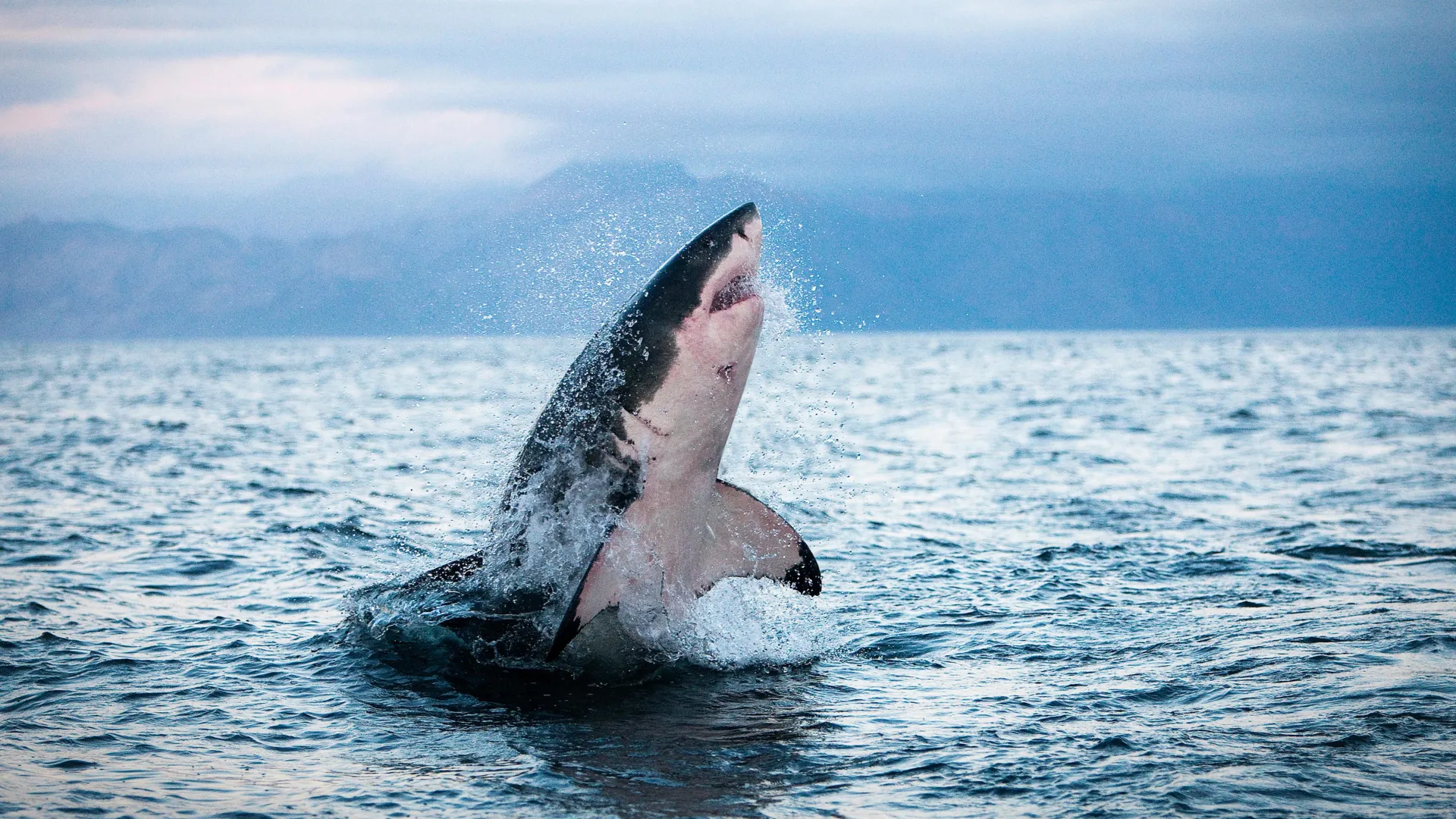
A new study has found that some of the ocean’s most powerful predators are getting hotter than expected, and the consequences could be severe. These animals already require large amounts of energy to survive, but now they are facing increasing challenges due to rising ocean temperatures and decreasing food availability. Scientists describe this as a “double jeopardy” where both environmental stress and biological demands work against you.
The study, led by scientists from Trinity College Dublin in collaboration with the University of Pretoria’s (UP) School of Veterinary Medicine, showed that certain warm-bodied fish, such as tuna, and some sharks, such as great whites and basking sharks, expend almost four times as much energy as cold-blooded fish of the same size. As ocean temperatures rise, these species are more likely to overheat, shrinking their ranges and potentially pushing them to cooler regions closer to the poles.
Characteristics of “Mesophilic Fish”
The study, published in the journal Science, focused on “mesophilic” fish. These are a rare group representing less than 0.1% of all fish species that are able to conserve body heat and keep parts of their bodies warmer than the surrounding water. This adaptation has evolved independently in several species of sharks and tuna, resulting in benefits such as faster swimming, long-distance movement, and increased hunting ability.
To better understand the costs of this high-performance lifestyle, researchers developed a new method to estimate the metabolic rate of free-swimming fish in the wild. They used biologging data collected from small sensors that record body and water temperatures. This allows us to calculate in real time how much heat a fish produces and how much it loses. The research team combined these findings, including data from giant basking sharks weighing up to 3.5 tonnes, with hundreds of laboratory measurements from smaller species.
The study’s lead author, Dr Nicholas Payne from Trinity University’s School of Natural Sciences, said: “These results were truly surprising. After accounting for body size and body temperature, we found that mesophilic fish use around 3.8 times more energy than similarly sized ‘cold-blooded’ or ‘cold-blooded’ fish. Furthermore, for a 10°C increase in body temperature, the fish’s daily metabolic rate more than doubles; in fact, this is the case.” This means that warm-bodied predators must consume much more food to maintain their lifestyle. ”
Why are larger fish at higher risk of heat?
Dr. Payne explained that increased energy use is only part of the problem. “However, increased energy demand is only part of the story, because as fish grow larger, they generate heat faster than their bodies can lose it,” he said. “This creates a mismatch caused by fundamental geometry and physics, because large objects retain heat more effectively, and at intermediate temperatures high metabolic rates amplify this effect.”
Because of this imbalance, larger fish naturally become “warmer” over time. This scale effect increases the risk of overheating and has important implications for how these species survive and where they can live.
Habitat may be restricted due to heat restrictions
Professor Andrew Jackson, lead author of the study, said the research team used the data to define a “thermal equilibrium threshold”. These thresholds represent water temperatures at which large fish can no longer release heat fast enough to maintain a stable body temperature.
“Based on our data, we were able to create a theoretical ‘thermal equilibrium threshold’ – the water temperature at which large fish cannot release heat fast enough to maintain a stable body temperature without altering their behavior or physiology. For example, a 1-ton long warm shark may struggle to maintain thermal equilibrium at water temperatures above about 17 degrees Celsius,” he explained.
“Once such a threshold is exceeded, fish have to slow down, change their blood flow, or dive to cooler depths to avoid dangerous warming, but that comes at a cost. For example, they can find it harder to find or catch food, especially when speed and power are their main weapons.”
Changing habitats and migration patterns
These findings help explain why large fish are more commonly found in cold waters, high latitudes, or deep oceans. Many species migrate seasonally to stay within their preferred temperature range.
Looking to the future, researchers predict that as global temperatures continue to rise, suitable habitat for large mesophilic fish will shrink, especially during the warmer months. Some species, such as the Atlantic bluefin tuna, can temporarily cope by diving deeper or increasing heat loss, but even these adaptations may not be enough if surface water temperatures continue to rise.
Growing pressure from climate change
Highlighting the growing challenge, UP’s Dr. Snelling said, “This study shows that becoming a high-performance predator in the ocean comes at a higher cost than we previously realized. As ocean temperatures rise, these species are approaching their physiological limits, which could impact where they can live and how they survive.”
He added: “Of particular concern is that these animals already operate on tight energy budgets, and climate change is further limiting their options. Understanding these constraints is essential if we want to predict how marine ecosystems will change in the coming decades.”
Double threat to the sea giants
“The implications of this new discovery are truly worrying, as it essentially puts these animals at ‘double jeopardy’,” Dr Payne said. “Many mesophilic fishes are already heavily affected by overfishing of themselves as well as their prey species, making them particularly vulnerable when energy demands increase and food becomes scarce.”
He also pointed to lessons from the past. “Fossil evidence suggests that warm ocean giants, such as the infamous extinct megalodon shark, suffered disproportionately as oceans changed during past climate events, and the alarm bells are now ringing louder as today’s oceans change at unprecedented rates.”
Why this study matters
This study provides a new way to predict which marine species are most at risk in a warming world. This highlights that many of the ocean’s fastest and most formidable predators may also be the most physically restricted animals. Understanding how these animals manage heat may be key to protecting them and maintaining marine ecosystems as climate change accelerates.
