

Close Menu

    Subscribe to Updates

    Get the latest creative news from FooBar about art, design and business.

    What's Hot

    Obese children face sharp decline in economic mobility as adults

    April 16, 2026

    APA launches digital resource library for mental health apps

    April 16, 2026

    What HaloMD’s legal victory means for No-Surprise Arbitration

    April 16, 2026
    Facebook X (Twitter) Instagram
    Facebook X (Twitter) Instagram
    Health Magazine
    • Home
    • Environmental Health
    • Health Technology
    • Medical Research
    • Mental Health
    • Nutrition Science
    • Pharma
    • Public Health
    • Discover
      • Daily Health Tips
      • Financial Health & Stability
      • Holistic Health & Wellness
      • Mental Health
      • Nutrition & Dietary Trends
      • Professional & Personal Growth
    • Our Mission
    Health Magazine
    Home » News » Scientists discover how the immune system signals the brain to avoid germs
    Discover

    Scientists discover how the immune system signals the brain to avoid germs

    healthadminBy healthadminApril 16, 2026No Comments4 Mins Read
    Scientists discover how the immune system signals the brain to avoid germs
    Share
    Facebook Twitter Reddit Telegram Pinterest Email


    Researchers from the University of Bonn and Bonn University Hospital elucidate the mechanisms essential for survival

    When humans or animals eat something that makes them feel sick, they then avoid that food source. Until now, it was unclear exactly how this avoidance learning occurs. New research shows that communication between brain cells and fat cells may play an important role here.

    Participants from the University of Bonn, Tohoku University (Japan), and University Hospital Bonn uncovered a previously unknown mechanism in fruit flies. Similar forms may exist in mammals and humans. The results have now been published in the journal Neuron.

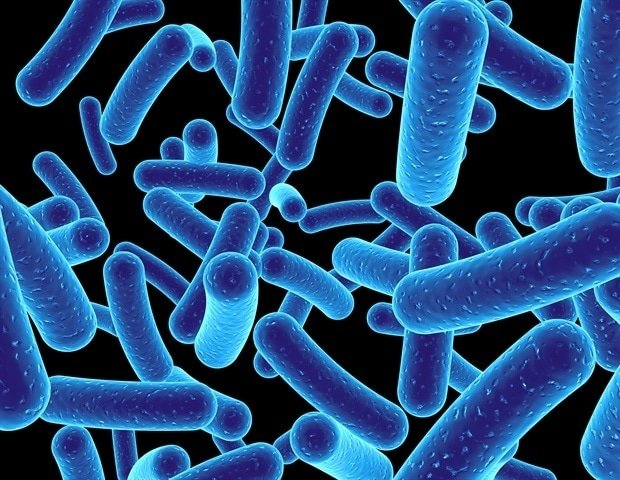
    If you’ve ever had an upset stomach after eating a bad meatball, you know how upsetting this experience can be. Within research, this is also known as “conditioned taste aversion.” The brain registers the immune response to the bacteria and its toxins, and concludes from there that the food source should be avoided in the future.

    It is not yet known how the discovery of pathogens by the immune system leads to behavioral changes. “This learned food avoidance is found in all species, so we investigated this question in the model organism Drosophila melanogaster,” explains Professor Ilona Grunwald-Cadeau.

    Within this model, we can reveal how the brain and body interact to elicit avoidance responses essential for survival. ”


    Dr. Ilona Grunwald Cadeau, University of Bonn

    Flies initially preferred food contaminated with bacteria

    Grunwald Cadeau is the 2nd Director of the Institute of Physiology at the University of Bonn and the University Hospital Bonn. In the current study, her working group is collaborating with researchers at Tohoku University in Japan. Participants had their experimental animals choose between two food sources. One of them was contaminated with the pathogen Pseudomonas entomophila. The other contained a harmless Pseudomonas strain. Otherwise, the two food sources were completely identical.

    Flies that have not yet had a bad experience with pathogens prefer harmful baits because they find the smell appealing. “Since this is life-threatening for animals, we wondered how animals would behave if they ingested these bacteria with their food,” explains the scientist. The pathogen did not go undiscovered among flies for a long time. An animal’s innate immune system has sensors that alert it in such cases. “In our experiments, receptors that respond to components of the bacterial cell wall were activated in the body,” explains Grunwald-Cadeau’s colleague Yujie Wang. She conducted most of the experiments as part of her doctoral thesis.

    Bacterial sensors lead to behavioral changes

    These sensors respond primarily to harmful Pseudomonas strains, but rarely to harmless Pseudomonas strains. Many of them are located on the surface of special neurons near the fly’s throat. These neurons are connected via branches to the fly’s brain as well as to fat stores in the fly’s head. Octopamine, a neurotransmitter closely related to adrenaline, is released in neurons when receptors sound an alarm in the presence of harmful microorganisms. This is transmitted through nerve branches to fat stores.

    “Octopamine triggers the formation of another neurotransmitter, dopamine, in fat cells,” says Grunwald-Cadeau. “Dopamine is then transported to the fly’s brain, where it continually increases the activation of neuronal networks important for learning and triggers an avoidance response.” Animals are therefore likely to be deterred from action by the smell of pathogens. “We were able to show that after the flies had experienced spoiled food, they selected a food source containing harmless bacteria,” the scientists explain.

    Are hungry flies less picky eaters?

    Adipose tissue is significantly involved in this learned behavioral change. But why is this so? “We don’t have a final answer yet,” says Grunwald Kado, a member of the Interdisciplinary Research Area (TRA) Life and Health at the University of Bonn. “However, the flies’ decisions may be related to their nutritional status.”

    When an animal is starved, fat cells decrease. When they discover that pathogenic bacteria have been consumed with food, they produce less dopamine accordingly. Perhaps starving animals try to rely on contaminated food sources. “This is a hypothesis that we are currently investigating in further experiments,” explains the scientist.

    This result may also be relevant to humans, as our species’ adipose tissue also produces neurotransmitters that act on the brain and influence appetite. Researchers now believe that in eating disorders such as anorexia and obesity, the interactions between the brain, organs, and fat are not working properly. Drosophila allows us to investigate such hypotheses in a simple model organism and understand the underlying mechanisms. This understanding could help influence the complex interactions between metabolism, the immune system, and the brain in disease settings.

    sauce:

    Reference magazines:

    Wang, Y. others. (2026) Bidirectional brain-fat body axis for pathogen avoidance. neuron. DOI: 10.1016/j.neuron.2026.03.026. https://www.cell.com/neuron/fulltext/S0896-6273(26)00217-5?_returnURL=.


    Source link

    Visited 1 times, 1 visit(s) today
    Share. Facebook Twitter Pinterest LinkedIn Telegram Reddit Email
    Previous ArticleNoteworthy in RFK Jr.’s testimony: DC diagnosis
    Next Article Clinical barriers to accessing hormone therapy after cervical cancer treatment
    healthadmin

    Related Posts

    Clinical barriers to accessing hormone therapy after cervical cancer treatment

    April 16, 2026

    Scientists discover biological ‘memory’ of breastfeeding in children’s blood samples

    April 16, 2026

    Researchers demonstrated that magnetic seizures were comparable to ECT in clinical response

    April 16, 2026

    Study reveals why endometriosis pain persists even after lesions are removed

    April 16, 2026

    Researchers have discovered a molecular signature that alerts aging cells to malfunctioning

    April 16, 2026

    Understanding cellular messaging provides a blueprint for targeting inaccessible tumors

    April 16, 2026
    Add A Comment
    Leave A Reply Cancel Reply

    Categories

    • Daily Health Tips
    • Discover
    • Environmental Health
    • Exercise & Fitness
    • Featured
    • Featured Videos
    • Financial Health & Stability
    • Fitness
    • Fitness Updates
    • Health
    • Health Technology
    • Healthy Aging
    • Healthy Living
    • Holistic Healing
    • Holistic Health & Wellness
    • Medical Research
    • Medical Research & Insights
    • Mental Health
    • Mental Wellness
    • Natural Remedies
    • New Workouts
    • Nutrition
    • Nutrition & Dietary Trends
    • Nutrition & Superfoods
    • Nutrition Science
    • Pharma
    • Preventive Healthcare
    • Professional & Personal Growth
    • Public Health
    • Public Health & Awareness
    • Selected
    • Sleep & Recovery
    • Top Programs
    • Weight Management
    • Workouts
    Popular Posts
    • the-pros-and-cons-of-paleo-dietsThe Pros and Cons of Paleo Diets: What Science Really Says April 16, 2025
    • Improve Mental Health10 Science-Backed Practices to Improve Mental Health… March 11, 2025
    • How Healthy Living Is Transforming Modern Wellness TrendsHow Healthy Living Is Transforming Modern Wellness… December 3, 2025
    • Kankakee_expansion.jpgCSL releases details of $1.5 billion U.S.… March 10, 2026
    • urlhttps3A2F2Fcalifornia-times-brightspot.s3.amazonaws.com2Fc32Fcd2F988500d440f2a55515940909.jpegA ‘reckless’ scrapyard with a history of… October 24, 2025
    • Healthy Living: Expert Tips to Improve Your Health in 2026Healthy Living: Expert Tips to Improve Your Health in 2026 November 16, 2025

    Demo
    Stay In Touch
    • Facebook
    • Twitter
    • Pinterest
    • Instagram
    • YouTube
    • Vimeo
    Don't Miss

    Obese children face sharp decline in economic mobility as adults

    By healthadminApril 16, 2026

    Children who experience obesity are significantly less likely to move up the economic ladder as…

    APA launches digital resource library for mental health apps

    April 16, 2026

    What HaloMD’s legal victory means for No-Surprise Arbitration

    April 16, 2026

    Finnish cold-water swimmer reveals how frigid climate cures modern rush

    April 16, 2026

    Subscribe to Updates

    Get the latest creative news from SmartMag about art & design.

    HealthxMagazine
    HealthxMagazine

    At HealthX Magazine, we are dedicated to empowering entrepreneurs, doctors, chiropractors, healthcare professionals, personal trainers, executives, thought leaders, and anyone striving for optimal health.

    Our Picks

    Finnish cold-water swimmer reveals how frigid climate cures modern rush

    April 16, 2026

    President Trump nominates Erica Schwartz to head CDC

    April 16, 2026

    Viatrice and Teva start separate recalls due to disbandment and raw material issues

    April 16, 2026
    New Comments
      Facebook X (Twitter) Instagram Pinterest
      • Home
      • Privacy Policy
      • Our Mission
      © 2026 ThemeSphere. Designed by ThemeSphere.

      Type above and press Enter to search. Press Esc to cancel.