


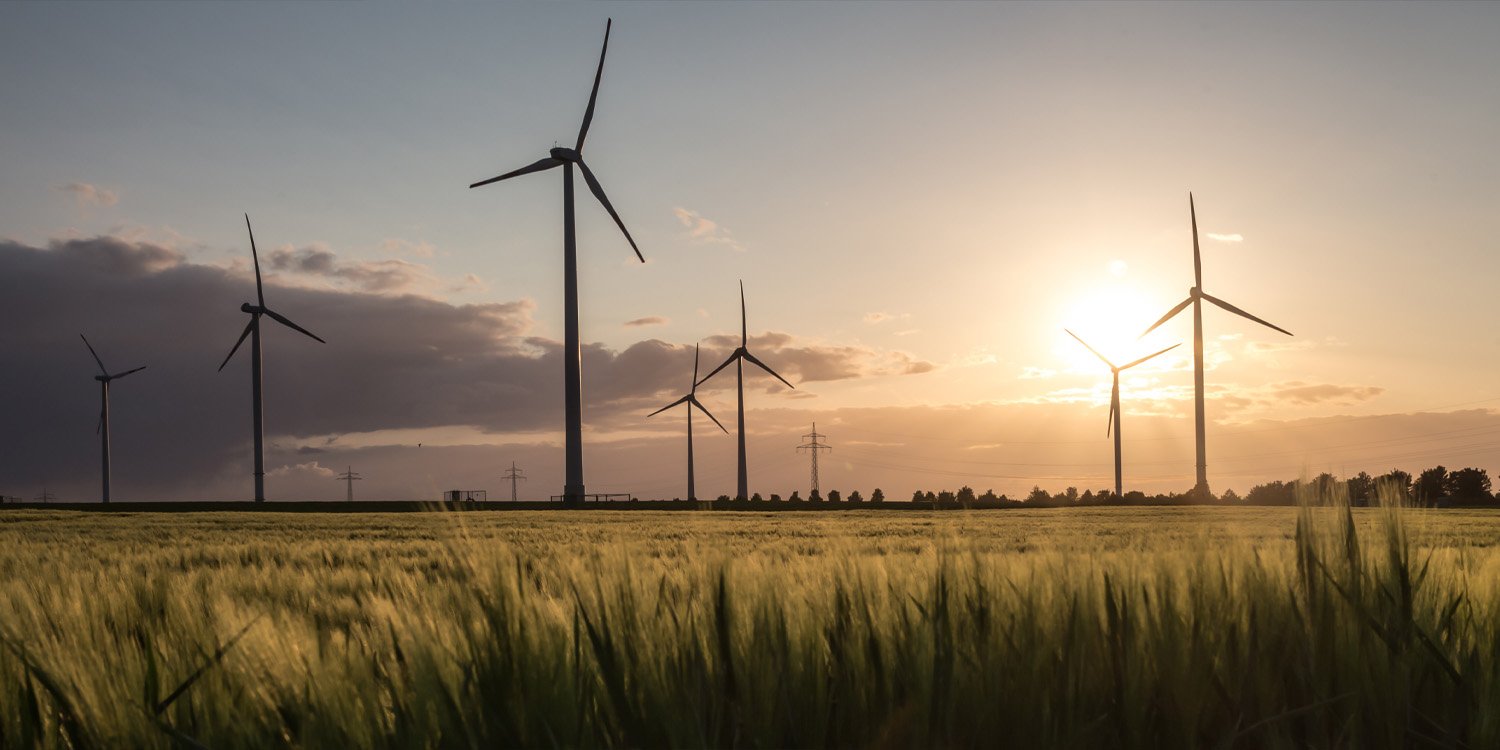
A general tendency to believe in secret conspiracies can predict whether someone will oppose the construction of a local wind farm in a few months. Similarly, becoming opposed to a local wind farm can deepen a person’s overall conspiratorial worldview over time. These mutually reinforcing perspectives may slow the transition to renewable energy sources if community concerns are not addressed. The study was recently published in the Journal of Environmental Psychology.
The transition to renewable energy often relies heavily on the expansion of onshore wind power. However, local communities often resist the construction of new turbines in their neighborhoods. Residents may be concerned about changes to the landscape, potential impacts on local wildlife, and the economic fairness of the development. Without community acceptance, ambitious national goals to mitigate climate change could face significant delays.
Previous research has shown that people who are more likely to believe in conspiracy theories are more likely to oppose local wind farms. A conspiracy theory is a common worldview characterized by the assumption that secretive, malicious groups orchestrate social events behind the scenes. This is different from believing in a single concrete theory, such as the idea that the moon landings were faked. This represents the basic assumption that the public is constantly being deceived.
People with high conspiracy theory tendencies tend to view political and scientific authorities as inherently corrupt or deceptive. Because these authorities are the main proponents of wind energy expansion, a high baseline level of mistrust can quickly translate into skepticism toward nearby renewable energy projects.
University of Hohenheim researcher Kevin Winter and his colleagues wanted to understand the timing of this relationship. Past studies have only been able to take one snapshot in time. From a single snapshot, it is impossible to determine whether a conspiratorial worldview will lead to opposition to wind power, or whether opposition will develop first. To find out, Winter teamed up with Lotte Pummerer, Timo von Oelzen, Matthew J. Hornsey, and Kai Sassenberg to track changes in people’s views over time.
Knowing which attitude prevails can help public policy makers design better ways to interact with communities. If conspiratorial thinking takes precedence, authorities may need to focus on building basic epistemic trust before proposing new infrastructure. Epistemic trust refers to an individual’s willingness to believe that the information provided by experts and institutions is accurate and well-intentioned. If opposition to wind power is a priority, planners may need to focus instead on local economic benefits and fair planning procedures.
The research team conducted a longitudinal study, asking the same group of German adults at three different points in time. Each survey wave was conducted approximately 4 months apart starting in late 2022. By visiting the same individuals repeatedly, researchers were able to look for patterns that indicate changes in one attitude precede changes in another.
Of the first group, 297 participants completed all three surveys. The survey asked participants to rate their general attitudes toward the construction of wind farms near their hometowns using a standard rating scale. The survey also measured overall conspiratorial sentiment by asking people about the extent to which they agreed with statements that claimed the public was kept in the dark about important world events. Participants also indicated their intention to vote in favor of local turbines in a hypothetical referendum.
To complete the data, the researchers also measured beliefs in specific conspiracy theories about wind energy. They asked participants whether they agreed with statements suggesting that the government is deliberately withholding information about the dangers of wind power. Certain stories often circulate online claiming that energy companies hide the negative health effects of living near turbines or exaggerate the environmental benefits in order to secure public funding.
The researchers analyzed the data to see how temporary changes in people’s thinking affected their views months later. They used a statistical model that distinguishes between a person’s long-term stable characteristics and short-term attitude fluctuations. Human beliefs are generally stable, so people who oppose wind turbines in January are likely to still oppose them in May. By controlling for these stable characteristics, the team was able to focus on less obvious deviations in individuals’ perspectives.
This step allowed the team to see exactly what happened when participants’ levels of suspicion or opposition rose slightly above their normal baseline. They found that as a person’s conspiratorial psychology increased above a typical baseline, they were more likely to express more negative attitudes toward local wind farms in subsequent surveys. General suspicion of hidden agendas appears to precede rejection of specific local initiatives. People with increased distrust of authorities may naturally assume that government and industry representatives are hiding the true costs and risks of proposed energy projects.
The data also revealed a pattern that works in the opposite direction. When participants reported an increase in negative feelings toward nearby wind farms, they showed an overall increase in conspiracy theory tendencies four months later. This second pathway actually showed a slightly stronger mathematical relationship than the first pathway. Opposing local projects seems to foster widespread suspicion of society’s institutions.
This dynamic suggests that having negative views toward local energy projects may lead people to actively seek out information that justifies resistance. During this ambitious search, you may come across certain conspiracy theories about wind turbines spread by influencers and online groups. Assimilating these targeted concepts can spread to more general suspicions of government and industry. As it turns out, these two ideas seem to feed off each other over time, creating a cycle of growing distrust and policy resistance.
The research team noted that there are several limitations that limit how broadly these conclusions can be applied. This study relied solely on self-reported survey responses, meaning that participants were evaluating their own attitudes rather than indicating them through observable behaviors. Additionally, we only tracked changes over a relatively short interval of four months, which may not capture how these beliefs evolve over the life of a multi-year infrastructure project.
Additionally, all participants were from Germany, a country where energy policy was undergoing intense debate during the study period. Russia’s recent invasion of Ukraine disrupted natural gas supplies, making domestic energy production and political trust highly polarizing topics across the country. Future studies should recruit more participants from different geographic regions to see if these patterns hold stably across different cultural contexts.
It is also possible that deeper underlying characteristics are the root cause of both wind farm opposition and conspiracy theories at the same time. For example, people with a general tendency to distrust others may be highly sensitive to both phenomena. Expanding the focus of research to a broader range of personality traits may help disentangle these intertwined psychological patterns.
If left unchecked, this could reinforce the cycle between official skepticism and opposition to renewable energy, slowing efforts to combat climate change. The researchers suggest that local governments could break the cycle by increasing transparency and encouraging citizen participation early in the planning process for new wind farms. Building trust directly with local residents may reduce the scope for secret suspicions to take root and spread.
The study, “Conspiracy Theories and Opposition to Wind Farms: A Longitudinal Study,” was authored by Kevin Winter, Lotte Pummerer, Timo von Oelzen, Matthew J. Hornsey, and Kai Sassenberg.
