

Close Menu

    Subscribe to Updates

    Get the latest creative news from FooBar about art, design and business.

    What's Hot

    New CellCelector CLD takes you from thousands of candidates to top clones faster

    April 10, 2026

    Scientists finally find out why promising anti-cancer drugs keep failing

    April 10, 2026

    Dragonflies can see colors that humans can’t see, which could change medicine

    April 10, 2026
    Facebook X (Twitter) Instagram
    Facebook X (Twitter) Instagram
    Health Magazine
    • Home
    • Environmental Health
    • Health Technology
    • Medical Research
    • Mental Health
    • Nutrition Science
    • Pharma
    • Public Health
    • Discover
      • Daily Health Tips
      • Financial Health & Stability
      • Holistic Health & Wellness
      • Mental Health
      • Nutrition & Dietary Trends
      • Professional & Personal Growth
    • Our Mission
    Health Magazine
    Home » News » New hippocampal model advances understanding of Alzheimer’s disease progression
    Discover

    New hippocampal model advances understanding of Alzheimer’s disease progression

    healthadminBy healthadminApril 10, 2026No Comments4 Mins Read
    New hippocampal model advances understanding of Alzheimer’s disease progression
    Share
    Facebook Twitter Reddit Telegram Pinterest Email


    Using a new model of brain regions essential for memory formation, from cells to brain-wide networks, researchers hope to identify critical changes in the progression of Alzheimer’s disease that could point the way to earlier and more effective treatments.

    A team of researchers at the Mark and Mary Stevens Neuroimaging and Informatics Institute (Stevens INI) at the Keck School of Medicine at the University of Southern California has received a large grant from the National Institutes of Health to investigate a long-standing mystery in Alzheimer’s disease (AD): how the loss of specific neurons in the hippocampus leads to the cognitive deficits seen in AD patients.

    This five-year NIH R01 award, led by Michael S. Bienkowski, Ph.D., assistant professor of physiology and neuroscience and biomedical engineering at the Keck School of Medicine, will support the development of powerful new cell type-specific multiscale models of the hippocampus. The hippocampus is one of the first regions affected in Alzheimer’s disease and is an essential brain region for memory formation. Multiscale models are a way to connect information across different “levels” of the brain, from microscopic parts such as cells and circuits to larger regions and brain-wide networks, allowing researchers to see how changes at one level affect other levels.

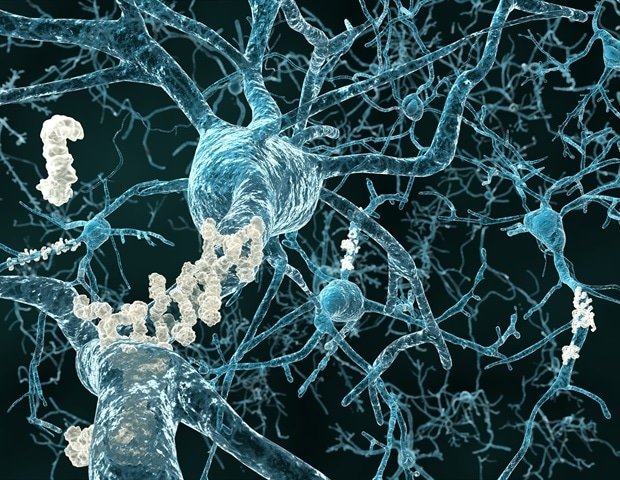
    Alzheimer’s disease affects more than 6 million Americans, and that number is expected to nearly double by 2050. The disease is characterized by the accumulation of toxic proteins such as amyloid and tau, but these changes do not damage all neurons equally. Understanding how specific cell types change over the course of the disease could reveal the circuitry underlying cognitive impairment and dementia and identify new targets for earlier and more effective interventions.

    “Alzheimer’s disease does not damage the brain uniformly,” Bienkowski says. “Even within the same brain region, some neurons deteriorate rapidly, while others remain relatively intact. This project is designed to model how cellular and molecular changes to these neurons and their connections begin to disrupt the hippocampal network, leading to dysfunction.”

    The study builds on Bienkowski’s earlier work, which developed the Hippocampal Gene Expression Atlas (HGEA), a detailed map that clearly defines populations of neurons in the hippocampus based on gene activity and wiring patterns. New research using this framework will combine cutting-edge molecular imaging, 3D circuit reconstruction, and advanced computational modeling to understand the functional implications of how changes associated with Alzheimer’s disease unfold over time.

    The research team includes two members of the USC Institute for Technology and Medical Systems (ITEMS), Dr. Gianluca Lazzi and Dr. Jean-Marie Bouteiller, whose world-class expertise in computational modeling of the hippocampus and retina is essential to this study. Together, the researchers will analyze both a mouse model of Alzheimer’s disease and donated human brain tissue to identify cell types that show early signs of stress, changes in gene activity, and structural damage before neurons die. These findings will be integrated into a multiscale model that simulates how the progressive loss or disconnection of specific neurons disrupts memory-related brain networks.

    “This multiscale approach allows us to link changes that occur in different parts of the hippocampus at different points in time,” Bienkowski said. “This is a way to study the mechanisms of Alzheimer’s disease at different scales, not possible in living patients, and provides a virtual testing ground to safely and quickly evaluate new disease treatment targets.”

    A key innovation of this project is the ability to virtually test how protecting or restoring specific neuron types stabilizes memory-related brain networks. By simulating the progression of Alzheimer’s disease through multiple stages, this model could help researchers identify the most important tipping points in disease progression and prioritize treatment strategies before irreversible damage occurs.

    Arthur W. Toga, Ph.D., director of the Stevens INI and Ghada Irani Professor of Neuroscience at the Keck School of Medicine at the University of Southern California, said the project reflects a broader shift toward precision neuroscience in Alzheimer’s disease research.

    “This study shows how integrating large-scale data, advanced imaging, and computational modeling can transform our understanding of neurodegenerative diseases,” Toga said. “By revealing brain circuits and cells at a level of detail that cannot be captured in living humans, this type of cell-scale research complements in vivo studies and helps connect fundamental biology with what we see in patients. By pinpointing which neurons are most important and when they are vulnerable, this study lays the essential foundation for more targeted and effective treatments.”

    All computational models and methodological advances developed through this project will be made openly available to the scientific community, thereby maximizing the impact of NIH investments and accelerating progress across the field.

    sauce:

    Keck School of Medicine, University of Southern California


    Source link

    Visited 1 times, 1 visit(s) today
    Share. Facebook Twitter Pinterest LinkedIn Telegram Reddit Email
    Previous ArticleStudy finds gap in participation in school-based dental care
    Next Article New combination therapy points to safer approach to Alzheimer’s disease treatment
    healthadmin

    Related Posts

    New CellCelector CLD takes you from thousands of candidates to top clones faster

    April 10, 2026

    Targeted diet helps reprogram aggressive neuroblastoma in mice

    April 10, 2026

    New 3D organoid model advances pediatric glioma research and treatment

    April 10, 2026

    New combination therapy points to safer approach to Alzheimer’s disease treatment

    April 10, 2026

    Study finds gap in participation in school-based dental care

    April 10, 2026

    CAR T therapy induces remission of multiple autoimmune diseases

    April 10, 2026
    Add A Comment
    Leave A Reply Cancel Reply

    Categories

    • Daily Health Tips
    • Discover
    • Environmental Health
    • Exercise & Fitness
    • Featured
    • Featured Videos
    • Financial Health & Stability
    • Fitness
    • Fitness Updates
    • Health
    • Health Technology
    • Healthy Aging
    • Healthy Living
    • Holistic Healing
    • Holistic Health & Wellness
    • Medical Research
    • Medical Research & Insights
    • Mental Health
    • Mental Wellness
    • Natural Remedies
    • New Workouts
    • Nutrition
    • Nutrition & Dietary Trends
    • Nutrition & Superfoods
    • Nutrition Science
    • Pharma
    • Preventive Healthcare
    • Professional & Personal Growth
    • Public Health
    • Public Health & Awareness
    • Selected
    • Sleep & Recovery
    • Top Programs
    • Weight Management
    • Workouts
    Popular Posts
    • the-pros-and-cons-of-paleo-dietsThe Pros and Cons of Paleo Diets: What Science Really Says April 16, 2025
    • Improve Mental Health10 Science-Backed Practices to Improve Mental Health… March 11, 2025
    • How Healthy Living Is Transforming Modern Wellness TrendsHow Healthy Living Is Transforming Modern Wellness… December 3, 2025
    • Kankakee_expansion.jpgCSL releases details of $1.5 billion U.S.… March 10, 2026
    • urlhttps3A2F2Fcalifornia-times-brightspot.s3.amazonaws.com2Fc32Fcd2F988500d440f2a55515940909.jpegA ‘reckless’ scrapyard with a history of… October 24, 2025
    • Healthy Living: Expert Tips to Improve Your Health in 2026Healthy Living: Expert Tips to Improve Your Health in 2026 November 16, 2025

    Demo
    Stay In Touch
    • Facebook
    • Twitter
    • Pinterest
    • Instagram
    • YouTube
    • Vimeo
    Don't Miss

    New CellCelector CLD takes you from thousands of candidates to top clones faster

    By healthadminApril 10, 2026

    Sartorius announces the launch of CellCelector CLD, an automated imaging and cell separation platform designed…

    Scientists finally find out why promising anti-cancer drugs keep failing

    April 10, 2026

    Dragonflies can see colors that humans can’t see, which could change medicine

    April 10, 2026

    Goodbye colonoscopy? New stool test detects 90% of colorectal cancers

    April 10, 2026

    Subscribe to Updates

    Get the latest creative news from SmartMag about art & design.

    HealthxMagazine
    HealthxMagazine

    At HealthX Magazine, we are dedicated to empowering entrepreneurs, doctors, chiropractors, healthcare professionals, personal trainers, executives, thought leaders, and anyone striving for optimal health.

    Our Picks

    Goodbye colonoscopy? New stool test detects 90% of colorectal cancers

    April 10, 2026

    Targeted diet helps reprogram aggressive neuroblastoma in mice

    April 10, 2026

    New 3D organoid model advances pediatric glioma research and treatment

    April 10, 2026
    New Comments
      Facebook X (Twitter) Instagram Pinterest
      • Home
      • Privacy Policy
      • Our Mission
      © 2026 ThemeSphere. Designed by ThemeSphere.

      Type above and press Enter to search. Press Esc to cancel.