

Close Menu

    Subscribe to Updates

    Get the latest creative news from FooBar about art, design and business.

    What's Hot

    Revolutionary water filter removes 98% of harmful PFAS chemicals

    April 9, 2026

    This ‘rotten egg’ brain gas could be the key to fighting Alzheimer’s disease

    April 9, 2026

    Humans arrived in Australia 60,000 years ago, new DNA research reveals

    April 9, 2026
    Facebook X (Twitter) Instagram
    Facebook X (Twitter) Instagram
    Health Magazine
    • Home
    • Environmental Health
    • Health Technology
    • Medical Research
    • Mental Health
    • Nutrition Science
    • Pharma
    • Public Health
    • Discover
      • Daily Health Tips
      • Financial Health & Stability
      • Holistic Health & Wellness
      • Mental Health
      • Nutrition & Dietary Trends
      • Professional & Personal Growth
    • Our Mission
    Health Magazine
    Home » News » Humans arrived in Australia 60,000 years ago, new DNA research reveals
    Nutrition Science

    Humans arrived in Australia 60,000 years ago, new DNA research reveals

    healthadminBy healthadminApril 9, 2026No Comments4 Mins Read
    Humans arrived in Australia 60,000 years ago, new DNA research reveals
    Share
    Facebook Twitter Reddit Telegram Pinterest Email


    A major international collaboration between researchers at the University of Huddersfield and the University of Southampton has provided new insights into when and how modern humans, Homo sapiens, first settled in New Guinea and Australia.

    The project brings together experts in archaeogenetics and marine archaeology, and was funded by the European Research Council awarded to Professor Helen Farr from the University of Southampton. The genetic analysis was led by Professor Martin Richards from the University of Huddersfield.

    Ancient Sahul and early human migration

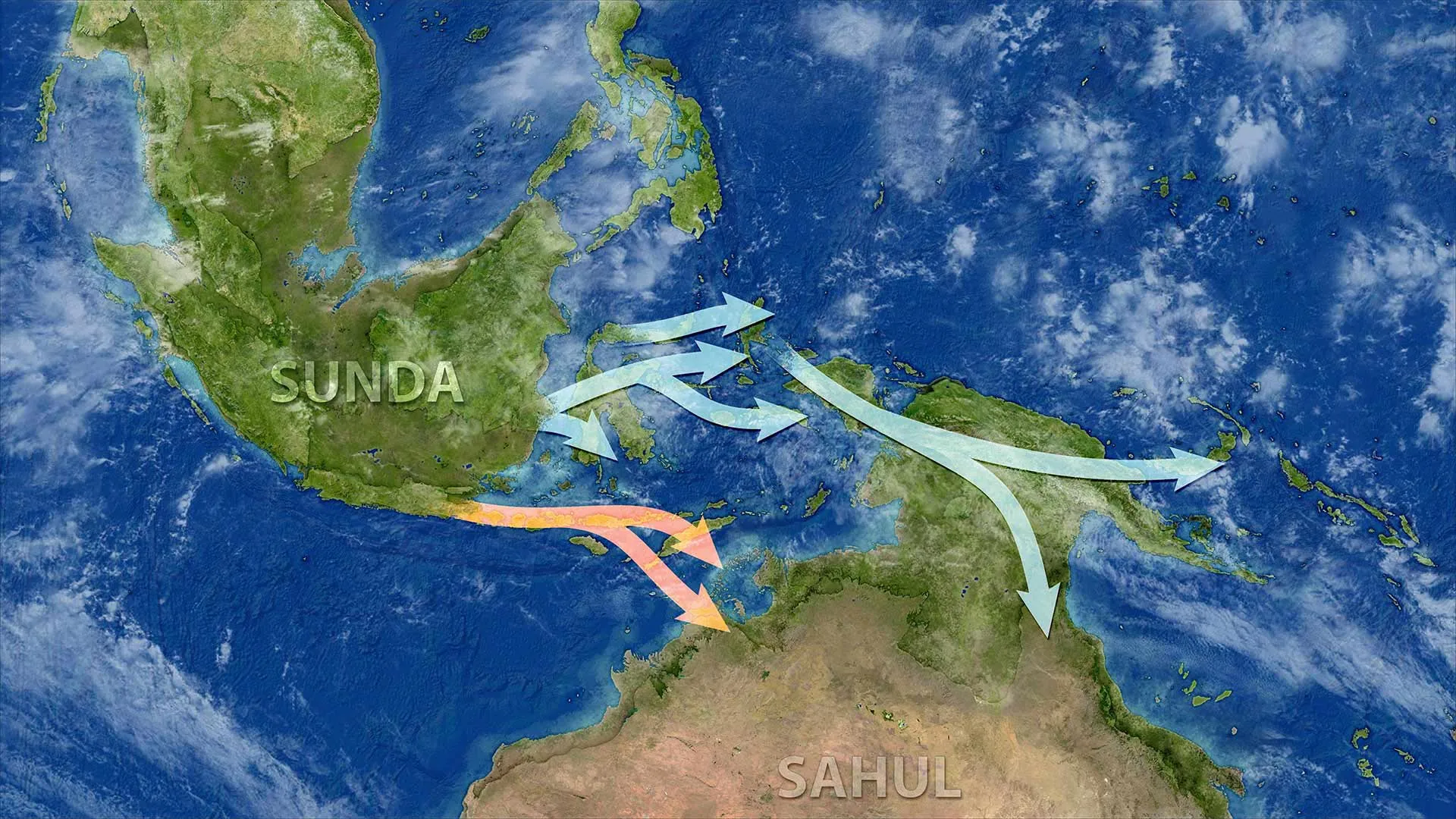
    During the last ice age, global sea levels were much lower than they are today. At that time, New Guinea and Australia were combined into a single land mass called Sahul. Scientists have long debated when people first reached this ancient continent and what routes they used to get there.

    To address these questions, researchers combined expertise from multiple fields, including genetics, archaeology, geosciences, and oceanography. Their goal was to better understand who these early immigrants were, where they came from, and when they traveled.

    Discussion of long and short chronology

    It is well known that the ancestors of New Guineans and Indigenous Australians have lived in Sahul for tens of thousands of years. Many of Australia’s Aboriginal people maintain deep cultural ties to the land, reflecting this long history.

    However, scientists do not always agree on the exact time of the first settlement. Two major theories exist. The “Long Chronicle” claims that humans arrived about 60,000 years ago. Competing “short chronicles” suggest a later arrival, approximately 45,000 to 50,000 years ago.

    To investigate this debate, the research team analyzed human mitochondrial DNA (mtDNA), which is passed down through the maternal line. Because mtDNA accumulates changes over generations, it can be used to reconstruct detailed genealogies going back far into the past.

    DNA evidence points to earlier arrival

    The research team studied approximately 2,500 mtDNA genomes from Australian Aboriginals, New Guineans, and populations from Southeast Asia and the Western Pacific. By constructing genetic family trees and tracking how lineages spread between regions, they were able to estimate when different groups diverged.

    Researchers used the gradual accumulation of genetic changes known as the “molecular clock” to date the oldest lineage, found only in Australian Aborigines and New Guineans, to around 60,000 years ago. This strongly supports the long-age model.

    Multiple routes to Sahul

    Genetic evidence also reveals where these early populations came from. The oldest lineages date back to Southeast Asia, but they do not come from a single location.

    Most lineages refer to northern regions such as northern Indonesia and the Philippines. At the same time, notable parts originate from southern regions such as southern Indonesia, Malaysia, and Indochina. This pattern suggests that early humans likely entered Sahul along at least two separate migration routes, both of which occurred around the same time.

    Why the findings matter

    These results are important because they are in good agreement with archaeological and environmental evidence. In recent years, some genetic studies have begun to support a more recent arrival, but this new analysis strongly supports an earlier date.

    Professor Richards said: “We feel this provides strong support for a long chronology. Still, estimates based on molecular clocks can always be challenged and mitochondrial DNA represents only one lineage. We currently have hundreds of We are analyzing the entire human genome sequence (3 billion bases compared to 16,000 bases each) and testing the results against thousands of other lineages across the human genome. Further archaeological analyzes will be conducted in the future.” It also holds promise that ancient DNA may be recovered from important archaeological sites, allowing us to test and differentiate these models more directly. ”

    Professor Farr added: “This is a great story that helps further our understanding of human origins, maritime migration and early seafaring stories. It reflects the really deep heritage of the indigenous communities of this region and the skills and skills of the early seafarers.”

    Published research and future research

    The discovery will be published in a magazine scientific progresspublished by the American Association for the Advancement of Science. A related study, led by Dr. Pedro Soares from the University of Minho, tested the reliability of the molecular clock method used in the analysis. scientific report.

    Taken together, these studies provide a clearer picture of one of humankind’s earliest and most remarkable migrations.


    Source link

    Visited 1 times, 1 visit(s) today
    Share. Facebook Twitter Pinterest LinkedIn Telegram Reddit Email
    Previous ArticleVirica Biotech and FUJIFILM Biosciences collaborate under Canada-Japan Cooperative Innovation Program to advance AAV production enhancers
    Next Article This ‘rotten egg’ brain gas could be the key to fighting Alzheimer’s disease
    healthadmin

    Related Posts

    Revolutionary water filter removes 98% of harmful PFAS chemicals

    April 9, 2026

    This ‘rotten egg’ brain gas could be the key to fighting Alzheimer’s disease

    April 9, 2026

    Your brain could help solve autism, but most people don’t know it

    April 9, 2026

    Ancient farmers accidentally created aggressive ‘warrior’ wheat

    April 8, 2026

    Something hit the moon, leaving a bright new scar.

    April 8, 2026

    Scientists say we were wrong about what makes sprinters faster

    April 8, 2026
    Add A Comment
    Leave A Reply Cancel Reply

    Categories

    • Daily Health Tips
    • Discover
    • Environmental Health
    • Exercise & Fitness
    • Featured
    • Featured Videos
    • Financial Health & Stability
    • Fitness
    • Fitness Updates
    • Health
    • Health Technology
    • Healthy Aging
    • Healthy Living
    • Holistic Healing
    • Holistic Health & Wellness
    • Medical Research
    • Medical Research & Insights
    • Mental Health
    • Mental Wellness
    • Natural Remedies
    • New Workouts
    • Nutrition
    • Nutrition & Dietary Trends
    • Nutrition & Superfoods
    • Nutrition Science
    • Pharma
    • Preventive Healthcare
    • Professional & Personal Growth
    • Public Health
    • Public Health & Awareness
    • Selected
    • Sleep & Recovery
    • Top Programs
    • Weight Management
    • Workouts
    Popular Posts
    • the-pros-and-cons-of-paleo-dietsThe Pros and Cons of Paleo Diets: What Science Really Says April 16, 2025
    • Improve Mental Health10 Science-Backed Practices to Improve Mental Health… March 11, 2025
    • How Healthy Living Is Transforming Modern Wellness TrendsHow Healthy Living Is Transforming Modern Wellness… December 3, 2025
    • Kankakee_expansion.jpgCSL releases details of $1.5 billion U.S.… March 10, 2026
    • urlhttps3A2F2Fcalifornia-times-brightspot.s3.amazonaws.com2Fc32Fcd2F988500d440f2a55515940909.jpegA ‘reckless’ scrapyard with a history of… October 24, 2025
    • Healthy Living: Expert Tips to Improve Your Health in 2026Healthy Living: Expert Tips to Improve Your Health in 2026 November 16, 2025

    Demo
    Stay In Touch
    • Facebook
    • Twitter
    • Pinterest
    • Instagram
    • YouTube
    • Vimeo
    Don't Miss

    Revolutionary water filter removes 98% of harmful PFAS chemicals

    By healthadminApril 9, 2026

    Contamination with per- and polyfluoroalkyl substances (PFAS) is widespread in groundwater, surface water, and even…

    This ‘rotten egg’ brain gas could be the key to fighting Alzheimer’s disease

    April 9, 2026

    Humans arrived in Australia 60,000 years ago, new DNA research reveals

    April 9, 2026

    Virica Biotech and FUJIFILM Biosciences collaborate under Canada-Japan Cooperative Innovation Program to advance AAV production enhancers

    April 9, 2026

    Subscribe to Updates

    Get the latest creative news from SmartMag about art & design.

    HealthxMagazine
    HealthxMagazine

    At HealthX Magazine, we are dedicated to empowering entrepreneurs, doctors, chiropractors, healthcare professionals, personal trainers, executives, thought leaders, and anyone striving for optimal health.

    Our Picks

    Virica Biotech and FUJIFILM Biosciences collaborate under Canada-Japan Cooperative Innovation Program to advance AAV production enhancers

    April 9, 2026

    U.S. metros spend the most on health care

    April 9, 2026

    Study reveals link between smoking and neurodegeneration in lungs and brain

    April 9, 2026
    New Comments
      Facebook X (Twitter) Instagram Pinterest
      • Home
      • Privacy Policy
      • Our Mission
      © 2026 ThemeSphere. Designed by ThemeSphere.

      Type above and press Enter to search. Press Esc to cancel.