


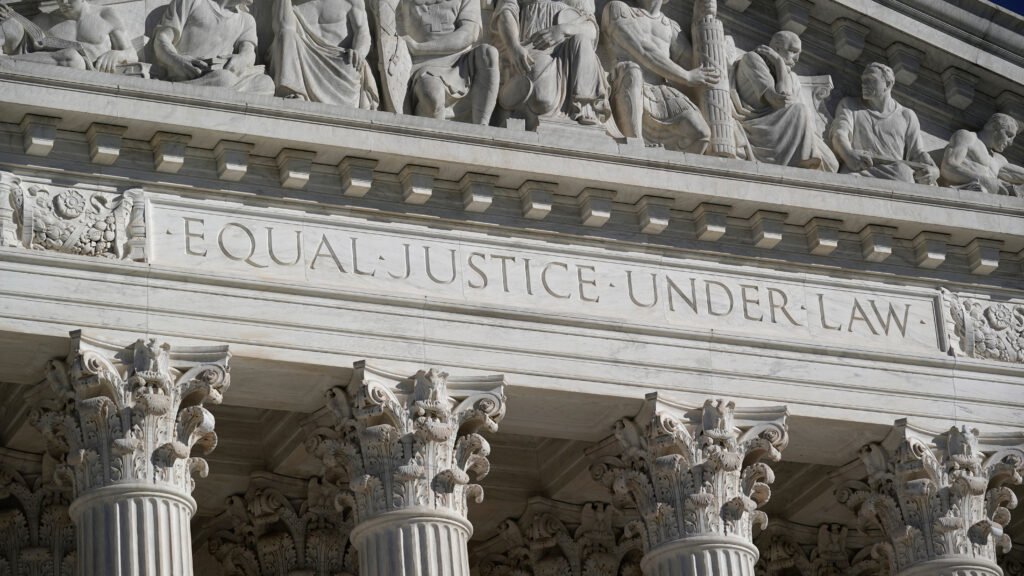
WASHINGTON – The Supreme Court ruled Tuesday against a law banning “conversion therapy” for LGBTQ+ children in Colorado, one of about 24 states that prohibits the unfair practice.
An 8-1 high court majority sided with Christian counselors who argued that laws banning talk therapy violate the First Amendment. The justices agreed that the law raised free speech concerns and sent it back to lower courts to determine whether it met legal standards that most laws do not pass.
Justice Neil Gorsuch, writing for the court, said the law “censors speech based on viewpoint.” The First Amendment “provides a shield against all efforts to impose orthodoxy in thought and speech in this country,” he wrote.
Justice Ketanji Brown Jackson wrote in a lone dissent that states should be free to regulate health care, even if it means restricting speech. Jackson wrote that the decision “opens up a dangerous can of worms” that “could undermine states’ ability to regulate health care delivery in all respects.”
The ruling is the latest in a series of recent cases in which judges have upheld religious discrimination claims while remaining skeptical of LGBTQ+ rights.

Conservative justices question medical authority as Supreme Court considers conversion therapy
Counsel Kayleigh Childs said the law, backed by President Donald Trump’s Republican administration, unfairly prohibits providing independent, faith-based therapy to children.
Chiles insists her approach is different from the “conversion therapies” of decades ago, such as shock therapy. Her lawyers argued that the ban would make it difficult for parents to find therapists willing to discuss gender identity with their children, unless the transition is acknowledged in counseling.
Colorado disagrees, saying its law allows for broad conversations about gender identity and sexual orientation and exempts religious services. The state says the measure simply prohibits the use of therapies that attempt to “convert” LGBTQ+ people to heterosexuality or traditional gender expectations, a practice that is scientifically discredited and associated with serious harm.
Colorado argued that the law did not violate the First Amendment because therapy is a form of medical care that the state is responsible for regulating and is different from other types of speech.
Although the 2019 law carries the possibility of fines and license suspension, no one has been sanctioned under the law. The ruling is expected to ultimately prevent similar laws from being enforced in other states.
Chile was represented by the Alliance Defending Freedom, a conservative legal group that has appeared frequently in court in recent years. The group also represented a Christian website designer who successfully challenged Colorado’s anti-discrimination law because he did not want to work with same-sex couples.
— Lindsey Whitehurst
