


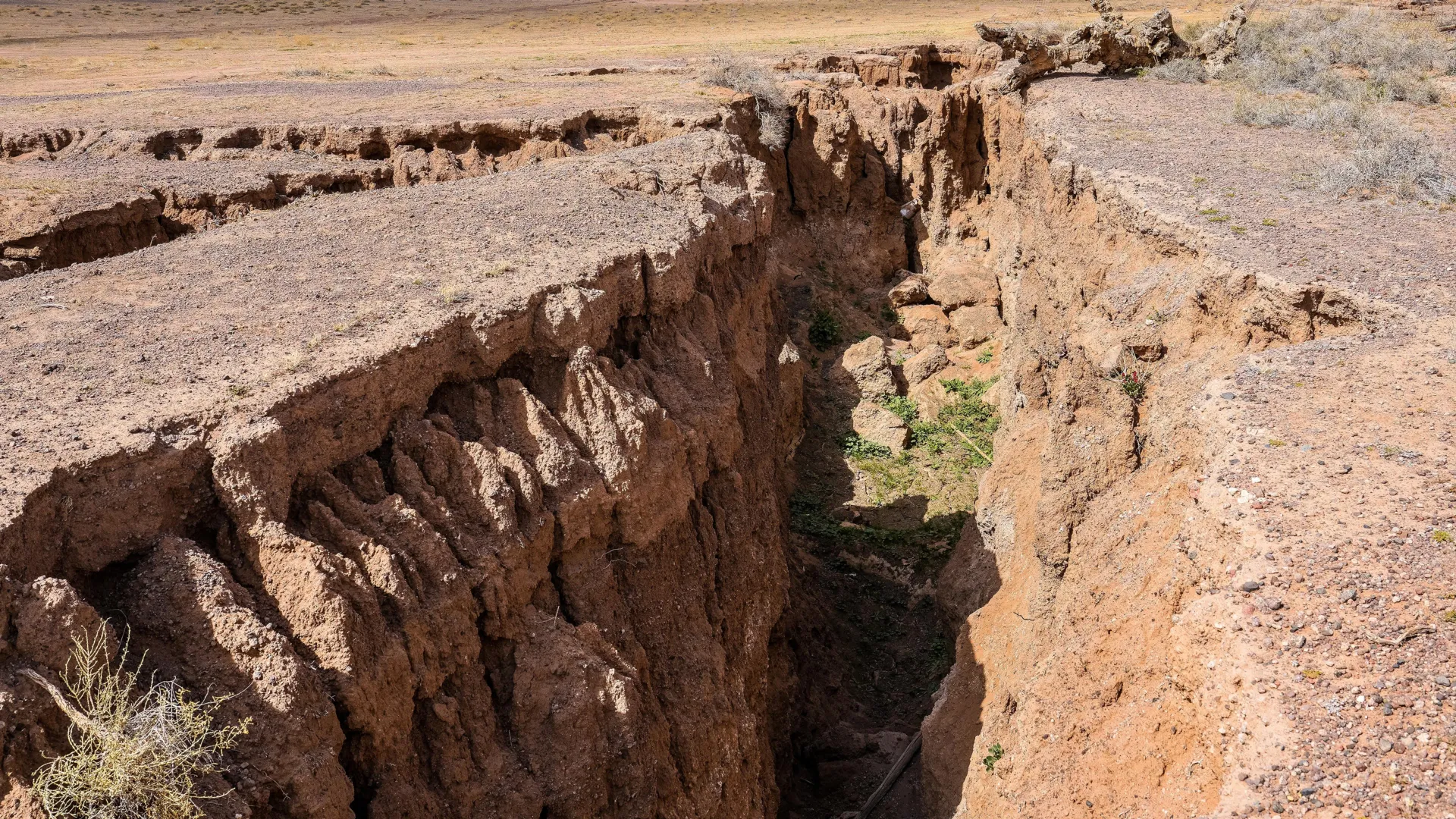
During Friday noon prayers on March 28, 2025, a powerful earthquake of magnitude 7.7 struck central Myanmar along the Sagaing Fault. The epicenter was near Mandalay, the country’s second largest city. The earthquake was the largest to hit Myanmar in more than 100 years, and the second deadliest earthquake in modern history.
This earthquake was caused by a strike-slip fault. In this fault, two large sections of the Earth’s crust are moved horizontally relative to each other along a vertical crack. To the viewer, it will appear as if the ground is splitting along distinct lines, with each side being pushed in opposite directions.
Previous studies based on seismic records suggested that such earthquakes could involve pulsed rupture and slightly curved movement along the fault. However, those conclusions are based on instruments located far from the fault zone, meaning the observations are indirect.
Valuable surveillance camera footage that captures fault movement
In this case, CCTV cameras recorded the movement of the fault, giving Kyoto University researchers a rare opportunity to observe the moment the fault occurred. (See video link at the bottom of the article.) This kind of direct visual evidence is highly unusual in earthquake research.
Frame-by-frame analysis reveals ultra-high speed
The researchers looked at the video frame by frame using a method called pixel cross-correlation to measure how the ground moved. According to their findings, the fault moved sideways 2.5 meters in just 1.3 seconds, reaching a maximum speed of 3.2 meters per second.
Although this degree of lateral motion is common in strike-slip earthquakes, the extremely short duration stands out as an important finding.
“The short duration of the motion confirms a pulsating fracture characterized by focused bursts of slip propagating along the fault, much like ripples through a rug when it is flipped off an edge,” says corresponding author Jesse Kurth.
Assumption of curved fault motion problem
The analysis also revealed that the slip path was slightly curved. This is consistent with early geological observations from faults around the world, suggesting that fault motion is often not perfectly straight, as is commonly assumed.
This study highlights the value of using video footage to monitor fault activity and provides a new way to study earthquakes in detail. Such observations improve our understanding of how earthquakes unfold and help scientists more accurately estimate the shaking that may occur during future large-scale events.
“We did not expect this video recording to provide such rich and detailed observations. Kinematic data like this is critical to advancing our understanding of seismic source physics,” Kaas said.
The next step in earthquake research
Using the new data uncovered by this analysis, the researchers plan to build on these findings by using physically-based models to investigate what controls the fault’s behavior.
