


After being infected with SARS-CoV-2, up to 10% of people in Germany develop Long COVID. Symptoms include persistent fatigue, difficulty concentrating, breathing problems, and neurological problems and can last for months or even years. This condition does not look the same in all patients, making it especially difficult to understand and treat.
“COVID-19 is a very complex disease with a variety of symptoms,” says Professor Yang Li, head of the Department of Computational Biology for Personalized Medicine and director of CiiM. “We still know very little about how and to what extent the long coronavirus progresses. Metaphorically speaking, unfortunately, we are looking at a very incomplete puzzle.”
Research on immune cells of patients with long-term novel coronavirus infection
To further uncover the cause of the long coronavirus, a research team led by Yang Li collaborated with colleagues including Professor Thomas Illig (MHH) and Professor Jie Sun (University of Virginia, USA), as well as additional collaborators. Their goal was to identify biological mechanisms that could explain why symptoms persist.
The research team focused on immune cells collected from Long COVID patients using samples stored in MHH’s central biobank. “We examined the cells using a so-called single-cell multi-omics approach, which allowed us to record the state of molecules within the cell and gain insight into cellular relationships,” explains Dr. Saumya Kumar, a scientist at CiiM and lead author of the study.
In addition, the researchers measured the levels of cytokines in the plasma. These molecules act as signal transducers for the immune system and are often associated with inflammation. “The central and innovative approach of our research is to classify patient data according to the severity of the original COVID-19 infection,” says Yang Li. “This approach allowed us to capture relevant molecular differences in immune responses between patients. Only in this way were we able to identify distinct molecular signatures underlying the chronic symptoms of Long COVID.”
Important immune cell status associated with long-term symptoms of COVID-19 infection
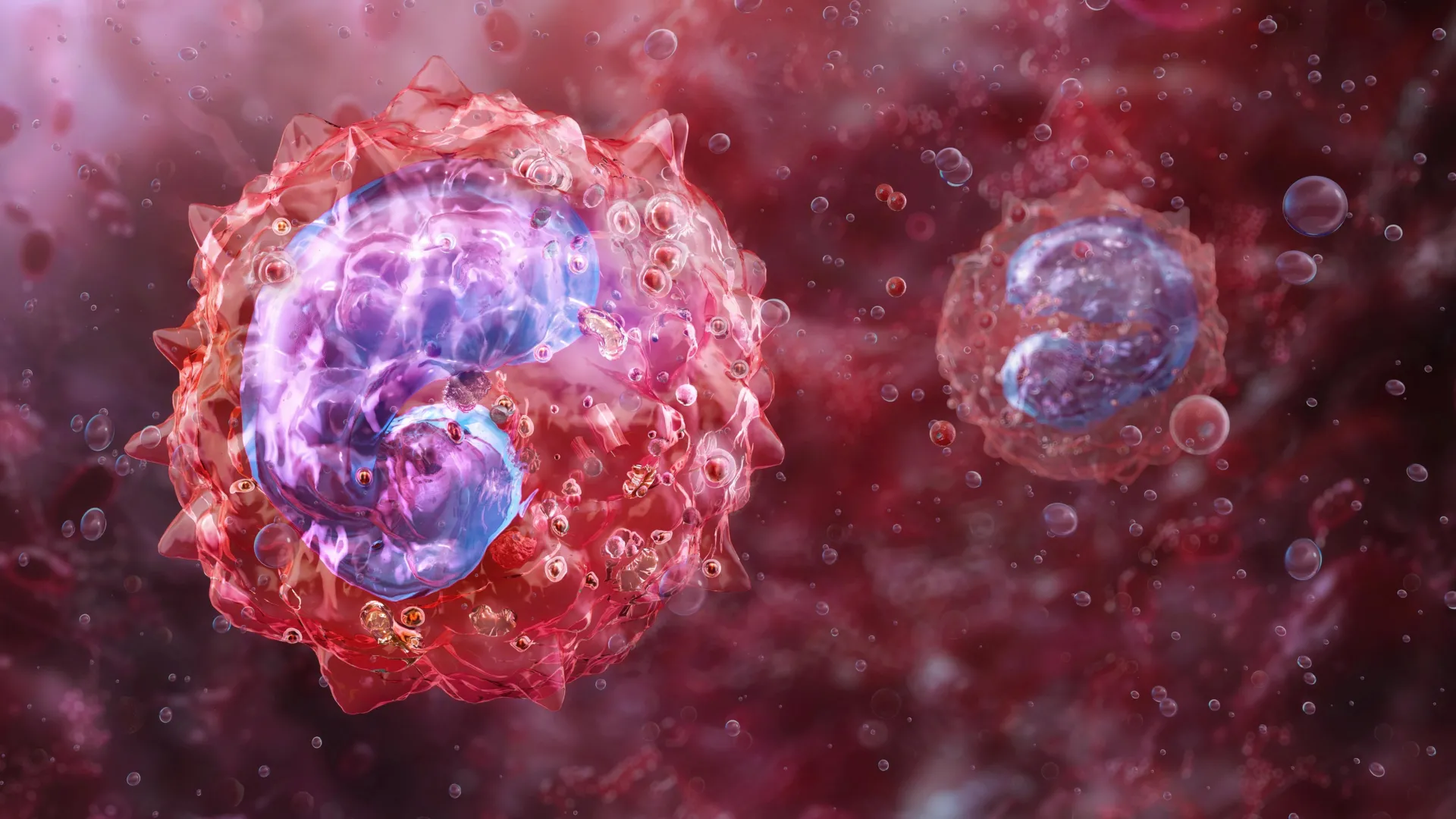
The researchers investigated how immune cells change over time at the molecular level and whether certain markers are associated with symptoms such as fatigue and difficulty breathing. Their large-scale data analysis pointed to distinct molecular states in a type of white blood cell known as CD14+ monocytes, which play an important role in immune defense.
“With the help of single-cell analysis, we were able to expand these cells. This revealed that monocytes with a specific molecular state (i.e., molecular profile) called ‘LC-Mo’ are particularly prevalent in long-coronavirus patients who had previously experienced mild to moderate COVID-19 infection,” says Saumya Kumar. “Furthermore, LC-Mo correlated with fatigue and severity of respiratory symptoms, and was associated with increased levels of cytokines in the plasma, an indicator of inflammatory processes in the body.”
New clues to the long coronavirus puzzle
The identification of LC-Mo provides important new clues in understanding Long COVID. Although researchers have not yet determined exactly how this immune cell status contributes to symptoms, it opens the door for future research focusing on genetic risk factors and personalized treatment approaches.
“Although its exact place in the pathogenesis of long coronaviruses has not yet been determined, this provides an interesting starting point for further research, for example on genetic risk factors and personalized medicine,” says Yang Li. “A better understanding of the background to the development of long coronaviruses will also help us better understand the development of late or long-term effects that other infectious diseases may cause.”
This research was funded by the ERC Starting Grant (ModVaccine), the Lower Saxony COVID-19 Research Network (COFONI) and the Lower Saxony Center for AI and Causal Medicine (CAIMed), all supported by the Lower Saxony Ministry of Science and Culture (MWK) and the Federal Ministry for Research, Technology and Space (BMFTR).
