

Close Menu

    Subscribe to Updates

    Get the latest creative news from FooBar about art, design and business.

    What's Hot

    The Urgent Gaps in Population Health: What Leaders Must Fix Now

    August 13, 2026

    The Growing Challenge of Treatment-Resistant Depression for Clinicians and Policymakers

    August 12, 2026

    The Core Problem with 2025-2030 DGAs for Clinical Practice

    August 11, 2026
    Facebook X (Twitter) Instagram
    Facebook X (Twitter) Instagram
    Health Magazine
    • Home
    • Environmental Health
    • Health Technology
    • Medical Research
    • Mental Health
    • Nutrition Science
    • Pharma
    • Public Health
    • Discover
      • Daily Health Tips
      • Financial Health & Stability
      • Holistic Health & Wellness
      • Mental Health
      • Nutrition & Dietary Trends
      • Professional & Personal Growth
    • Our Mission
    Health Magazine
    Home » News » How birds spread plastic pollution
    Environmental Health

    How birds spread plastic pollution

    healthadminBy healthadminMarch 20, 2026No Comments4 Mins Read
    How birds spread plastic pollution
    Share
    Facebook Twitter Reddit Telegram Pinterest Email


    Hungry seagulls don’t just steal chips and sandwiches. They learn our habits and look for reliable food sources. This includes waste processing centres, landfills or areas where food waste is concentrated. To take advantage of these food sources, many gull populations have moved inland from the coast.

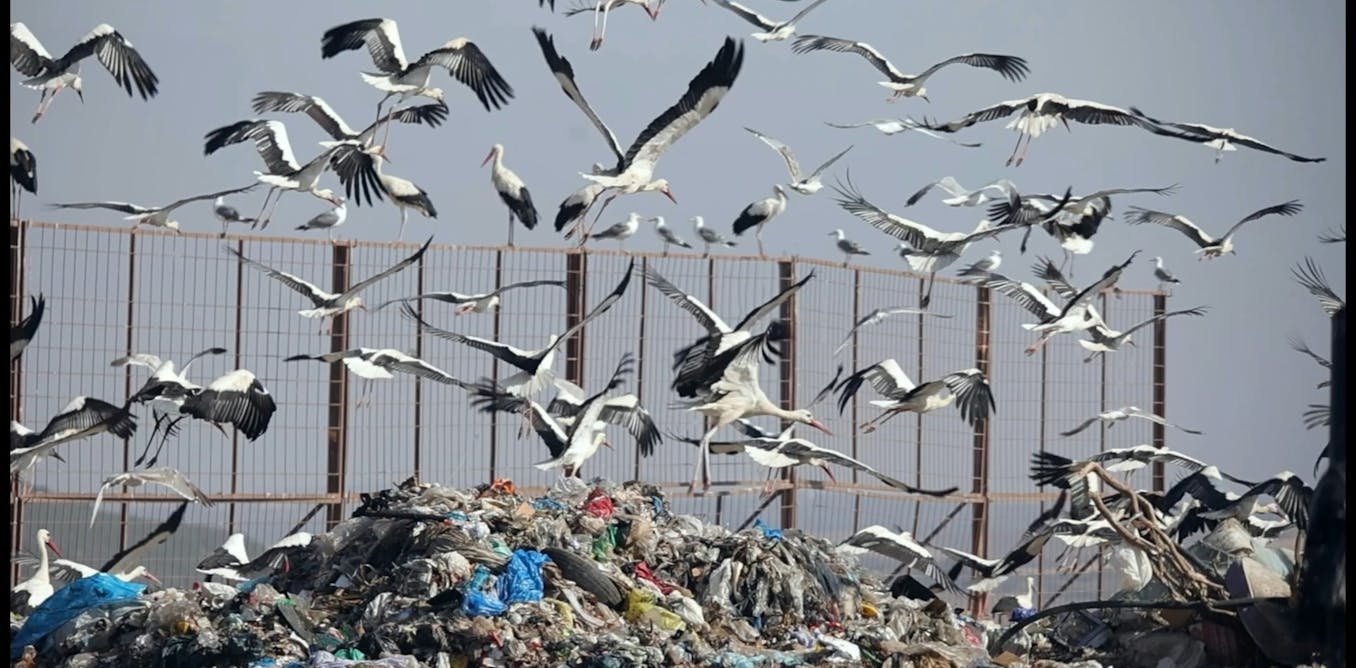
    Seagulls and other birds can feed wherever our waste is disposed of. At the landfill, seagulls eat the waste before it can be covered up. If the pieces of plastic or glass covered in food are small enough, gulls will swallow them whole. Only the food itself is digested, and when the gulls return to roost, the waste flows back up and contaminates the area. This transfer of contaminants is known as “biovectoring.”

    Scientists like me are quantifying for the first time how much plastic and other waste is flowing into important natural areas through the daily movements of birds.

    Many herring gulls that breed in the UK and other parts of northern Europe migrate to Andalusia in southern Spain, where they form overwintering populations of more than 100,000 birds, feeding mainly on rice fields and reclaimed land. Fortunately, many of these birds are fitted with GPS tags while breeding. This allows detailed tracking of movements.


    Read more: Yes, screaming at seagulls actually works, scientists confirm

    Malaga’s Fuente de Piedra Lake is a migration hotspot for herring gulls. This wetland is of special natural importance and has been designated as a Site of International Importance under the World Convention known as Ramsar. It is most famous as Spain’s largest flamingo breeding ground. Seagulls fly up to 80 miles to the landfill to feed, then return to roost.

    By combining GPS data, waterfowl counts and analysis of regurgitated pellets, scientists estimate that the gulls deposit an average of 400kg of plastic, plus more than two tonnes of other debris such as glass, textiles and pottery, into the lake each year. This lake has a high salt content as there is no runoff, making it friendly to flamingos. The imported plastic remains in the lake and breaks down into microplastics. Can be ingested by flamingo chicks, aquatic insects, and other animals.
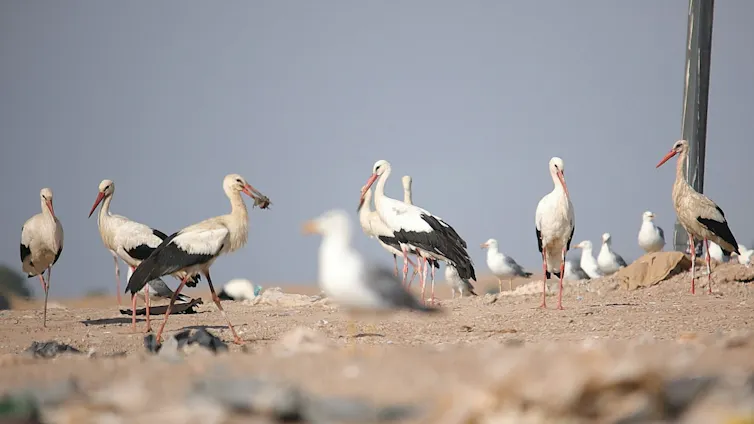
    Birds feeding on a landfill

    Two northern gulls chase a stork that is carrying plastic it has picked up from a landfill in its beak.
    Enrique García Muñoz (FotoConCiencia)CC BY-NC-ND


    Read more: Plastic pollution threatens distant sea birds – new study

    On the Andalusian coast, these gulls join a mix of the resident yellow-backed gull (equivalent to the herring gull), migratory and resident storks as the three main waterbirds that visit reclaimed sites.

    In the wetlands of the Bay of Cadiz (another Ramsar wetland) that surround the historic city, which is now a favorite port of call for cruise ships, three species combine to spread different types and sizes of plastic into different microhabitats. Every year, 530kg of plastic is deposited in wetlands by recycled pellets. Because of their larger size, storks carry more waste per bird, but most of the plastic is transported back by the smaller black-headed gulls, which overwinter there in large quantities.
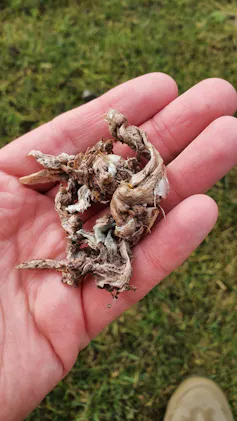
    Hand holding partially digested plastic waste eaten by birds

    Plastic film spewed out by seagulls roosting in fields in Atherton, Greater Manchester.
    Kane BridesCC BY-NC-ND

    The ingestion of this waste has strong effects on the birds themselves, including through direct mortality from disease, suffocation and entanglement in plastic, and the toxic effects of additives in the birds. After being regurgitated as pellets, those plastics pose a threat to all fauna and easily enter our food supply through aquaculture and salt production, which is important in the Gulf of Cadiz.

    These studies conducted in Spain address issues that are ongoing across Europe. There are no comparable quantitative studies in the UK yet, but similar problems occur wherever seagulls are concentrated to feed on our waste. In the future, if storks become abundant in the UK, they will visit landfills along with gulls and perhaps cattle egrets.

    The closure of many landfill sites and improved waste management may be contributing to the recent decline in many gull populations in the UK and elsewhere. However, as long as consumer society produces large amounts of waste, this problem of plastic leakage will continue. Reducing waste and reusing things is better than recycling. One reason for this is that food containers can be eaten by birds before they can be recycled. Cleaning food containers before putting them in the trash and composting your own food waste can also help reduce this phenomenon.


    Source link

    Visited 26 times, 1 visit(s) today
    Share. Facebook Twitter Pinterest LinkedIn Telegram Reddit Email
    Previous ArticleDo artificial sweeteners increase appetite and food intake?
    Next Article Astronomers discover a nearby galaxy was shattered by a cosmic collision
    healthadmin

    Related Posts

    The Urgent Health Risks from Climate Change and Pollution

    August 10, 2026

    The Urgent Health Crisis from Pollution and Climate Change

    August 8, 2026

    Impact of extreme weather on local agriculture

    July 30, 2026

    Should you drink tap water in Philadelphia?

    July 30, 2026

    Can MAHA candidate Zach Rahn stand up to Big Ag in Iowa?

    July 30, 2026

    Recycling food waste is good for the climate, but can add microplastics to the soil, study finds

    July 30, 2026
    Add A Comment

    Comments are closed.

    Categories

    • Daily Health Tips
    • Discover
    • Environmental Health
    • Exercise & Fitness
    • Featured
    • Featured Videos
    • Financial Health & Stability
    • Fitness
    • Fitness Updates
    • Health
    • Health Technology
    • Healthy Aging
    • Healthy Living
    • Holistic Healing
    • Holistic Health & Wellness
    • Medical Research
    • Medical Research & Insights
    • Mental Health
    • Mental Wellness
    • Natural Remedies
    • New Workouts
    • Nutrition
    • Nutrition & Dietary Trends
    • Nutrition & Superfoods
    • Nutrition Science
    • Pharma
    • Preventive Healthcare
    • Professional & Personal Growth
    • Public Health
    • Public Health & Awareness
    • Selected
    • Sleep & Recovery
    • Top Programs
    • Weight Management
    • Workouts
    Popular Posts
    • 1773313737_bacteria_-_Sebastian_Kaulitzki_46826fb7971649bfaca04a9b4cef3309-620x480.jpgHow Sino Biological ProPure™ redefines ultra-low… March 12, 2026
    • pexels-david-bartus-442116The food industry needs to act now to cut greenhouse… January 2, 2022
    • 1773729862_TagImage-3347-458389964760995353448-620x480.jpgDespite safety concerns, parents underestimate the… March 17, 2026
    • 1774403998_image_28620e4b6b0047f7ab9154b41d739db1-620x480.jpgGait pattern helps distinguish between Lewy body… March 24, 2026
    • 1773209206_futuristic_techno_design_on_background_of_supercomputer_data_center_-_Image_-_Timofeev_Vladimir_M1_4.jpegMulti-agent AI systems outperform single models… March 11, 2026
    • Leukemia-620x480.jpgBiomimetic platform powers CAR T therapy for… March 9, 2026

    Demo
    Stay In Touch
    • Facebook
    • Twitter
    • Pinterest
    • Instagram
    • YouTube
    • Vimeo
    Don't Miss

    The Urgent Gaps in Population Health: What Leaders Must Fix Now

    By healthadminAugust 13, 2026

    Addressing short-termism, data gaps, and chronic disease pressures to strengthen outbreak preparedness and community health outcomes in 2026.

    The Growing Challenge of Treatment-Resistant Depression for Clinicians and Policymakers

    August 12, 2026

    The Core Problem with 2025-2030 DGAs for Clinical Practice

    August 11, 2026

    The Urgent Health Risks from Climate Change and Pollution

    August 10, 2026

    Subscribe to Updates

    Get the latest creative news from SmartMag about art & design.

    HealthxMagazine
    HealthxMagazine

    At HealthX Magazine, we are dedicated to empowering entrepreneurs, doctors, chiropractors, healthcare professionals, personal trainers, executives, thought leaders, and anyone striving for optimal health.

    Our Picks

    The Urgent Health Risks from Climate Change and Pollution

    August 10, 2026

    AI-Powered Wearables and Telemedicine Trends Driving Adoption

    August 9, 2026

    The Urgent Health Crisis from Pollution and Climate Change

    August 8, 2026
    New Comments
      Facebook X (Twitter) Instagram Pinterest
      • Home
      • Privacy Policy
      • Our Mission
      © 2026 ThemeSphere. Designed by ThemeSphere.

      Type above and press Enter to search. Press Esc to cancel.