


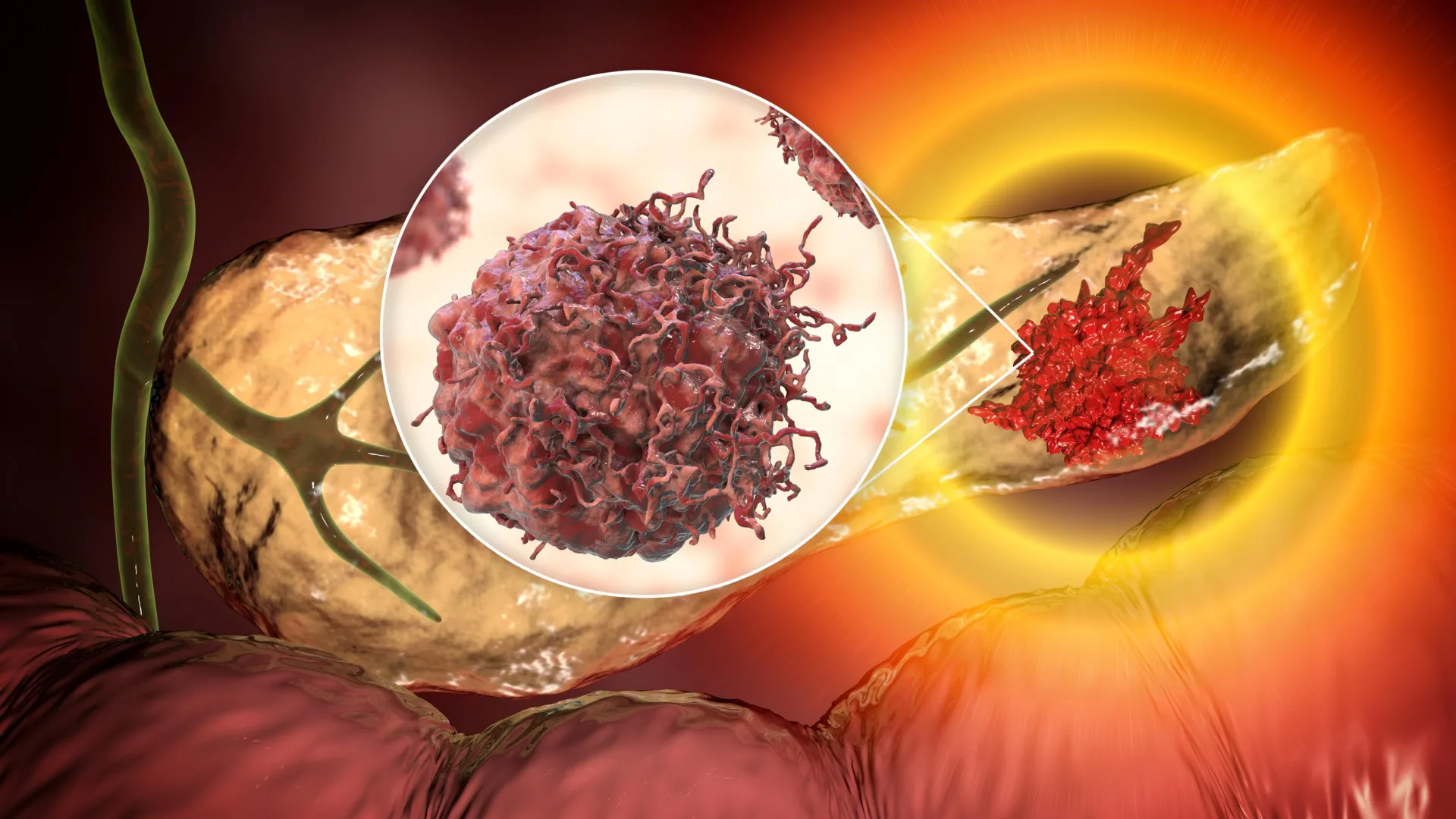
Researchers supported by the National Institutes of Health (NIH) have developed a new blood test designed to identify pancreatic ductal adenocarcinoma, one of the deadliest types of cancer. Because pancreatic cancer is often discovered only at an advanced stage, treatment options are limited and survival rates remain low. For more information on this new approach, see clinical cancer researchwhich could help detect the disease earlier and improve patient outcomes.
Pancreatic cancer has a poor prognosis, with only about 10% of patients surviving more than 5 years after diagnosis. But doctors believe survival rates could be significantly improved if the disease is caught early and treatment is more effective. Nevertheless, there are currently no reliable screening tools available to detect pancreatic cancer at an early stage.
Testing for existing and new blood biomarkers
To address this gap, scientists at the Perelman School of Medicine at the University of Pennsylvania in Philadelphia and the Mayo Clinic in Rochester, Minnesota, analyzed blood samples from people with and without pancreatic cancer. They evaluated several biomarkers, including carbohydrate antigen 19-9 (CA19-9), which is commonly used to monitor treatment response, and thrombospondin 2 (THBS2), another previously studied marker.
Each of these markers has its own limitations. CA19-9 levels can also be elevated in non-cancerous conditions such as pancreatitis or bile duct obstruction, but some people do not produce this marker at all due to genetic differences. As a result, neither marker alone is reliable enough for screening.
Newly identified proteins improve detection
By testing stored blood samples, researchers identified two additional proteins that appear to be elevated in early-stage pancreatic cancer patients: aminopeptidase N (ANPEP) and polymeric immunoglobulin receptor (PIGR). These newly identified biomarkers showed clear differences between cancer patients and healthy people.
When combined with CA19-9 and THBS2, the four-marker panel showed strong performance. Across all stages, it accurately distinguished between pancreatic cancer cases and non-cases 91.9% of the time, with a false-positive rate of 5% for non-cases. For early-stage (stage I/II) cancer, the test detected 87.5% of cases.
“Adding ANPEP and PIGR to our existing markers greatly improves our ability to detect this cancer at its most treatable time,” said the study’s principal investigator, Kenneth Zarett, Ph.D., of the Perelman School of Medicine at the University of Pennsylvania.
Distinguishing between cancer and other diseases
An important advantage of this test is that it can distinguish pancreatic cancer from other non-cancerous pancreatic diseases such as pancreatitis. This reduces the risk of misdiagnosis and unnecessary worry for patients.
Next steps towards screening
“Our retrospective study results warrant further testing in a larger population, especially in people before symptoms appear,” Zaret said. “Such ‘pre-diagnostic’ studies will help determine whether this test can be used as a screening tool for people at high risk of developing this disease based on family history, genetic screening results, and personal history of pancreatic cysts or pancreatitis.”
This research was supported by NIH grants U01CA210138, P50CA102701, S10 OD023586-01, P30 DK020579, UL1 TR002345, P30CA091842, and U01CA210138.
