


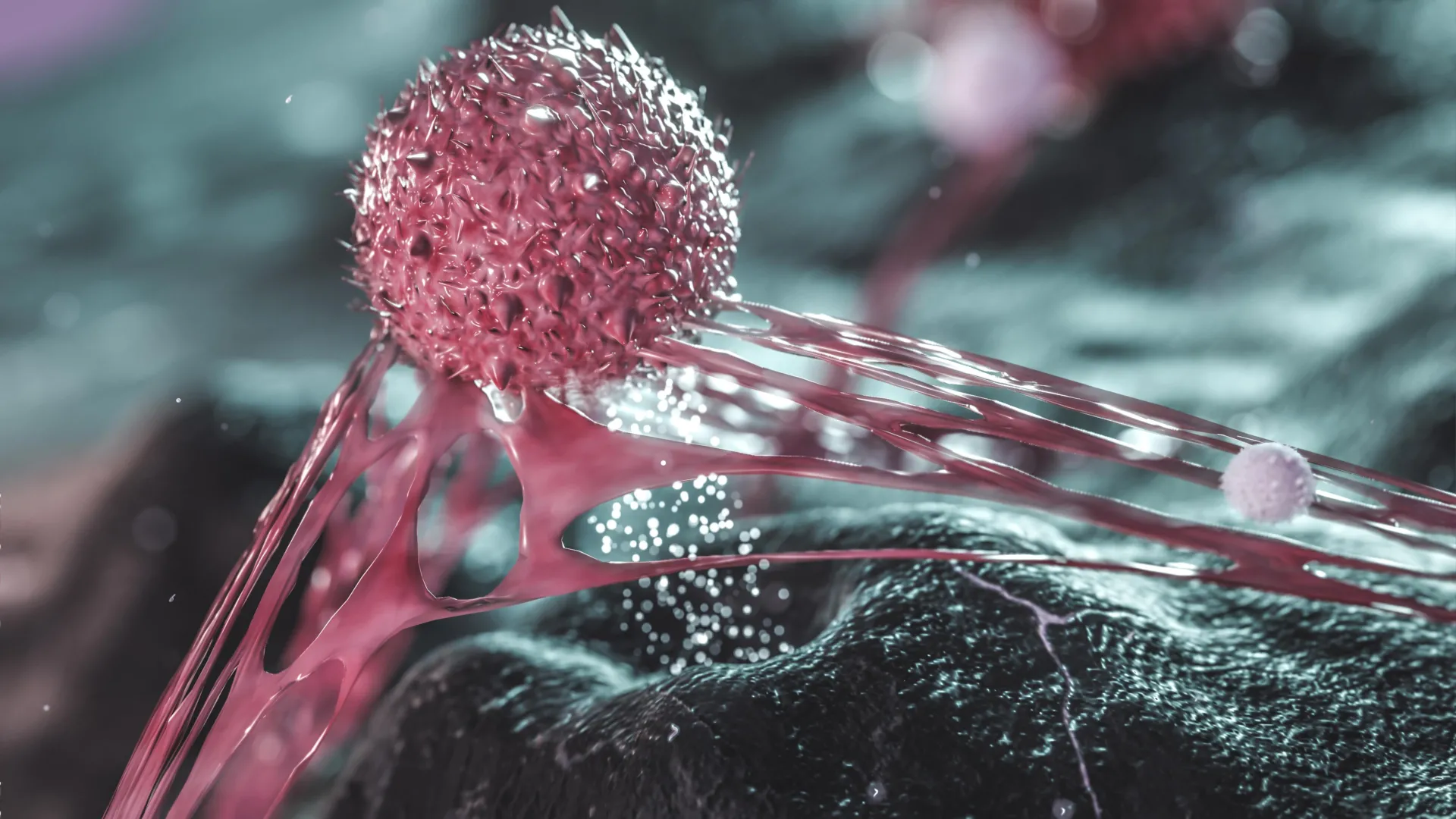
Cancer occurs more frequently with age and is often difficult to treat in older people. However, most cancer research using mice does not reflect that reality. Less than 10% of mouse experiments use older animals, and researchers typically rely on mice that are roughly equivalent to humans in their early 20s.
This gap may help explain why many cancer treatments that are successful in clinical studies ultimately fail in human clinical trials.
New findings from Fox Chase Cancer Center, presented at the American Association for Cancer Research annual meeting, suggest that melanoma does not behave the same way throughout the aging process. The researchers found that cancer spread was lowest in young mice, reached highest levels in middle-aged mice, and then decreased again in very old mice.
“The majority of the research has been done in very young mice with healthy, intact immune systems,” said Dr. Mitchell Fehn, a cancer biologist who specializes in aging and cancer and the study’s principal investigator. “Right now, it’s easy to customize care for patients who are young, healthy, and may not experience many toxicities. If we can understand how treatments affect older patients, we’ll have more and better treatment options.”
Immune cells may hold the key
Researchers believe that a specialized group of immune cells known as gamma delta (γδ) T cells may help explain this surprising pattern.
These cells act as an early defense system, preventing cancer from spreading throughout the body. Young and very old mice had higher levels of these protective immune cells, and their tumors were more likely to remain dormant or spread less aggressively.
The middle-aged mouse told a different story. They had lower numbers of γδ T cells and were much more likely to have melanoma spread to organs such as the lungs and liver.
The research team also found that melanoma cells can actively weaken the immune system as the animals age. In middle-aged mice, cancer released molecules that suppressed or depleted γδ T cells. As these defenses weakened, previously dormant cancer cells became active and spread more aggressively.
Additional experiments reinforced the importance of these immune cells. When researchers removed γδ T cells from young and very old mice, the spread of melanoma significantly increased. Conversely, blocking signals that suppress immune activation restored protection and reduced cancer spread in middle-aged mice, but the same effects were not seen in younger or older groups.
Why researchers need older mouse models
One reason why aging research remains uncommon is practical. Young mice are easy to obtain and inexpensive, but older mice require long-term care and breeding. Researchers typically have to wait 18 to 24 months for mice to reach an appropriate age for aging studies.
To address this challenge, Fein and colleague Yash Chhabra, Ph.D., assistant professor in the Cancer Signaling and Microenvironment Research Program, helped establish the Aged Mouse Facility at Fox Chase Cancer Center.
The goal is to make older animal models more accessible and encourage scientists to test whether their findings hold across different stages of life.
“We now have facilities with established colonies of aging mice, which lowers the cost and time barriers for aging research,” he said. “This allows me to say to my colleagues, ‘Your model is interesting, why don’t you test it on aging mice?'”
Reconsidering the relationship between cancer and aging
Understanding how aging affects cancer could lead to more effective treatments for older people. Fehn’s lab is particularly interested in the observation that the relationship between age and cancer does not appear to follow a simple straight line.
Cancer risk generally increases with age, but the rate unexpectedly decreases after age 80 to 85.
“The risk increases steadily with age, but decreases sharply after age 80 to 85,” Fehn said. “We hope to explain the mechanism behind why cancer incidence is low in very old patients, but cancer incidence is increasing in middle-aged patients.”
This new finding suggests that age-related changes in the immune system may play an important role in determining when cancer is most likely to spread. They also highlight the importance of including older animals in cancer research to better reflect the patients most affected by the disease.
