


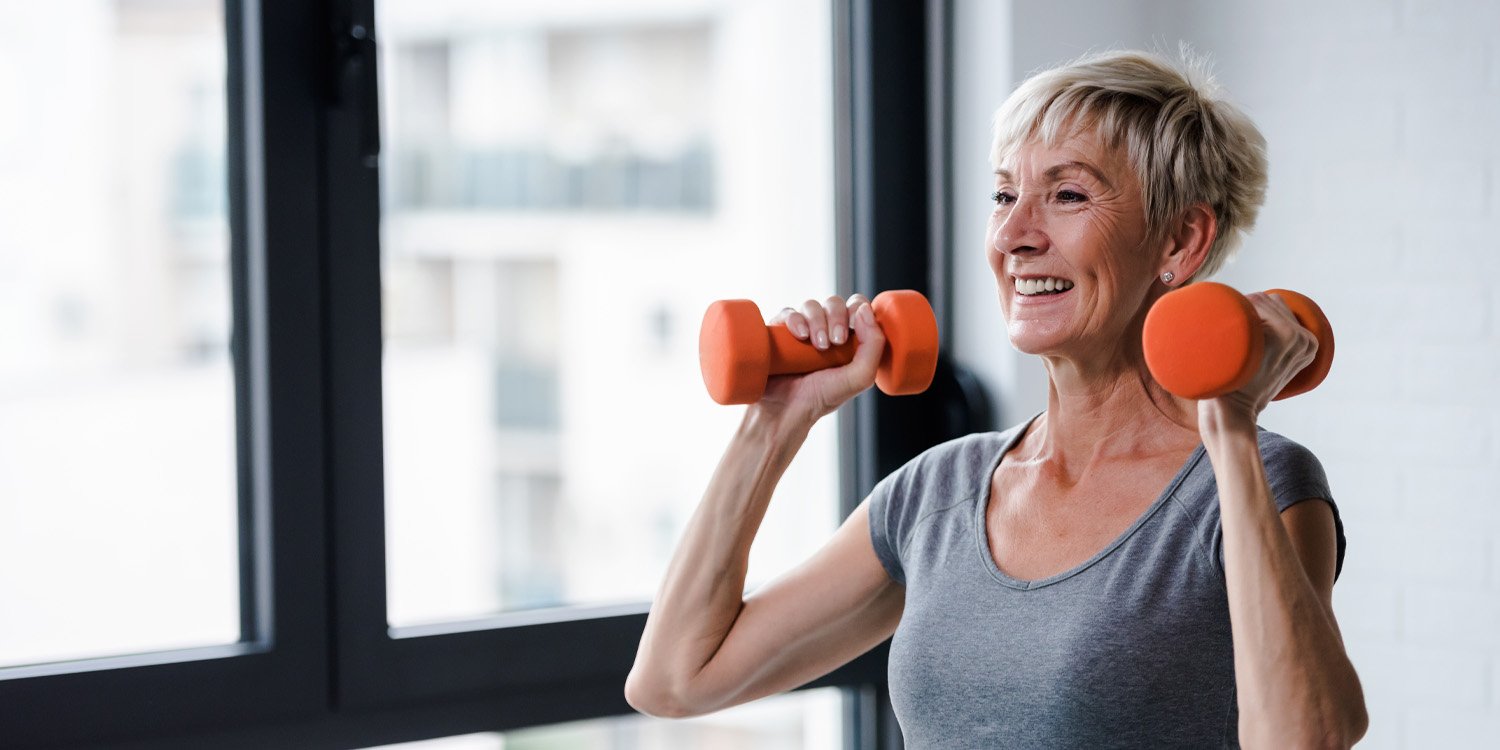
Weightlifting, whether you lift heavier weights for fewer reps or lighter weights for more reps, can be a powerful way for older women to improve memory and mental health. Recent clinical trials have Affective Disorders Journalhighlights exercise as a highly effective non-drug treatment for protecting the aging mind. The results of this study reveal that systematic physical exercise has significant psychological benefits.
As people age, they routinely face a gradual decline in various physical abilities, along with an increased risk of cognitive impairment. Women in particular often have increased vulnerability to depression and anxiety later in life. This increased risk results from a combination of biological changes related to menopause, hormonal changes, and a variety of evolving social factors. Over time, poor mental health can accelerate the decline in physical and cognitive function.
Medical professionals regularly prescribe cardiovascular and resistance training to maintain physical independence. In addition to building muscle mass and raw strength, weightlifting induces biological changes that protect the brain. Muscle contractions release special proteins into the bloodstream that are transported to the brain, where they theoretically promote the growth of new nerve connections and reduce systemic inflammation.
Physical exercise also helps regulate the body’s stress system, especially the sustained secretion of cortisol. Maintaining this biological balance reduces oxidative stress in brain tissue, actively limiting harmful cellular damage over time. Researchers suspect that these invisible biochemical reactions can change the way the aging brain processes daily thoughts and emotions.
Major sports medicine organizations offer various guidelines on exactly how older adults should program these physical routines. The American College of Sports Medicine once recommended that older adults lift weights heavy enough to cause muscle fatigue no more than 8 to 12 times. Fitness experts refer to this particular intensity threshold as your repetition max.
Recent updates to these guidelines have expanded the recommended repetition limit to 10 to 15 repetitions. The exact intensity that produces the greatest mental adaptations remains a subject of debate among exercise physiologists. Lifting heavy loads less often can cause very different neurological adaptations than lifting light loads more frequently.
Some previous research has shown that short, heavy sets may be effective in reducing depression, and that light, long sets may be better at calming anxiety. Paolo M. Cunha, a prominent researcher at Brazil’s Londrina State University, designed a study to test these different training variables. Cunha and his colleagues organized a randomized clinical trial to identify the optimal resistance training intensity to enhance brain health.
The researchers recruited 120 women with an average age of 68 who were not currently participating in a structured exercise program. Prior to the intervention, an independent cardiologist screened volunteers using a diagnostic stress test to ensure that volunteers were safe to participate. The researchers then divided the women into three equal groups based on their baseline physical fitness to ensure a balanced comparison.
The first group followed a resistance training program using heavier weights with 8 to 12 repetitions. The second group performed the same exercise, but lifted a slightly lighter weight for 10 to 15 repetitions. The final group served as a control and maintained a sedentary lifestyle throughout the study.
For three months, the activist group visited the university’s fitness facility three mornings a week. Under the direct supervision of a qualified fitness professional, participants completed three sets of eight different full-body exercises. Their routines used weight machines and free weights and incorporated movements such as chest presses, leg extensions, seated rows, and bicep curls.
Over the course of 12 weeks, the supervisors gradually increased the weight the women lifted as they gained strength. Adjusting the load allowed participants to consistently reach their assigned repetition range using proper breathing and movement techniques. Meanwhile, the researchers instructed all participants to avoid any new exercise outside of a laboratory setting.
The scientists conducted an extensive series of cognitive and psychological tests before the program began and immediately after it ended. They used the Montreal Cognitive Assessment to assess basic spatial skills, short-term memory, and language processing. The team also distributed multiple standardized surveys to track clinical symptoms of geriatric depression and general anxiety.
Other specialized tests measured executive function, a term that describes the mental processes that allow us to plan, focus attention, and multitask. The trail-making test required the women to connect a series of scattered numbers and letters as quickly as possible to measure their cognitive flexibility. In another language test, the women had to name as many words and animals starting with F as possible within 60 seconds.
The researchers also assessed the women using a computerized Stroop test to measure mental inhibitory control. In this visual test, the software displayed words like “red” or “black” written in conflicting ink colors, such as green font. The women had to suppress their automatic reading reflexes and quickly press a button that corresponded to the color of physical ink instead of the written word.
After three months of intervention, both groups of weightlifters showed significant improvements in test scores. Performance on global cognitive assessments improved, and reaction times on tests of executive function significantly decreased. The control group showed no such improvement, and their mental performance worsened slightly in certain test categories.
Structured physical activity also significantly reduced the severity of mood disorders in exercise participants. Scores assessing depressive symptoms decreased by about 34 percent in the low repetition group and by a significant 24 percent in the high repetition group. Diagnostic anxiety scores plummeted by more than 40% in both groups of active women.
The researchers noted that these positive changes met certain thresholds for clinically meaningful differences. In practical terms, this means that the psychological benefits were large enough that women noticed a visible improvement in their daily emotional state. The trial data did not reveal significant differences in results between the two iterative strategies. Both weightlifting intensities showed similarly good results in protecting against cognitive decline.
This study includes several caveats that may shape future research on the neurological benefits of structured exercise. This test relies heavily on self-reported psychological surveys, and the research may be susceptible to participants’ subjective biases and temporary mood states. The research team also did not closely track changes in the women’s light daily physical activity outside of the gym environment.
Researchers also strongly suspect that the social framework of fitness programs contributes to the emotional benefits. Over a 12-week period, active participants exercised in a collaborative, shared environment, interacting regularly with peers and enthusiastic supervisors. This kind of consistent social engagement combats loneliness and provides psychological comfort on a daily basis.
Future studies will need to determine whether these positive neural changes are altered by different exercise durations or by adding social interaction. Despite these variables, the results show that resistance training provides a robust and accessible method for treating mild cognitive and mood problems. Seniors can be confident that regular weight training will benefit the mind as much as the skeletal muscles.
The study, “Effects of repeated resistance training on cognitive function and mental health in older women: a randomized controlled clinical trial,” was authored by Paolo M. Cunha, Alex S. Ribeiro, Edilaine F. Cavalcante, Pâmela Castro-e-Souza, Vanessa Santos-Melo, Luís Alves de Lima, Fábio L. Orsatti, Aline M. Gerage, and Ricardo. J. Rodriguez, Annaliza M. Silva, Brendon Stubbs, Edilson S. Cirino.
