


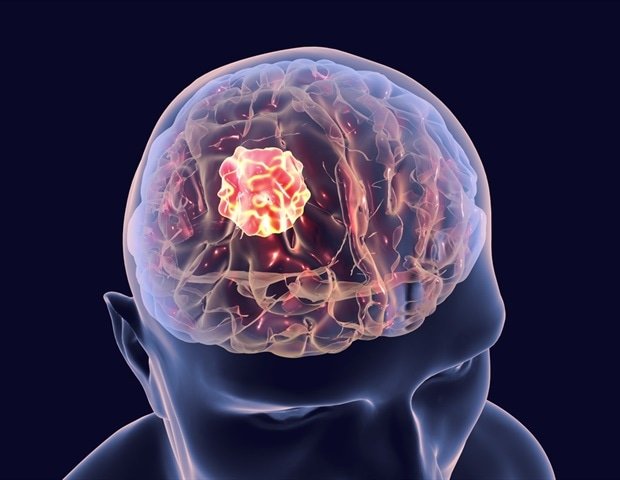
Scientists at the University of Virginia Comprehensive Cancer Center have developed a promising new experimental approach to target glioblastoma, the most common and deadliest brain tumor. This approach has the potential to overcome many of the limitations of existing drug-based treatments.
UVA’s Roger Abunader, MD, PhD, and colleagues have identified a “microRNA” that can simultaneously suppress multiple dysfunctional genes involved in glioblastoma formation and growth. Researchers are using a combination of brain-penetrating nanoparticles, focused ultrasound, and microbubbles to deliver miRNAs through the brain’s natural protective barrier, a barrier that typically impedes treatment of tumors and neurodegenerative diseases.
This new approach targets a large number of molecules that promote cancer growth, including those for which no therapeutic drugs exist, and could simultaneously help achieve better treatments. We hope to translate this discovery into future clinical trials for patients with glioblastoma and other brain tumors. ”
Roger Abunader, MD, Professor, Department of Microbiology and Immunology and Cancer Biology, Comprehensive Cancer Center and Center for RNA Science and Medicine, UVA School of Medicine
Treatment of glioblastoma
Glioblastoma is the most common and aggressive malignant brain tumor in adults, killing more than 13,000 people each year in the United States alone. Treatment is difficult because the tumor penetrates healthy brain tissue and is very difficult to remove. Meanwhile, the natural “blood-brain barrier” that protects the brain from infections and toxins also prevents anti-tumor drugs from entering.
Currently, doctors typically remove as much of the cancer as possible with surgery and then use radiation therapy and chemotherapy to help patients survive as long as possible.
By using miRNAs, small molecules of genetic material, Abunader’s approach allows doctors to suppress the effects of multiple defective genes at once. This may slow or stop tumor growth by blocking cancer-causing genes. Attempts to target multiple genes with existing therapies are complicated by the toxicity caused by combinations of cancer drugs and the fact that for many molecules there are no drugs available to target them.
Dr. Abunader plans to use focused ultrasound guided by magnetic resonance imaging (MRI) to target miRNAs to the brain. Highly focused sound waves guide tiny “microbubbles” that open the blood-brain barrier just long enough for the miRNA nanoparticle carrier to cross.
Testing their approach in the lab, Abunader and his team found that miRNAs were effective at slowing tumor growth and extending survival in animal models of glioblastoma. More research is needed to test this approach in humans, but Abunader says the results are a positive indicator of the potential of this approach not only for glioblastoma but other cancers.
“This approach could have broad applications in several brain diseases and other human diseases,” Abunader said. “We and many others are working intensively to reduce the burden of cancer and, hopefully, cure it once and for all, but this requires continued investment in cancer and medical research.”
Focused ultrasound at UVA
UVA Health was one of the earliest pioneers in the field of focused ultrasound. UVA’s expertise in this technology has led to a robust research program exploring the use of focused ultrasound to treat a variety of conditions.
The great promise of this technology led UVA and the Charlottesville-based Focused Ultrasound Foundation to launch the Focused Ultrasound Immunotherapy (FUSION) Center, the world’s first center dedicated to exploring the benefits of combining focused ultrasound and cancer immunotherapy. Experts hope this treatment could revolutionize cancer treatment in the 21st century.
Finding new ways to improve patient care is a core mission of both the UVA Comprehensive Cancer Center and UVA’s Paul & Diane Manning Institute for Biotechnology. UVA Comprehensive Cancer Center is one of only 57 cancer centers in the country to earn the elite “Comprehensive” designation from the National Cancer Institute for its outstanding patient care and cutting-edge cancer research.
Meanwhile, the Manning Institute was created to accelerate the development of new drugs and treatments for the most complex and difficult diseases. This is complemented by a statewide clinical trial network that expands access to potential new treatments being developed and tested.
Publication of survey results
Abu Nader and his colleagues described their approach and initial clinical test results in the Journal of Clinical Investigation. This article is open access. That means you can read it for free.
The research team includes Shekhar Saha, Ying Zhang, Myron K. Gibert Jr., Collin Dube, Farina Hanif, Elizabeth Qian It was composed of McCord, Fadilla Guesus, Nicola Cruikshanks, Rossimar Rivera Colon, Lily Dell’Orio, Rajita Anbu, Wenjie Liu, Songji Choi, Benjamin Cefas, Pankaj Kumar, Alexander L. Klibanoff, David Schiff, Soo-seok Jeong, Justin Haynes, Jamie Mata, Marcus Hafner, Abu Nader. The scientists have no financial interest in this research.
This research was supported by the National Cancer Institute of the National Institutes of Health, grants U01 CA220841 and P30 CA044579. NIH’s National Institute of Neurological Disorders and Stroke grants R01 NS122222 and R21 NS122136. UVA Comprehensive Cancer Center Pilot Grant. Schiff Foundation grant. Ben and Katherine Ivey Foundation. and the Focused Ultrasound Foundation.
sauce:
University of Virginia Health System
Reference magazines:
Saha, S. others. (2026). Discovery and therapeutic delivery of microRNAs that target deregulated glioblastoma pathways inhibits tumor growth in mice. clinical research journal. DOI: 10.1172/JCI195639. https://www.jci.org/articles/view/195639
