

Close Menu

    Subscribe to Updates

    Get the latest creative news from FooBar about art, design and business.

    What's Hot

    Scientists reverse autism-like symptoms in mice by restoring shortened nerve cell structures

    June 30, 2026

    Navigating the Top Clinical Trial Challenges in 2026

    June 30, 2026

    Scientists may have finally discovered how Alzheimer’s disease spreads to the brain

    June 30, 2026
    Facebook X (Twitter) Instagram
    Facebook X (Twitter) Instagram
    Health Magazine
    • Home
    • Environmental Health
    • Health Technology
    • Medical Research
    • Mental Health
    • Nutrition Science
    • Pharma
    • Public Health
    • Discover
      • Daily Health Tips
      • Financial Health & Stability
      • Holistic Health & Wellness
      • Mental Health
      • Nutrition & Dietary Trends
      • Professional & Personal Growth
    • Our Mission
    Health Magazine
    Home » News » UPV researchers develop high-speed sensor to detect active tuberculosis
    Discover

    UPV researchers develop high-speed sensor to detect active tuberculosis

    healthadminBy healthadminApril 20, 2026No Comments3 Mins Read
    UPV researchers develop high-speed sensor to detect active tuberculosis
    Share
    Facebook Twitter Reddit Telegram Pinterest Email


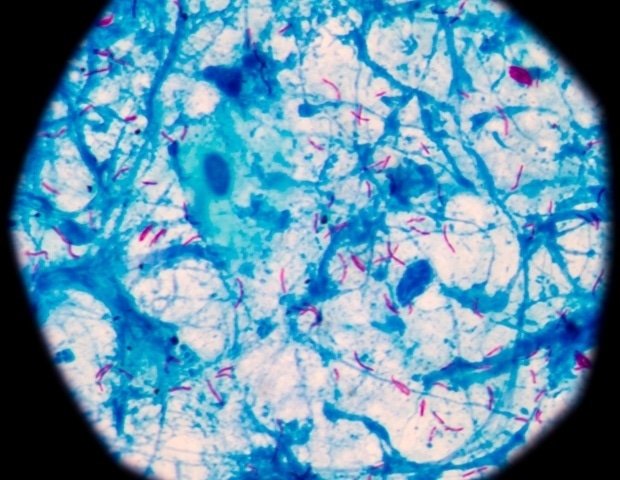
    UPV’s research team is leading the development of sensors that pave the way for rapid, selective and cost-effective detection of active tuberculosis. The device detects the presence of a protein secreted by the disease-causing Mycobacterium tuberculosis. Get results in just 60 minutes. This is significantly faster than traditional methods, such as microbial culture, which take several weeks.

    Tuberculosis remains one of the world’s major public health problems today. According to the World Health Organization’s 2024 Global Report, it is the number one cause of death from a single infectious pathogen. “Having tools that allow early and reliable diagnosis is therefore key to controlling the infection,” emphasizes Dr. Isabel Caballos, a member of the IDM-UPV team.

    fluorescence detection

    The new system is based on a nanoporous material containing fluorescent molecules and coated with an antibody specific for the MPT64 protein, a characteristic marker of active tuberculosis. The presence of this protein causes the movement of antibodies that block the pores of the material, releasing a fluorescent compound. This light signal makes it easy to detect infections.

    One of the main innovations of biosensors is to detect active disease. This is particularly important because other molecular techniques, such as PCR, can identify fragments of bacterial DNA without distinguishing whether the infection is active, active, developing, or latent. In contrast, this system recognizes proteins secreted by bacteria during active infection, providing more accurate information from a clinical perspective. ”


    Professor Ramón Martínez Máñez, Head of the NANOSENS Group of IDM-UPV and Nanomedicine and Sensors Joint Unit of IIS La Fe

    Promising pathways to improve tuberculosis diagnosis

    Tests conducted have shown that this biosensor achieves very low detection limits and high selectivity for proteins from other respiratory pathogens such as influenza virus, SARS-CoV-2, respiratory syncytial virus, and other non-tuberculous mycobacteria. Additionally, the device was validated using cultured clinical samples taken from patients.

    “In the final validation, carried out using 20 cultures of respiratory samples taken from tuberculosis patients, the system achieved a sensitivity of 80% and a specificity of 90%, showing a good predictive value and confirming its potential as a diagnostic tool,” points out Dr. Ana Gil, from the Department of Microbiology at La Fé Polytechnic Hospital in Valencia.

    According to IDM-UPV researchers, this new biosensor offers a promising avenue to improve tuberculosis diagnosis, especially in resource-poor countries where access to advanced technology remains a challenge. Professor Elena Aznar, professor at UPV and researcher at CIBER-BBN and IIS La Fe, concluded that “its simplicity, portability and selective detection ability make this a tool with great potential to contribute to the control of what remains the world’s most deadly disease.”

    The research, published in the journal Taranta, was led by the Polytechnic University of Valencia and the Interuniversity Institute for the Development of Molecular Recognition and Technology (IDM) at the University of Valencia. Also participating were the UPV-IIS Rafe Joint Research Unit on Nanomedicine and Sensors, the CIBER Center for Biotechnology, Biomaterials and Nanomedicine (CIBER-BBN), the UPV-CIPF Joint Research Unit on Disease Mechanisms and Nanomedicine, and the Microbiology Department and Severe Infectious Diseases Group of Rafe University of Technology Hospital.

    sauce:

    Polytechnic University of Valencia

    Reference magazines:

    horse, me Others. (2026) Targeted detection of Mycobacterium tuberculosis MPT64 antigen using an antibody-coated nanoporous anodic alumina biosensor: a new approach for tuberculosis screening. talent. DOI:10.1016/j.talanta.2026.129625. https://www.sciencedirect.com/science/article/pii/S0039914026002808?via%3Dihub


    Source link

    Visited 6 times, 1 visit(s) today
    Share. Facebook Twitter Pinterest LinkedIn Telegram Reddit Email
    Previous ArticleDemocrats call for clean energy to be tied to affordability as Iran war sends prices soaring | Climate crisis
    Next Article A new microfluidic device improves enrichment of tumor cells from pleural fluid
    healthadmin

    Related Posts

    Review assesses effectiveness of creatine as add-on therapy for depression

    June 30, 2026

    New diagnostic tool bypasses blood-brain barrier to detect autism early

    June 30, 2026

    Researchers map structural changes in viruses during dehydration process

    June 30, 2026

    Niigata University study updates Alzheimer’s disease risk for APOE-e4 homozygotes

    June 30, 2026

    Pharmacy experts call for hybrid digital-human model in NHS healthcare

    June 30, 2026

    Genetic study links KDF1 mutations to dental epithelial tissue disorders

    June 30, 2026
    Add A Comment

    Comments are closed.

    Categories

    • Daily Health Tips
    • Discover
    • Environmental Health
    • Exercise & Fitness
    • Featured
    • Featured Videos
    • Financial Health & Stability
    • Fitness
    • Fitness Updates
    • Health
    • Health Technology
    • Healthy Aging
    • Healthy Living
    • Holistic Healing
    • Holistic Health & Wellness
    • Medical Research
    • Medical Research & Insights
    • Mental Health
    • Mental Wellness
    • Natural Remedies
    • New Workouts
    • Nutrition
    • Nutrition & Dietary Trends
    • Nutrition & Superfoods
    • Nutrition Science
    • Pharma
    • Preventive Healthcare
    • Professional & Personal Growth
    • Public Health
    • Public Health & Awareness
    • Selected
    • Sleep & Recovery
    • Top Programs
    • Weight Management
    • Workouts
    Popular Posts
    • 1773313737_bacteria_-_Sebastian_Kaulitzki_46826fb7971649bfaca04a9b4cef3309-620x480.jpgHow Sino Biological ProPure™ redefines ultra-low… March 12, 2026
    • pexels-david-bartus-442116The food industry needs to act now to cut greenhouse… January 2, 2022
    • 1773729862_TagImage-3347-458389964760995353448-620x480.jpgDespite safety concerns, parents underestimate the… March 17, 2026
    • 1773209206_futuristic_techno_design_on_background_of_supercomputer_data_center_-_Image_-_Timofeev_Vladimir_M1_4.jpegMulti-agent AI systems outperform single models… March 11, 2026
    • 1774403998_image_28620e4b6b0047f7ab9154b41d739db1-620x480.jpgGait pattern helps distinguish between Lewy body… March 24, 2026
    • Leukemia-620x480.jpgBiomimetic platform powers CAR T therapy for… March 9, 2026

    Demo
    Stay In Touch
    • Facebook
    • Twitter
    • Pinterest
    • Instagram
    • YouTube
    • Vimeo
    Don't Miss

    Scientists reverse autism-like symptoms in mice by restoring shortened nerve cell structures

    By healthadminJune 30, 2026

    Recent research published in cell death and disease Suggests that certain cellular abnormalities in the…

    Navigating the Top Clinical Trial Challenges in 2026

    June 30, 2026

    Scientists may have finally discovered how Alzheimer’s disease spreads to the brain

    June 30, 2026

    Scientists accidentally discovered the inherent tendency of counterclockwise movement in humans

    June 30, 2026

    Subscribe to Updates

    Get the latest creative news from SmartMag about art & design.

    HealthxMagazine
    HealthxMagazine

    At HealthX Magazine, we are dedicated to empowering entrepreneurs, doctors, chiropractors, healthcare professionals, personal trainers, executives, thought leaders, and anyone striving for optimal health.

    Our Picks

    Scientists accidentally discovered the inherent tendency of counterclockwise movement in humans

    June 30, 2026

    Delhi plans to ban petrol rickshaws and scooters to cut toxic fumes | India

    June 30, 2026

    Researchers discover new species of beetle hiding right next to their lab

    June 30, 2026
    New Comments
      Facebook X (Twitter) Instagram Pinterest
      • Home
      • Privacy Policy
      • Our Mission
      © 2026 ThemeSphere. Designed by ThemeSphere.

      Type above and press Enter to search. Press Esc to cancel.